Blog

The Bombus lucorum complex – a study across urban and rural habitats

During summer 2018, Trinity College Dublin undergraduate student, Maeve McCann, carried out a research project using molecular methods to identify individual bumble bees belonging to the Bombus lucorum complex. She wrote a blog about her fieldwork back in July, and now she has completed her project. Here’s what she found…

Summary:

Bumble bees are commercially and ecologically important pollinators. They are declining in Ireland due to climate change, land use change and habitat loss. To inform effective conservation it is vital that species distribution and abundance is known. Four of the most common bumble bees in Ireland, belonging to the Bombus lucorum cryptic complex, require molecular identification through PCR/RFLP digest to distinguish individual species, as morphological characteristics are shared in a cryptic manner.

Picture2
Taxonomy of the Bombus sensu stricto subgenus in Ireland. The species highlighted in green are species of bumble bee present in Ireland that are indistinguishable using normal morphological identification methods. Bombus terrestris queens are distinguishable by their buff tail, however workers usually have the colour banding pattern of the lucorum complex, and so are considered part of cryptic complex. Any ambiguous records for these 4 species are referred to Bombus lucorum agg (aggregate).

Our study used molecular techniques to identify bees from the urban and rural settings of Dublin city and County Fermanagh respectively.

Picture3
Dublin city, situated on the eastern seaboard of Ireland, is shaded blue. County Fermanagh, part of Northern Ireland, in the north-west of Ireland is shaded green.

We were able to identify a total of 98 individuals, which revealed a unique species composition in each region. In Dublin, individuals were identified as Bombus cryptarum (4.2%), Bombus lucorum (8.3%) and Bombus terrestris (87.5%); and in Fermanagh, Bombus cryptarum (46%), Bombus lucorum (20%) and Bombus terrestris (34%).

Picture1
A Bombus cryptarum worker caught at Killykeegan Nature Reserve in Co. Fermanagh. Its banding pattern of a yellow band on the thorax and abdomen and a white tail is shared by members of the Bombus sensu stricto subgenus.
Picture6
Species composition by region. The Dublin pie chart corresponds to the following percentages for each species: B. cryptarum (blue) = 4.2%, B. lucorum (orange)= 8.3% and B. terrestris (grey)= 87.5%. The Fermanagh pie chart shows species composition of: B. cryptarum (blue) = 46%, B. lucorum (orange) =20% and B. terrestris (grey) =34%.

No Bombus magnus individuals were found.

Conclusions:

This research project has shown differentiation in the species composition of the B. lucorum complex across a rural and urban setting. The species present varies between each region, but pooled regional data are mostly representative of each site within the region. While the findings show clear regional differences, this difference in species composition could indicate that these species are variable with regard to their preference for a rural or urban environment. However, the extent to which the B. lucorum complex reliably differentiates across all of Ireland can only be assessed by an all-Ireland study controlled for these rural and urban differences. As it stands, B. cryptarum and B. magnus are data deficient, however it could be noted that much of the data on B. lucorum is inconclusive as it too is also deficient on high quality (molecular) identifications.  More investigation is required to understand the ecology of each species uniquely and thus inform conservation strategies.

Download the full report here.

Maeve McCann is an undergraduate Science student at Trinity College Dublin, and her project was supported by the C.B. Dennis British Beekeepers’ Research Trust.


SCAPE 2018: Pollination Ecologists on tour in Ireland

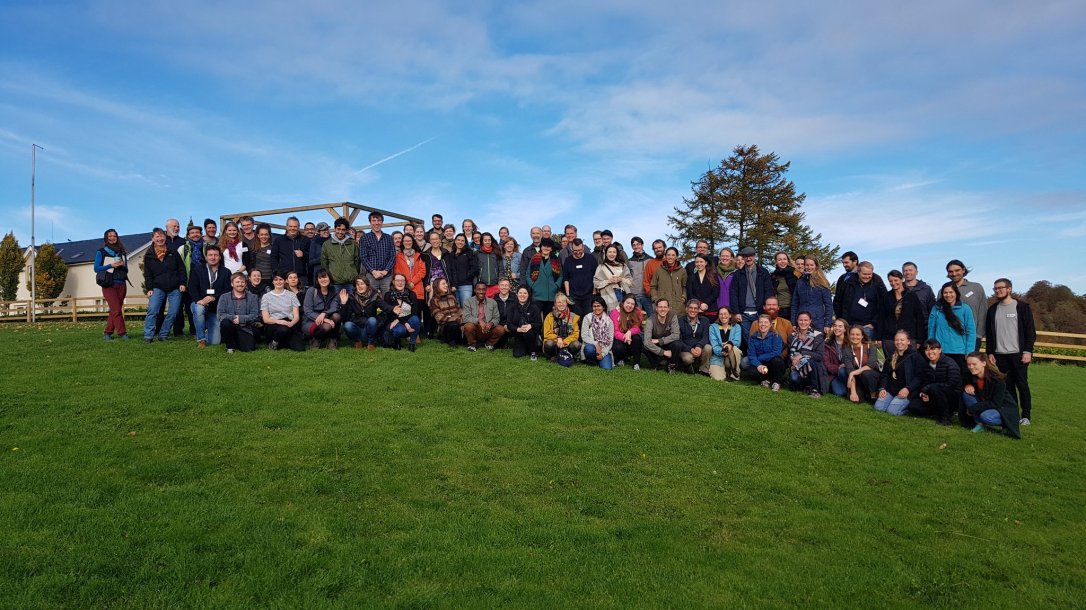
One of the (possibly the) best of the pollination ecology conferences is SCAPE. This meeting has been held annually since 1987, and has rotated around the four Scandinavian countries of Denmark, Finland, Norway and Sweden. In 2018, for the first time, this meeting was held outside Scandinavia, when Prof Jane Stout (TCD) and Dr Dara Stanley (UCD) hosted the meeting in the Republic of Ireland and welcomed 87 pollination ecologists from around the world. Delegates came from 14 different European countries, and further afield (USA, Canada, Brazil, South Africa and Zambia).

SCAPE
SCAPE delegates enjoying the Irish countryside in County Wicklow

The focus of the SCAPE meeting is on pollination ecology, wild and crop plant pollination, plant-pollinator interactions, pollinator conservation, plant reproduction, pollinator behaviour and diversity, plant evolution, and related subjects. Delegates enjoyed 50 oral presentations, 20 poster presentations and two excellent keynote speakers (Dr Elli Leadbeater and Prof Steve Johnson) (see programme here).

One of the highlights of the SCAPE meetings is the friendly, informal atmosphere, which integrates top professors with Early Career Researchers (including MSc and PhD students, early postdoctoral researchers). This enables ECRs to not only present their work, but to have it reviewed and critiqued in a supportive way. It also allows and encourages connections to be made, networking and informal mentoring of ECRs. This year, thanks to SFI sponsorship, student prizes were awarded to:

  • Best Oral Presentation: Stephanie Maher, Anglia Ruskin University, UK
  • Best Poster Presentation: Margareta Kluth, Heinrich-Heine-Universität Dusseldorf, Germany
  • Best Flash Presentation: Cian White, Trinity College Dublin, Ireland

Congratulations to all, particularly our own Cian White, from the TCD Plant-Animal Interactions Research Group.

The conference was held at the the beautiful Avon Ri Lakeshore Resort, Co. Wicklow, Ireland. And we maintained the Scandinavian feel with a very Irish sauna, and augmented it with a very enjoyable ceili (see photos by Laura Russo here).

20181019_131347
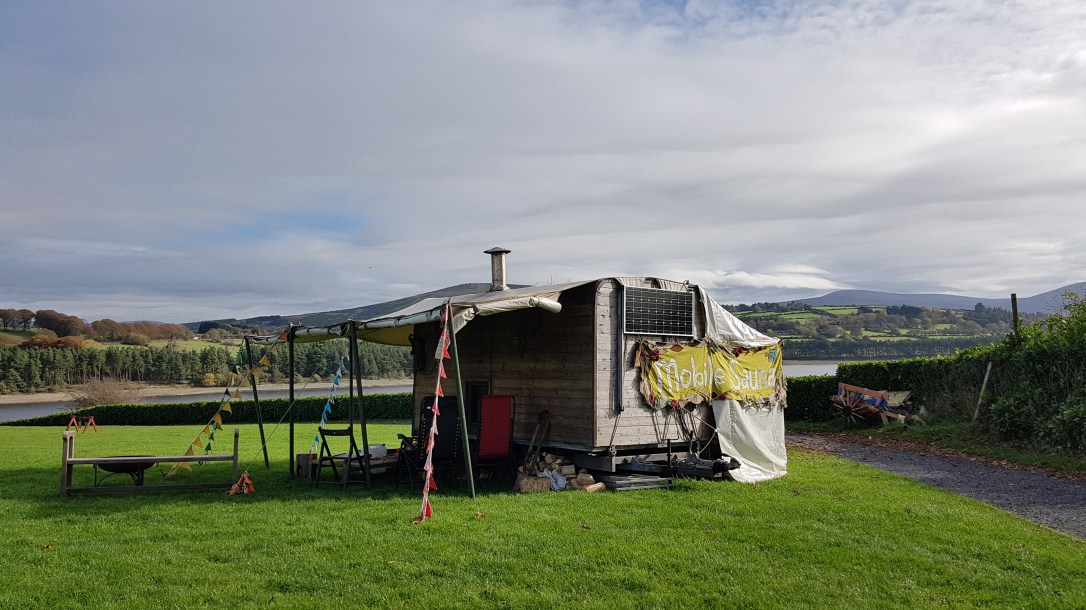
Bosca Beatha, the Mobile sauna

Thanks to all the delegates and to the venue for making this a very successful SCAPE meeting. Looking forward to SCAPE 2019 in Lund, Sweden!


New PhD students bring Italian and Greek flavour to research group

We are delighted to welcome two new PhD students to the Plant-Animal Interactions Research Group at Trinity College Dublin this semester: Elena Zioga and Irene Bottero. Both are working on how agricultural pesticides influence plants and pollinators: Elena on the national DAFM-funded PROTECTS project and Irene on the EU-funded PoshBee project.

herbal-teas.jpg

At their first lab group meetings, Irene and Elena treated us to a honey tasting session and Greek herbal infusion teas

Elena has a B.Sc. (Hons) in Agriculture, Forestry and Natural Environment, and an M.Sc. in Conservation of Biodiversity and Sustainable Exploitation of Native Plants, both from Aristotle University of Thessaloniki (Greece). Her primary interests are botany, apidology, pollination ecology, chemistry of natural products, and environmental chemistry. She is currently undertaking her PhD under the supervision of Prof. Jane Stout (Department of Botany, Trinity College Dublin) and Prof. Blanaid White (Department of Chemical Sciences, Dublin City University) and she is part of the plant-pollinator interactions group at Trinity College. In her PhD project, Elena is evaluating the potential for pesticide contamination of floral resources as a result of translocation from soil. This is a multidisciplinary project and part of the PROTECTS (Protecting Terrestrial Ecosystems Through Sustainable Pesticide Use) programme, funded by the Irish Department of Agriculture, Food and the Marine.

Irene has a B.Sc. (HONS) in Natural Sciences and a M. Sc. in Evolution of Animal and Human Behaviour from the University of Turin. In the past she worked for an European project, in order to restore a damaged area of Toce River in Pieve Vergonte (VB, Italy). Her main interests are the ecosystem services, the environment and the conservation of biodiversity and landscape. She is currently undertaking her PhD under the primary supervision of Prof. Jane Stout at TCD, with Prof. Chris Topping (Aarhus, Denmark) and Dr. Cecilia Costa (CREA,Italy). Her PhD is part of the European PoshBee project (www.poshbee.eu), which aims to understand the impact of several stressors (i.e. nutrition, agrochemicals, pathogens) on bee health. The collected data will be correlated with the landscape data from both Ireland and Italy, in order to create a risk assessment and to reduce the negative impact of these stressors on wildlife, pollinators and environment.

Follow Elena @ZioElena and Irene @irene_bottero on Twitter to keep up with their progress.

research group

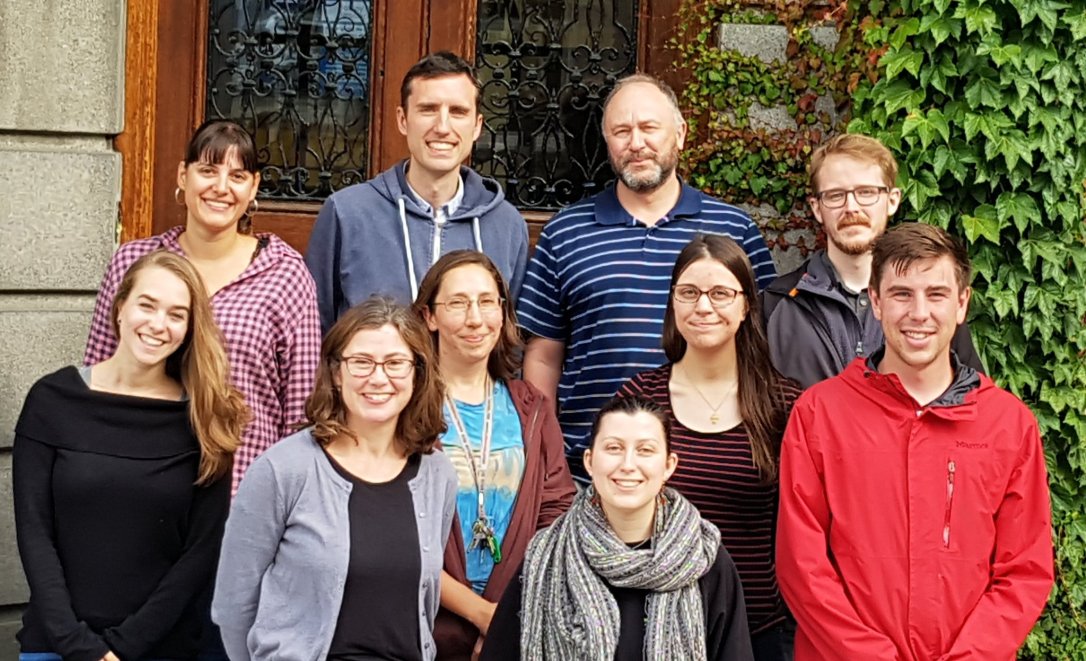
The Plant-Animal Interactions research group (13 Sept 2018): Back row (L-R) Elena Zioga, James Murphy, Simon Hodge, Conor Owens; front row (L-R) Irene Bottero, Jane Stout, Laura Russo, Maeve McCann, Sarah Gable, Cian White

Natural Sciences at PROBE 2018: The pollinator bit

Each year, Trinity College Dublin takes part in European Researchers Night, funded by  European Commission Marie Skłodowska-Curie Actions, where research institutions around Europe open their doors to the public to promote their research. This year, Trinity’s event, PROBE, in collaboration with the Science Gallery, took place on Friday 29th September. Our research group led a morning activity as PhD student, Cian White explains below…

To kick-start the day, the Science Gallery welcomed 90 children from four different schools around Dublin to a hands-on workshop about pollinators. Prof. Jane Stout introduced the children to the amazing diversity of insect life (all 1.5 million species described so far) and was careful to remind them that spiders are not insects (why? Cus they have 8 legs silly!).  The children were quick to catch on though and in response to a question about why insects are special, hands shot up all over the room and in their eagerness, one shouted out ‘Cus they can fly!’. Spot on, I think we have a recruit for the plant animal interaction lab!

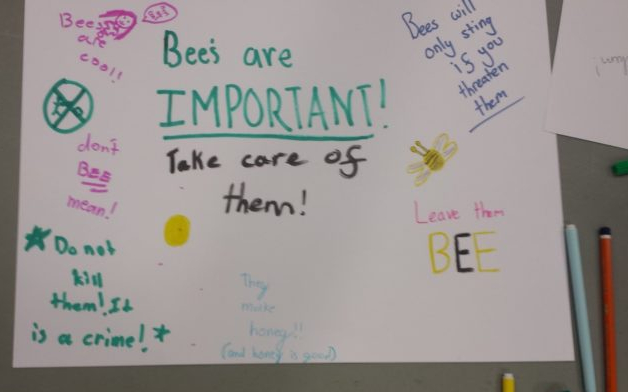
BeeBoard-768x431The children’s thoughts on bees.

After retelling the story of the Hungry Caterpillar, illustrating that metamorphosis allows many insects to occupy very different niches during their life (another reason why there is 1.5 million of them), Prof. Stout let them in on a little secret. Only a handful of bee species actually produce honey! Out of the 20,000 species of bee in the world! Gasps from the young audience, ‘There’s more than one species of bee?’. Recruit number 2. After showing the children how honey bees communicate to each other through dance (wish I could be a bee), it was onto the interactive part of the event. Three groups rotated around activities, from learning to dance like a bee, to live like a bee (making solitary bee hotels for the 15 Irish species who nest in cavities) and to eat like a bee (aka how dependent on pollinators is the food you eat?). My favourite reaction of the day: a girl finding out that the cocoa plant (where chocolate comes from) is pollinated by mosquitoes and swearing to never eat chocolate again. I wish her luck.

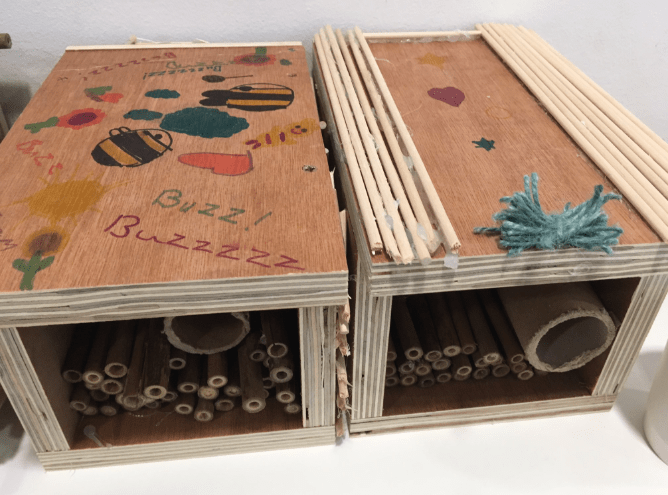
A luxury insect hotel

All in all it, was great fun and the children learned lots, and were genuinely enthusiastic about pollinators. Thanks to Sandra Austin and the trainee teachers from Marino, Irene and Elena for getting stuck in, Jane for being awesome and Kate for organising. For more information about Ireland’s 99 species of bee and 180 hoverfly species and what you can do to conserve them, check out pollinators.ie.

About the Author: Cian White is a PhD Student supervised by Prof. Jane Stout and Dr. Marcus Collier, and is a joint member of the Plant Animal Interactions and Urban Ecology labs. His research focuses on network, community and applied ecology. You can find out more about his research here: Cian White

This post originally formed part of the EcoEvo@TCD blog “From Worms to Wildfire: Natural Sciences at PROBE 2018” – check it out to find out what else we got up to on the night…


Pesticides harm bees, but what about hoverflies?

Summer has come to an end, and with it the hot, sunny days that we all enjoyed. It was a good year for field work, as the uncharacteristically warm Irish summer made my job of sampling for my research easier.

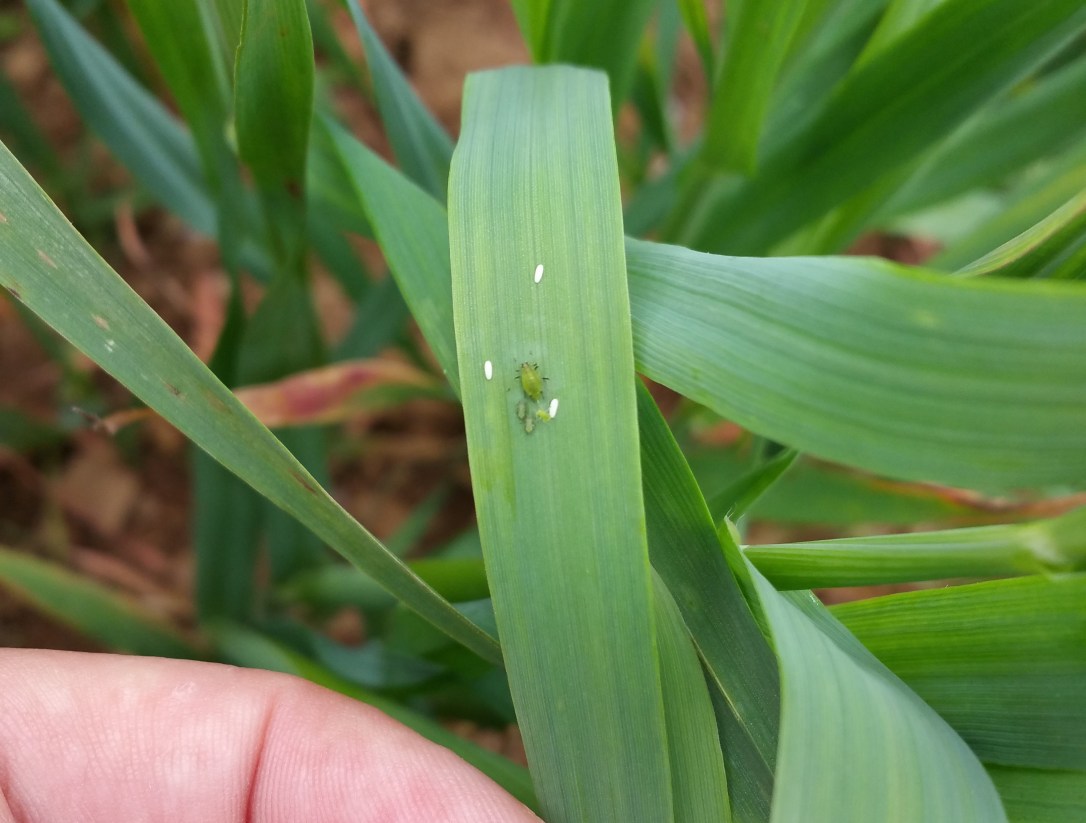
I am a PhD student with a research focus on aphidophagous syrphids in cereal crops. Syrphids are commonly known as hoverflies, many of which have colour patterns that mimic bees and wasps. I focus on the species with larvae that feed on aphids (aphidophagous), therefore providing pest control services to tillage farmers (Figure 1). The adults, however, generally feed on pollen and nectar from flowers, providing pollination services like the bees and wasps they mimic.

Figure1
Figure 1: Hoverfly eggs (white) and aphids on oat leaves. These will hatch into larvae that will feed on the aphids. Image Credit: Sarah Gabel

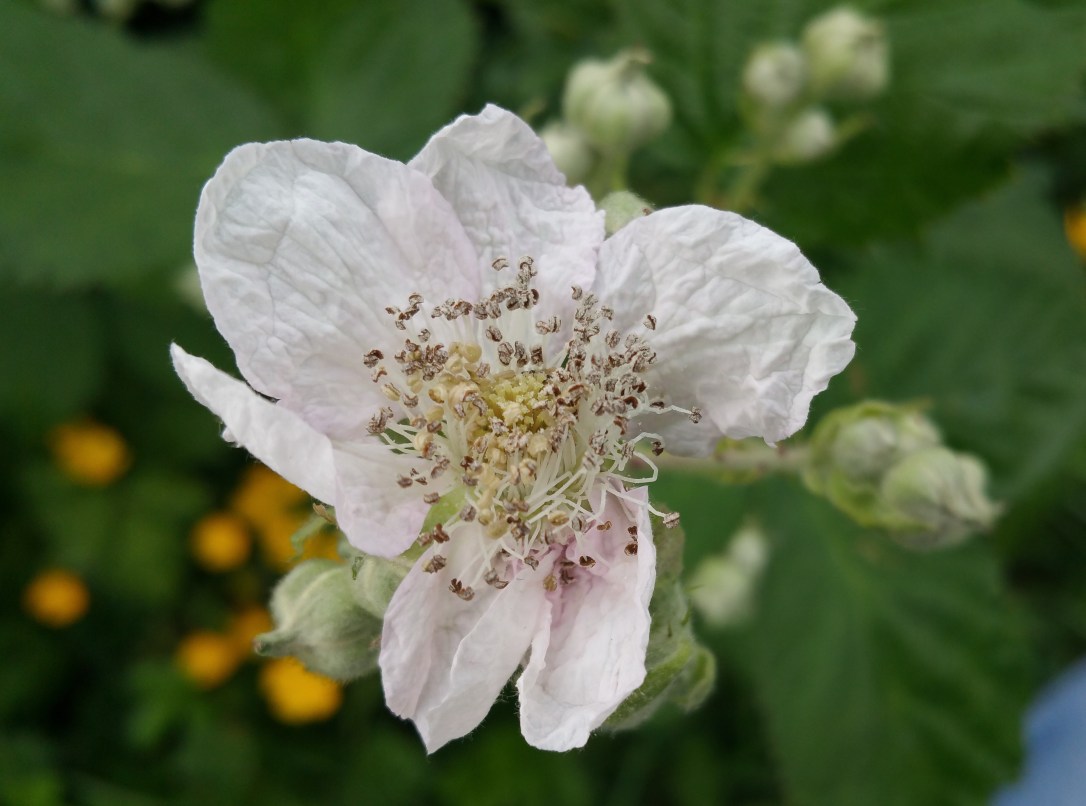
However, just as bees are facing threats of habitat degradation, so too are hoverflies. This summer, I was investigating the presence of one threat in particular – pesticides. Although intended to be applied to a certain aspect of the landscape (e.g. crops) to kill a certain kind of pest (e.g. aphids), pesticides can disperse throughout the environment, ending up in unintended places (e.g. wildflowers near a treated crop) and harming beneficial wildlife (e.g. pest-controlling, pollinating hoverflies). An adult hoverfly can inadvertently consume pesticide residues that ended up in the pollen and nectar of wildflowers. Likewise, hoverfly larvae can feed on aphids that had been feeding on treated crops, therefore being exposed to the pesticides the aphids were either sprayed with or ate themselves. To determine whether pesticides could be found in these food resources for hoverflies – and in what amounts – I sampled aphids from cereal crops, and pollen and nectar from blackberry flowers (Rubus fruticosus, Figure 2) in the hedges surrounding the crops.

Figure2
Figure 2: A blackberry flower loaded with pollen. Image Credit: Sarah Gabel

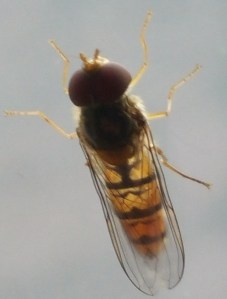
With an amazing team of helpers, the samples were all collected, and are safely stored in a freezer, waiting for chemical analysis. Surveying of the adult fauna found a high presence of aphidophagous hoverflies, with the highest counts going to the iconic marmalade hoverfly (Episyrphus balteatus, Figure 3).  While there weren’t many hoverfly juveniles found hunting for aphids on the crops, there were plenty of other predators feeding on aphids – ladybirds, parasitoid wasps, and spiders just to name a few. Pesticide residues found in aphids could have an impact on all of these beneficial predators, just as residues found in the nectar and pollen of blackberry flowers could have an impact on all the pollinators feeding on them.

Figure3
Figure 3: The marmalade hoverfly, Episyrphus balteatus. Image Credit: Sarah Gabel

While this work is mainly focused on the poisons in hoverfly food resources (aphids, nectar and pollen), the results will have significant meaning to all beneficial wildlife that depend on these resources and, subsequently, will have meaning to us humans as recipients of their ecosystem services.


Sarah Gabel (@SarahG10J) is a PhD student at Trinity College Dublin supervised by Professors Jane Stout and Blanaid White at DCU. She is studying aphidophagous hoverflies in cereal crops, and their interactions with the landscape. Sarah’s PhD is funded by the Irish Research Council (IRC).