Blog

What’s the buzz about Irish honey?

Newly published research by IRC-funded PhD student, Saorla Kavanagh, from DCU, supervised by Blanaid White and Jane Stout, has hit the headlines today, with articles in The Irish Times, Independent, Irish Examiner, The Times, and RTE news,  and the TCD news page.
saorla
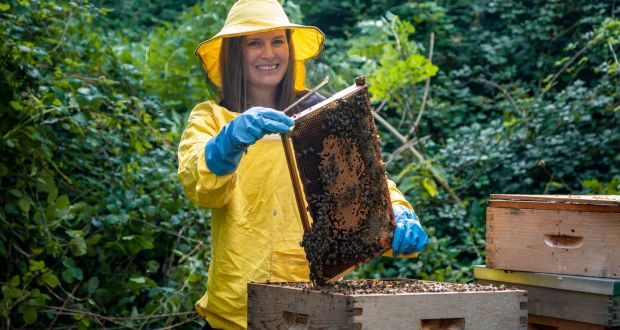
Saorla Kavanagh with her bees

By sampling honey from all over Ireland (see map below), we evaluated the physiochemical properties and total phenolic content (TPC) of single vs. multi-floral honey, and compared this with selected international honeys. The story that has hit the headlines is that Irish heather honey has similar total phenolic content as the famous manuka honey from New Zealand. Increased phenolic content has been linked with beneficial antioxidant effects, and manuka honey commands high retail prices due to its alleged health benefits.
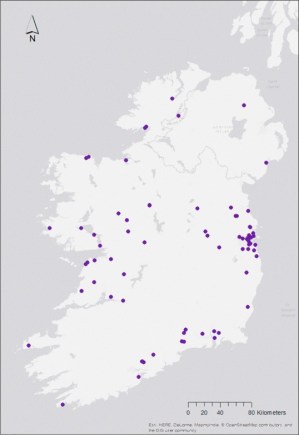
1-s2.0-S0308814618314365-gr1
Honey samples were donated by beekeepers from across Ireland

However, we only tested three heather and three manuka honey samples. Most of our samples (124) were multi-floral honeys, and we found that those produced by urban bees (55 samples) had a greater TPC than their rural counterparts (69 samples). We also analysed ivy honey for the first time.

Because the botanical origin of honey has the greatest influence on its phenolic content, the availability of food sources (flowers) in the wider landscape influences its potential health benefits. Finding a difference in honey chemistry between urban and rural hives probably reflects the difference in flower availability in urban and rural areas, and raises interesting questions with regards to floral availability and quality across landscapes.

The full paper is published in Food Chemistry.

We are grateful to the Irish Research Council for funding the research, and to the beekeepers across Ireland who donated honey samples.

The Flight of the Undergraduate – From Genetics to Bumblebees

My name is Maeve McCann and I’m a Genetics student at TCD. This summer I am working on a research project with Jane Stout (Botany, TCD) and Jim Carolan (Biology, Maynooth University). Last May (2017), I sent Jane an email asking if there was any chance I could get involved with the work she was doing with bumblebees, not even sure if as a 2nd year I would get a reply. However, to my delight Jane replied and here I am doing a research project and loving it!

In a meadow near Monawilkin Lake, Derrygonnelly, Co. Fermanagh

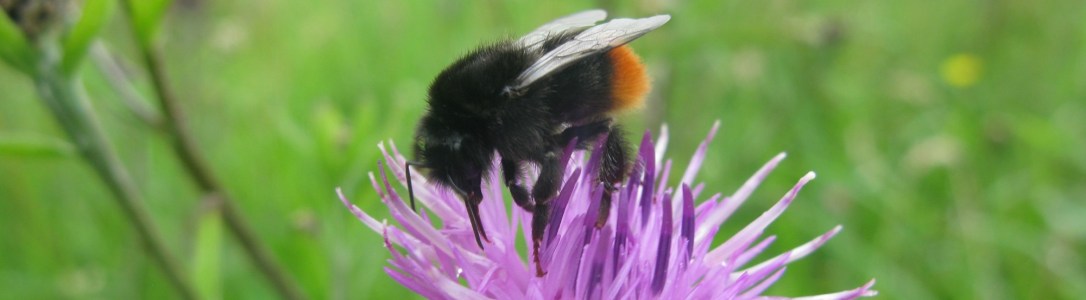
The project Jane and I put together aims to further research already carried out on a group of bumblebees known as B. lucorum agg. They are a cryptic complex meaning that the worker bees of four different species are indistinguishable by appearance. They are all white tailed with two yellow bands, one on the thorax and one on the abdomen. The four species are Bombus terrestris, Bombus lucorum, Bombus magnus and Bombus cryptarum (B. terrestris queens are distinguished from the other queens by their buff tail, however the workers are generally not distinguishable). Due to their cryptic appearance the only way to exactly determine the species is to do a genetic fingerprint test from a sample of their DNA. This is a robust method for species determination and, provided I get the hang of the lab techniques, I should be able to figure out which of the four species are living in which habitats across our chosen locations of County Fermanagh and Dublin city (cross-border bees!).

IMG_20180610_125617
Two yellow stripes and a white tail, but which species?

To get the DNA samples I was out “in the field” for a few weeks in Dublin and Fermanagh catching Bombus lucorum agg bees. I only need a single tarsal (foot) sample from each bee as this gives sufficient DNA to run the fingerprint test. I have had a fantastic time out and about catching bees to get the tarsal samples. I have learned so much about bumblebees, been to beautiful places and had great conversations with people enthusiastic about bees. I also managed to drag a few friends and family along with me. I took a few friends to the flower beds in Phoenix park, went with a group learning about Bumblebees with Bí Urban around Stoneybatter, went cycling between meadows in west Fermanagh with my Mum and canoeing to islands in Lower Lough Erne with my Dad. I’ve also been working on my farmers tan having been out and about during the recent hot weather!

blog pic 2
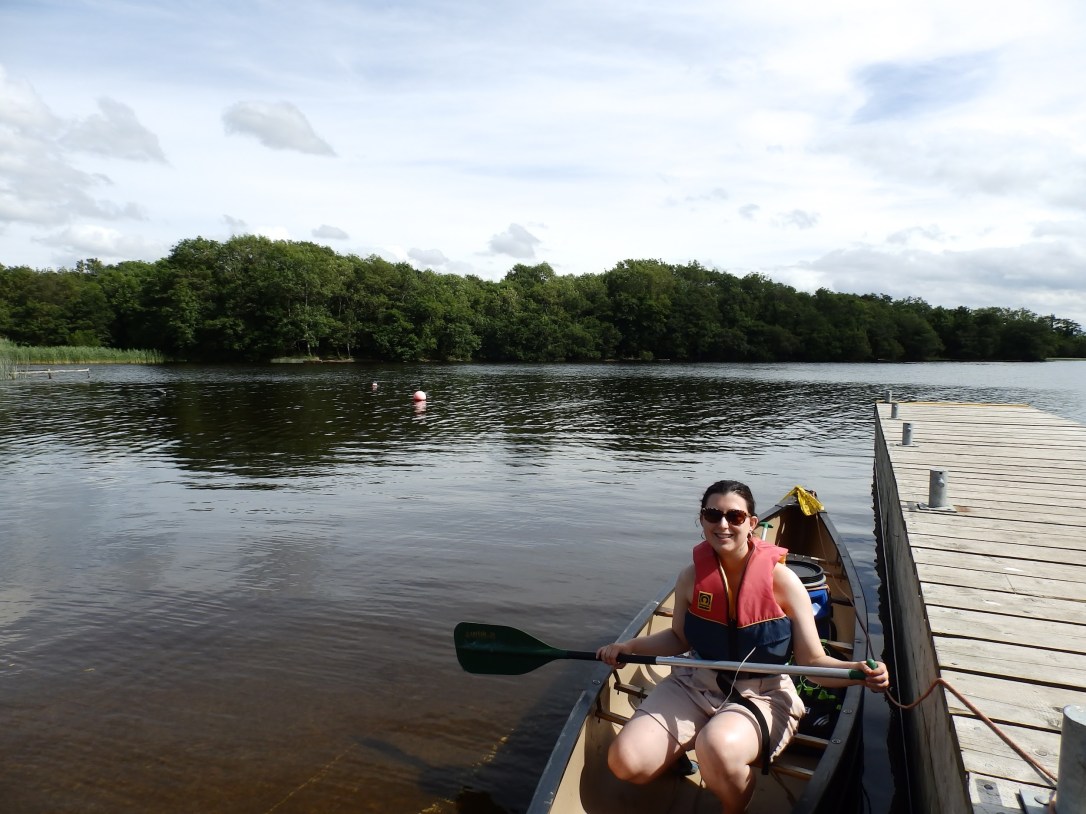
On the way to Inis Davar, Lower Lough Erne, Co. Fermanagh.

Having completed my fieldwork I feel enriched with the new knowledge which it has brought. I’ve seen brand new things, learned a lot about bumblebees and gained a whole new appreciation for the insect world, but I have also come to realise that bumblebees along with many other insect species are under major threat from human activity. With projects like the All-Ireland Pollinator Plan in full swing I have great hope that we can turn the tide of habitat loss and insect decline.

As for me – It’s now time for me to take all my samples to Jim Carolan’s lab in Maynooth and discover what I have caught. So I’m switching my net for a pipette.


Maeve McCann is an undergraduate Science student at Trinity College Dublin, and her project is supported by the C.B. Dennis British Beekeepers’ Research Trust.

PROTECTS (Protecting Terrestrial Ecosystems Through Sustainable Pesticide Use)

We have received funding from the Irish Department of Agriculture, Food and the Marine (DAFM) under their Research Funding programme for a new project called PROTECTS. We will provide baseline information in an Irish context to build towards mitigating the effects of pesticide use on terrestrial ecosystem services, focussing on pollinators and soils.

Picture1

This project brings together several of the members of the Irish Pollinator Research Network (IPRN) and is an interdisciplinary, multi-institutional 4-year project, starting 1st July 2018.

Dara Stanley (UCD) will lead the project, which involves researchers from Trinity College Dublin (Jane Stout), Maynooth University (Jim Carolan), Dublin City University (Blanaid White), and Teagasc (Karl Richards). Our findings will help to ensure that pesticides can be used safely while protecting wildlife, health and the environment, both in Ireland and internationally.

There are two PhD studentships currently available at TCD and DCU (details below). Successful candidates will join two other PhD students on the project team.

TCD studentship: Characterising pesticide residues in floral resources for bees

In this PhD project, the potential for pesticide contamination of floral resources as a result of translocation from soil will be evaluated. This translocation to floral products poses a major route of exposure of pollinators to pesticides. Working with other members of the PROTECTS team, we will identify four systemic pesticides which are a) extensively in Irish agricultural systems and b) potentially have negative impacts on pollinating insects. We will develop and validate extraction protocols for these pesticides from the floral resource matrices of nectar and pollen, collect samples from model species from field sites, complete laboratory-based chemical analyses and determine residue presence/concentrations in nectar and pollen to compare with soil-level contamination. In addition, methods for screening residues from nectar and pollen samples for rapid assessment of toxicity of floral rewards will be developed, and nectar extracts will be utilised directly in bee exposure experiments.

DCU studentship: Developing tools for pesticide detection and toxicity testing in soils and floral resources for bees

In this PhD project, we will collect soil samples from sites across Ireland and characterise these soils in terms of their physical and chemical properties, and their microbial communities. We will develop methods to extract pesticide residues from these soils, and analyse these extracts using GC-MS and HPLC-MS methodologies to determine which pesticide residues are present, and at what concentration. The extracted pesticide residues will also be used to determine their impact on pollinator species. We will also use the developed analytical tools to determine what pesticide residues are present in associated floral resource matrices for bees, in particular nectar and pollen. Finally, we will also develop a soil toxicity biosensor and apply this to screen the soil extracts.

PhD studentship available

PhD studentship: Integrating natural capital into Bioeconomic industrial applications (pdf)

We are seeking applicants with Bachelors/Masters degree (2.1 or higher) in natural/environmental science, natural resource management, or similar, preferably with knowledge and experience in natural capital, bioeconomy, and/or life cycle analysis.

A studentship, which includes a €18,000 stipend, plus €5,500 contribution to fees per annum, is available for 4 years from 1st September 2018.

20065932-4436-4ef8-a0d0-dbe04d4577e5

The PhD student will be registered in Trinity College Dublin, supervised by Prof Jane Stout (TCD) and Prof Cathal O’Donoghue (NUIG), and work as part of the SFI-funded BEACON-Bioeconomy research centre.

To apply: please send letter of application, outlining suitability for the post, and a CV with the names & email addresses of 2 referees, to Jane Stout stoutj@tcd.ie before 31st August 2018.

Project description: “Natural capital” comprises the world’s stock of natural resources, including all living and non-living components and associated bio-physio-chemical processes, from which flow goods and services which have benefits and value to human society. Natural capital is essential for a sustainable bioeconomy – it can be distinguished from physical capital (e.g. the factory that processes raw materials), social capital (e.g. employees harvesting and processing materials), and financial capital (e.g. the repayments on the operational costs). All types of capital are needed and an imbalance will reduce the capacity of the bioeconomy to function and threaten its long-term sustainability.

Natural capital stocks have been depleted globally, and although it is not about protecting the environment, the bioeconomy strategy could represent an opportunity to stop the loss of natural capital and the services that flow from it. However, integrating the natural capital approach into biobased industrial applications is challenging. One problem is in specifying and assigning “value” to natural capital in order to incorporate goods and services from nature into economic business models; another is making knowledge, tools and approaches accessible; and a third is reforming practices to align short-term private objectives with long-term public/societal ones.

This project will deliver a generic natural capital approach to developing bioeconomic activities in Ireland. This will involve determining impacts and dependencies (reliance on and outputs to) on natural capital across spatio-temporal scales (from local, regional, national to global; from cradle to cradle) for case-study applications, and developing general product rules.

Objective: Deliver generic and specific frameworks for integrating natural capital, tested on Technical Projects, applicable across industries

Methodological approach: Using an LCA approach and incorporating economic valuations, costs and benefits of alternative pathways can be determined. The project will further identify pressure points at which intervention could minimise potentially adverse impacts on natural capital.

Postdoc position available

We are seeking applicants for a post-doctoral research assistant (PDRA) position to co-ordinate and manage a multi-partner site network as part of an EU Horizon 2020 research project. The successful applicant will be based in the research group of Jane Stout in the School of Natural Sciences, Trinity College Dublin and will join the dynamic and interdisciplinary PoshBee[1] team.

poshbee logo

The PDRA is required to:

  • Liaise with site network managers to organise site location, bee deployment and sampling protocols
  • Collate and distribute methods for data collection and sample preparation; organise and facilitate a multi-partner methods workshop
  • Locate and manage the Irish sites, working with Irish partners, Teagasc and the Federation of Irish Beekeepers; collect and collate Irish samples
  • Mentor a PhD student
  • Participate in project meetings, assist with report-writing


Key skills

Essential:

  • Excellent organisation and time-management skills
  • Excellent face to face communication skills – with project participants, farmers, scientists etc.
  • Excellent written communication skills to prepare clear and precise documents and reports
  • Excellent data handling skills to collate and manage data sets
  • PhD in agroecology or similar
  • Analytical skills including quantitative GIS/landscape ecology
  • Full clean driving licence (valid in the Republic of Ireland)
  • Willingness to travel both within Ireland and overseas

Desirable:

  • Knowledge and interest in bee health science
  • Experience in conducting fieldwork in Ireland
  • Languages skills – must be fluent in English, other languages beneficial


Salary: This appointment will be made at point 1 of the PDRA scale from the Irish Universities Association Researcher Salary Scales i.e. €36,854 per annum (gross) for 18 months from 1st July 2018.


To apply: please send letter of application, outlining suitability for the post, and a CV, to Jane Stout stoutj@tcd.ie before 13th June 2018. Interviews will be conducted Monday 18th June (in person or via Skype).


Project description

Pollinators face multiple threats including agrochemicals, pathogens, habitat loss and climate change (Potts et al. 2016). A major new project PoshBee (Pan-European Assessment, Monitoring and Mitigation of Stressors on the Health of Bees) aims to understand the impacts of these multiple pressures on a range of bee species and develop novel tools to help reduce risks and negative impacts. Our findings will help to ensure that pesticides can be used safely while protecting wildlife, health and the environment, both in Ireland and internationally.

The PDRA will co-ordinate and facilitate replicated experiments over eight partner sites, including Ireland. At each site, the same experiments will be implemented and samples will be dispersed to other partners for analysis.

bilingual-trinity

[1] This project has received funding from the European Union’s Horizon 2020 research and innovation programme under grant agreement No 773921