Surveying flying mini-beasts at Dublin Zoo

By Alison Hall

This summer, myself and a fellow classmate were fortunate enough to have been given the opportunity to start embark on very exciting research projects. The subject of these projects – which I’ll admit may seem off-putting at first, but I promise with a short explanation you’ll be humming and nodding your head with interest – is insects. Flying insects to be exact. Flying insects in Dublin Zoo. See, this is where I know I’ve caught your attention.

Myself and my classmate, Mark Browne, are final year Zoology students studying in Trinity College Dublin and we are working with Dr. Jane Stout as our supervisor on this project. Jane put us into contact with Sandra Molloy, the research and conservation coordinator in Dublin Zoo. Together, we are investigating the species richness and abundance of flying insect species in different sites around the zoo. I myself am focused on comparing areas full of flowering plants to wooded areas, while Mark is comparing areas full of bamboo to the same wooded areas.
Alison1
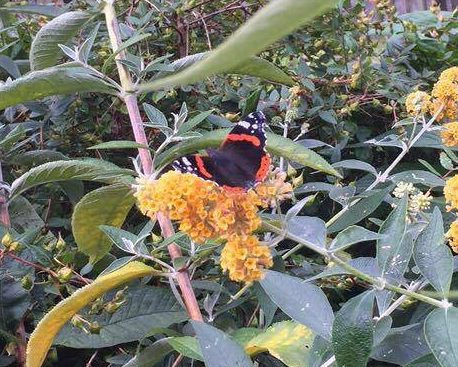
Red Admiral butterfly feeding on nectar at Dublin Zoo

The first question you may ask, is why on earth would anyone want to do that? And there is a very simple answer: for conservation. Dublin Zoo is involved in a whole range of conservation projects around the world concerned with animals such as snow leopards, orangutans, and also with our own native Irish wildlife. They have records of these vertebrates and the ones which they provide habitats for in the zoo. There are very few records, however, concerning the invertebrate species which live in the zoo. This is where we come in. While the National Biodiversity Data Centre does have some records of insects which have been spotted in Dublin Zoo, we hope that our findings will be a very helpful base for further data which may be collected in the future.

alison3.png
Pan traps used to capture flying insects

During the summer months, myself and Mark, all kitted out in Dublin Zoo high-vis vests, set up pan traps in nine different sites across the zoo. Two traps were set up per site to monitor the different insects which each area supported. These pan traps mostly caught very small flying insects such as gnats and midges. These tiny insects can be very difficult to identify in the field and for this reason were brought back to a lab on Trinity campus where we used microscopes to help us identify them. We also carried out passive transect walks through the sites and took note of all of the larger flying insects, such as bees and butterflies, which we observed in our path.

The combination of these two sampling methods gave us a better impression of what insects were living in these areas, and we had a lot of fun in the process! Most of our field work was done early in the morning before official opening hours. Let me just say there is nothing like being the only two people in the zoo and listening the wolves howling, the lions roaring, hearing all the animals in the zoo waking up.

Alison2
One of the mini-beasts found in our traps

We were even recorded for the Dublin Zoo program which will air at some point in the future on the television. Although we felt a bit silly at times it was a fun experience that we were glad to be a part of. All in all, it has been an incredible summer and we have worked with such amazing people as we carried out this research. We hope that our findings prove helpful and useful in the future to others investigating the insects which inhabit not only Dublin Zoo, but the whole country. We are both very grateful to have been given the chance to work on these projects in such a prime location and we really enjoyed ourselves.


About the author: Alison Hall is a final year Zoology student at Trinity College Dublin.

To bee, or not to bee?

This article from Professor Jane Stout was originally featured in the Irish Times on June 13th. Find the original article here

“Are you off now for the summer?” As a university professor, I get asked this question a lot at this time of year. People are often surprised when I tell them that this is when things are at their busiest! I’m a pollination ecologist, which means that I study the interactions between plants and insects, especially bees. Since bees hibernate during the winter and flowers only bloom in the summer, these brief months when the students are off campus and the bees are buzzing around are the only time of year I can get outdoors and actually do some science first hand. Except these days I don’t get the chance very often.

The higher you get in academia, the less you get your hands dirty. Most of my research time is spent in the office planning experiments and applying for funding, managing the researchers who are actually outdoors conducting them, writing and talking about the findings, and occasionally gazing wistfully out of my office window and remembering the halcyon days of my PhD studies, when I spent my time in flowery meadows, chasing insects with my trusty net. Ah, those were the good times . . .

WildFlowerLawnsandMeadows

Every now and then, though, I do get the opportunity to go back to my field ecology roots. The last time was in Burkina Faso – a landlocked and extremely poor West African country. It was 38 degrees in the shade and dry as a bone, and while it’s about as unlike Ireland as it’s possible to get, I was there to study a situation not unlike ours at home: how land management and agricultural intensification affected populations of bees, and how this in turn has affected the pollination of an economically significant crop.

Everyone knows that bees are important for food production: 75 per cent of global food crops, which result in roughly a third of all crop production, are pollinated by bees and other pollinators moving pollen between flowers, enabling fruit and seeds to develop. In Ireland, bees are a crucial link in the supply chain of apples, raspberries and other soft fruits, which is why bee decline (a third of Irish species are threatened with extinction) is a major problem for the bottom lines of food producers and the healthy diets of people.

Protecting the wild bees who do the job for free makes more sense than spending money buying in commercially produced hives of bees, who may also bring with them diseases and parasites that can make our native wild bees sick, or employing people to do the job manually, which is vastly expensive. This is one of the reasons we developed the All-Ireland Pollinator Plan, which aims to make Ireland a place where bees can survive and thrive. By protecting what we have in terms of pollinator-friendly habitat, providing extra flowers and nesting sites and reducing the use of agrochemicals, we can go a long way to ensuring these insects are strong and healthy to keep doing their important work.

1491497168_Bee hotel 1
Programmes such as the All-Ireland Pollinator Plan or our own Campus Pollinator Plan are essential for protecting the insects that give us so much for free!

In Africa, I was studying shea – the tree from which we get the rich, fatty butter that is used in a wide range of confectionary products, but also in cosmetics and pharmaceuticals worldwide. Shea trees rely on bees to move pollen between flowers so that shea nuts can form. The nuts are then collected by women in the community and processed into shea butter to be used locally and also exported. So in this case, the bees are also helping to provide products with socio-economic significance to some of the poorest women in the world.

Like in Ireland, Burkina Faso’s bees are increasingly hungry and homeless, threatening shea production and the livelihoods of these women. Our job as researchers was to figure out first of all whether maintaining fallow land and other bee-friendly habitats increases the number of bees visiting flowers, and hence their pollination. And second of all, whether if we had more bees, this would increase the shea yield, and thus income for local communities.

But when I say “we”, I really mean my post-doc researcher. I spent a week out there setting things up, and then left her in a remote town hours from the capital Ouagadougou to do six months’ hard graft of surveys and experiments.

IMG_6506

So while I’m in my office this summer, slaving over paperwork and gazing mournfully at the bees buzzing by my window, I half long for fieldwork and chasing bees around with a net, but I confess I also half wish that I did have the summer off.

Jane Stout is a Professor in Botany, in the School of Natural Sciences at Trinity College Dublin. She has been researching bees and pollination since 1996 and is deputy chair of the AIPP Steering Group.
A hoverfly feeding on nectar from a sunflower inflorescence.

Pollination Research in Trinity: Hoverflies in Farmland

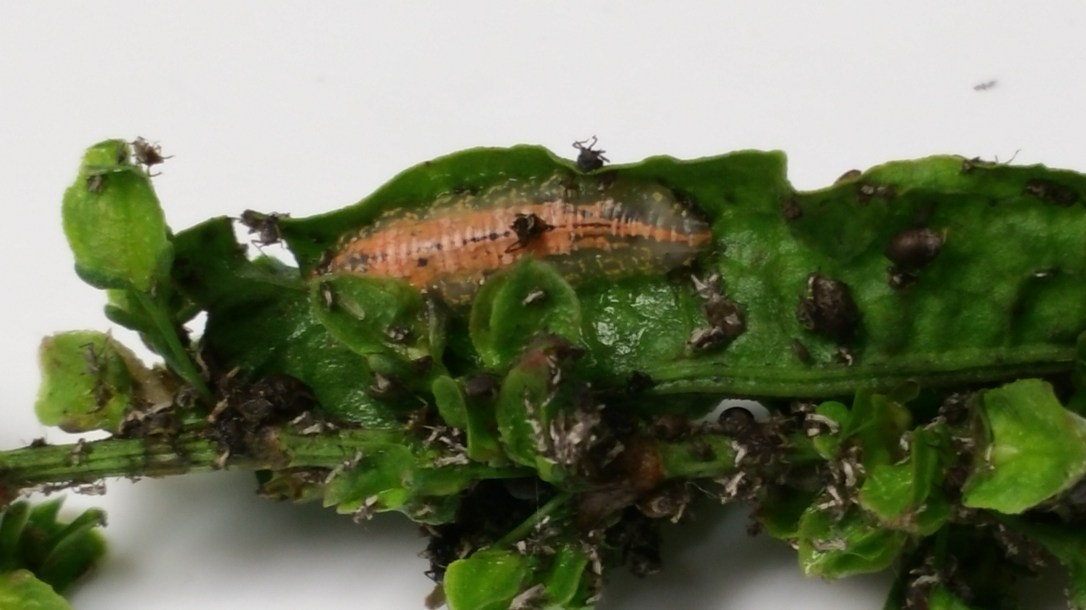
As a first year PhD student at Trinity College Dublin, supervised by Professor Jane Stout, I’m studying hoverflies in agriculture, how they benefit the farmers, and how farmlands can benefit and threaten the hoverflies. This year, I’m focusing on predatory hoverflies (those with larvae that feed on aphids and protect crops) in oat fields.

Picture#1
Hoverfly larvae eating aphids on a dock leaf. Image credit: Sarah Gabel.

But it’s not just the larvae that are beneficial, but the adults too – feeding on pollen and nectar, and thus pollinating flowers in the process.

Though hoverflies are my focus, they aren’t the only pollinators and predators I’ve been seeing out in the field. There have been quite a few bees as well, pollinating flowers right alongside the hoverflies.

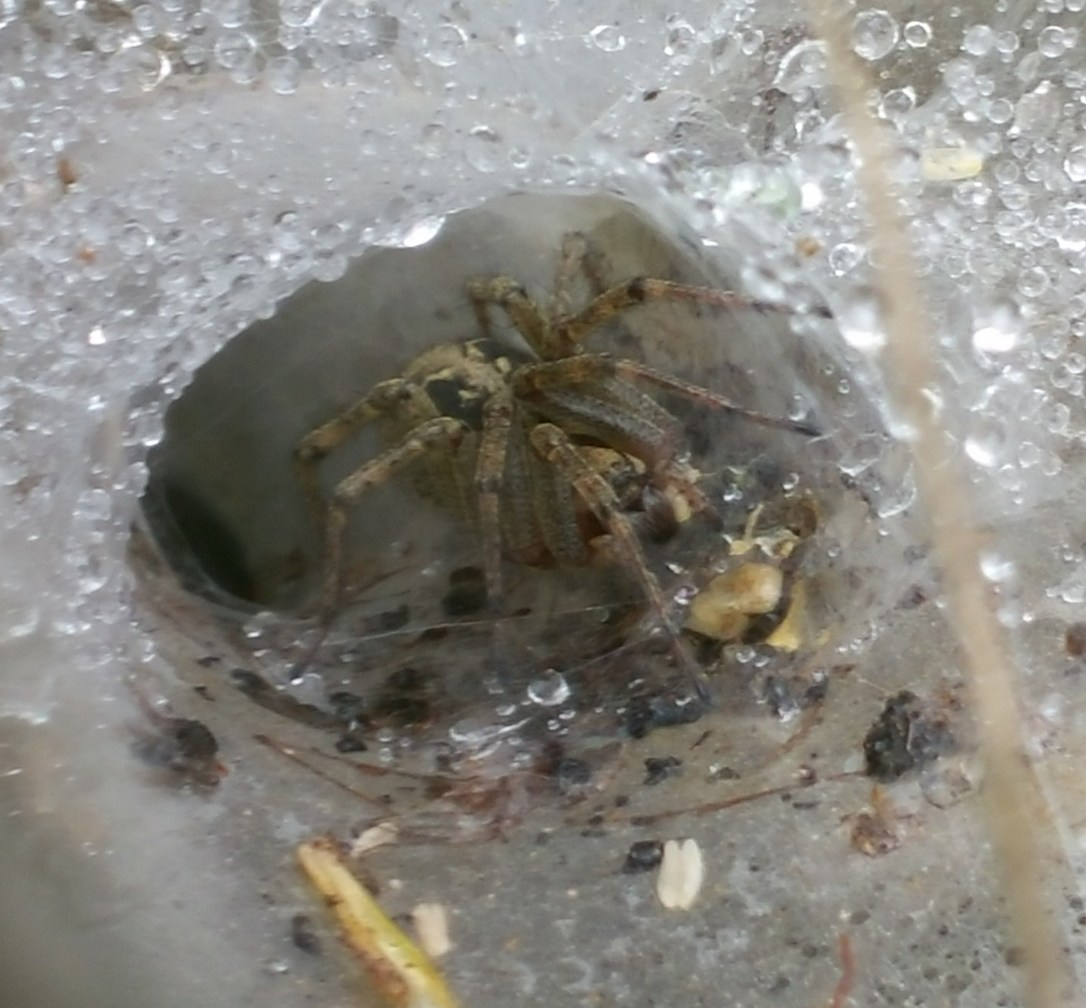
And there are a variety of aphid predators out there too, like spiders, parasitoid wasps, and ladybirds.

Picture#2
Spider peeking out from its funnel web. Image credit: Sarah Gabel.

Because of the important services of pollination and pest control that hoverflies offer farmers, I’m trying to identify some characteristics in and around the crops that might attract them to the fields. I’m paying particular attention to hedgerows, which provide flowers as food as well as shelter from wind and rain.

It’s been a wonderful field season so far, and it’s nice to see all the beneficial invertebrate activity out there keeping the oats and flowers happy and healthy.

Sarah Gabel (@SarahG10J) is a PhD student at Trinity supervised by Professor Jane Stout. She is studying how pesticides impact on hoverflies in agricultural landscapes. Sarah’s PhD is funded by the Irish Research Council (IRC).

Pollination Research in Trinity: Agrochemicals and Plant-Pollinator Interactions

I am a postdoctoral research associate at Trinity College Dublin. My advisor is Prof. Jane Stout and I am funded on a Marie Curie Sklodowska Fellowship. It’s a two year program for foreign scholars to study in the EU, and my proposal for the fellowship addressed the impact of agricultural runoff (fertiliser and herbicide) on the structure of the interactions between pollinators and the weedy plants that grow on the edge of agricultural fields. To better understand the way that low concentrations of fertiliser and herbicide can change the way plants and pollinators interact, I have designed a field experiment.
TCD 1 (4)
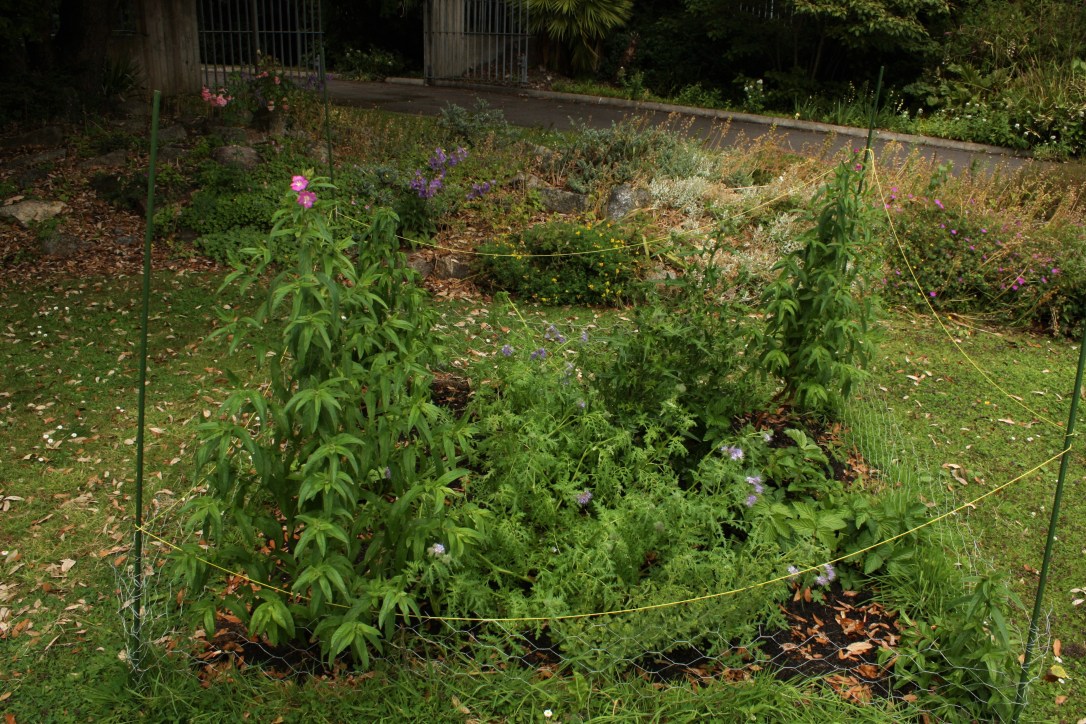
One of my research plots. Image credit: Laura Russo.

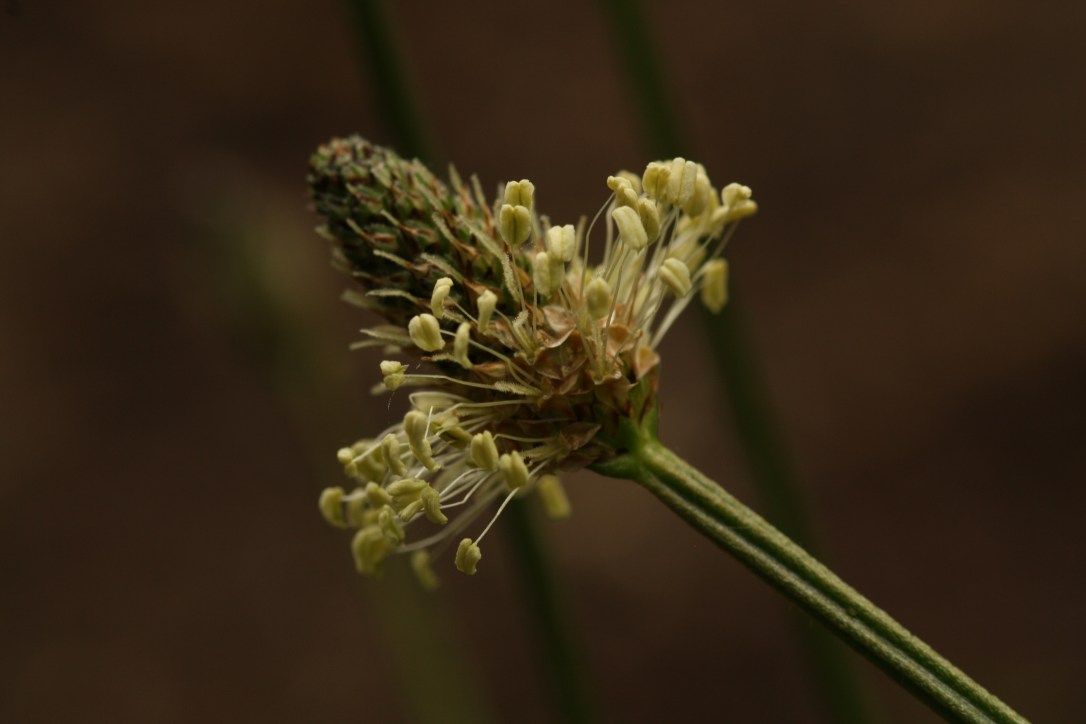
The field experiment involves 4 treatments: a control (only water), and very low concentrations of herbicide, fertilizer, and a combination treatment of fertiliser and herbicide. This means that I have four experimental plots, replicated at four sites in south Dublin (16 total plots). These 2x2m plots are then planted with the same community of weedy plants: Plantago lanceolata, Filipendula ulmaria, Epilobium hirsutum, Cirsium vulgare, Origanum vulgare, Hypochaeris radicata, and Phacelia tanacetifolia. All of these are native perennials to Ireland, except the Phacelia, which is both non-native and annual.

IMG_6413
The flowers of Plantago lanceolata. Image credit: Laura Russo.

I’ve been applying the experimental treatments throughout the spring, and once the plants began to flower, I started collecting data on the interactions between the plants and their pollinators in the different treatments, to see if pollinators react differently to plants that have been exposed to low levels of herbicide or fertilizer.

I’m accompanying this field experiment with a glasshouse experiment where I treat different potted individuals with the same low concentration runoff levels and then measure changes in their pollen and nectar, a likely mechanism for any possible changes in their interactions with pollinators.

IMG_6468
Epilobium hirsutum flower with pollen. Image credit: Laura Russo.

It’s too soon to tell whether my treatments are having an effect on the pollinators, but I am gathering a lot of exciting data, both on the health of the plants, and on the nature of their interactions with insects.

I’m also interested in adding new replicates next year, so contact me if you have space for four 2x2m pollinator garden plots!

Dr Laura Russo (@lrusso08) is a postdoctoral research fellow at Trinity funded by a Marie Curie Sklodowska Fellowship. She is studying the impact of agricultural runoff, both fertilizer and herbicide, on communities of plants and their insect pollinators (https://www.tcd.ie/Botany/staff/stout/project-effects-of-fertilisation.php).

The Buzz From The Hive: July

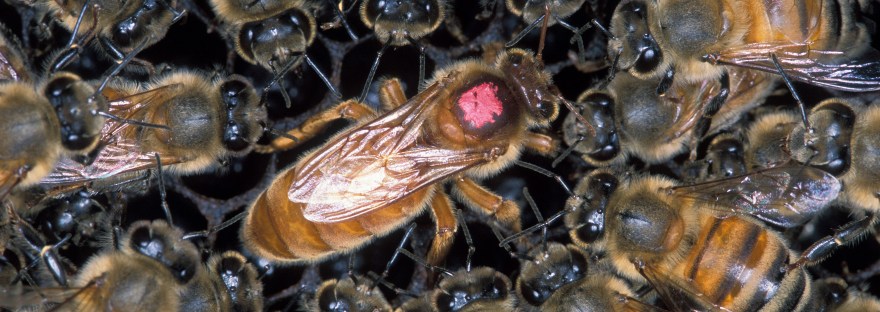
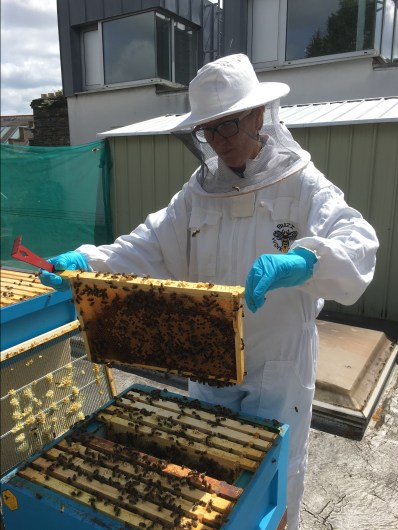
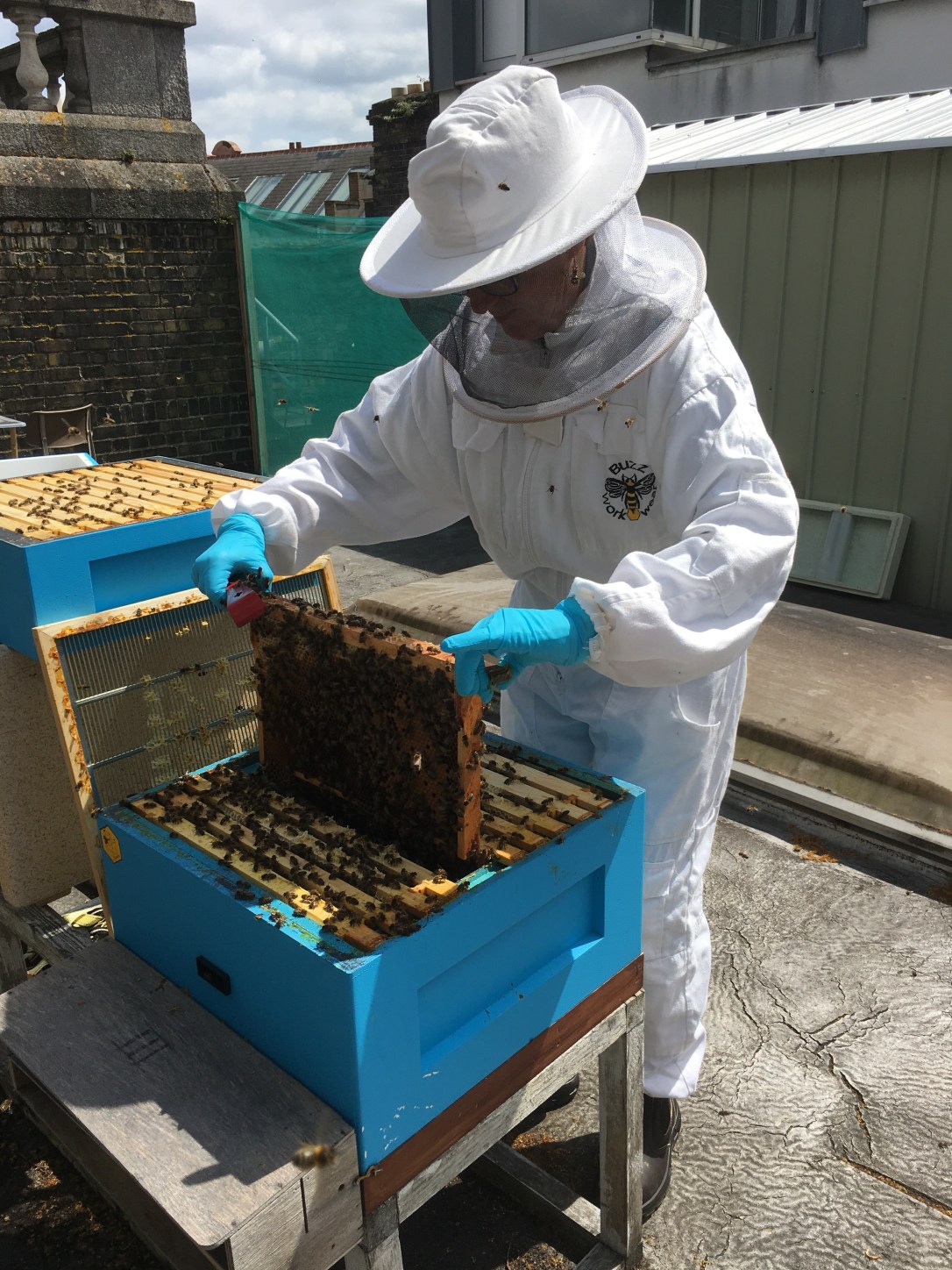
The big news for July (and other beekeepers will appreciate how big this is!) is that our colony has “survived” the swarming season largely intact. This has been both helped and hindered by our highly productive, and newly coroneted Queen Mebh. As colonies grow and fill up the spaces in their hive, they want to swarm to produce a daughter colony. As this can weaken the original colony, we try to manage the process. This year in mid-June, we achieved this by creating a “split”. This is where you move a queen cell (a modified version of the standard egg cell which is big enough to house a growing queen), along with several frames of brood (bee larvae), and several hundred house bees into a miniature hive known as a “nuc”. A full sized “national hive” has 11 frames, whereas a nuc contains just 6 frames, just enough space for a developing colony.

image002

The queen emerged in the nuc  around the 22nd of June, and is now laying. Over the next couple of months, the colony will hopefully grow big enough to sustain the queen over the coming Winter period. To add to the apiary’s genetic diversity, we acquired a well-established nuc of bees last week, thanks to a generous gift from a beekeeper in Kilternan. This nuc will graduate to a full sized colony in August. We are delighted to be on track to meet our goal for 2017: to have two hives and a nuc of bees going into the Winter

In the meantime, our bees have also been participants in two research projects. The first is a study of the pollen the bees are collecting, using a pollen trap at the entrance to the blue hive. Pollen from different types of plants can have different shapes, and by examining the pollen under a microscope, it’s possible to identify how broad the honeybees’ diets have been. Our colony is being compared with pollen taken from an experimental bumblebee colony located on the Parson’s building alongside our honeybees. The results will be evaluated against 8 other apiary sites in the city and outskirts where the experiment is also being conducted. The second is a study being carried out by the University of Western Australia on honeybee venom as a potential ingredient in breast cancer treatment. We provided 40 worker bees for venom extraction by a visiting researcher, and hope we have been able to contribute to a successful outcome for this important initiative.


As we head towards the end of summer we hope our bees will find a bounty of nectar to put into their stores, and a little extra to cover their rent. Tá samhradh sona!

image003