Written by Fernanda Azevedo, whose PhD work focuses on how farmers feel about pollinator conservation in Ireland
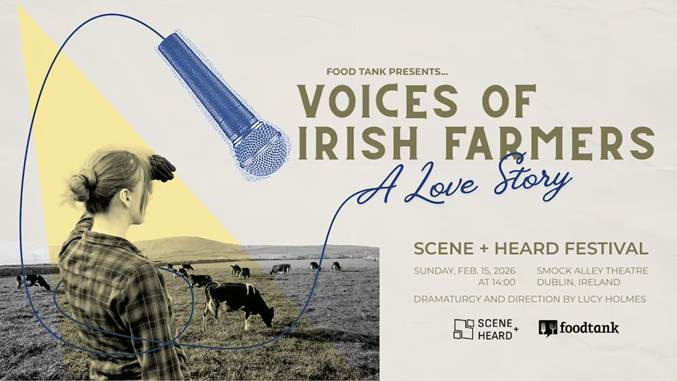
After a stretch of very little sun in Dublin, on a lovely afternoon, the day after Valentine’s Day, we went to the Smock Alley to watch a love story. No ordinary story, but one carrying the weight of the Irish women who chose to be farmers, in what is a very male-dominated profession in Ireland. The love they have for their farms, their animals and the responsibility to the environment and the food they produce.
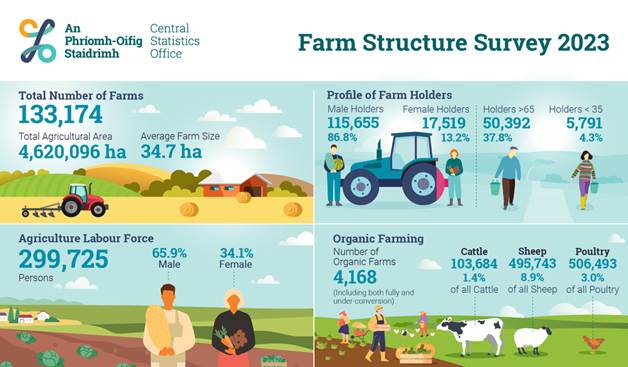
According to the CSO (Central Statistics Office) in 2023, only 13.2% of farms are owned by women.
We had the opportunity to get to know and celebrate the story of three generations of women farmers, and we were able to taste a little piece of their farms in beautiful bites that represented their stories.
That afternoon felt like stepping into three living, breathing farms and into the lives of the women who sustain them. Through their stories and the flavours they shared, we experienced agriculture as something deeply personal, rooted in family, resilience, community and care.
Sophie’s story reminded us of the determination required to challenge gender bias and build confidence in spaces that are not always welcoming. Carina’s journey highlighted the power of diversification, community bonds and generational strength, showing how farming is sustained not only by land but by people who show up for one another. Ailbhe’s path revealed the courage it takes to reimagine farming, to centre nature, education and biodiversity while navigating economic and social tensions and the power of being part of a community to a farmer.
Together, their voices carried a common thread: farming is not just production; it is stewardship, memory, responsibility, community and hope. It is early mornings in harsh weather, unseen labour, difficult decisions, and unwavering commitment. It is also sweetness, like yoghurt, smoked cheese and honey, created through collaboration, persistence and care.
Leaving the theatre, it was impossible not to feel a deeper appreciation for the food on our plates and for the women who, despite representing only a small percentage of farm owners in Ireland, are shaping the future of agriculture. Their stories invite us to slow down, to question the systems behind our food, and to recognise that farming can be many things: innovative, community-driven, nature-centred and profoundly human.
Sophie Bell
The first to tell her story was Sophie Bell. She is a young farmer from Co. Cavan who farms 57 acres while also working full-time off farm as a social media advocate for agriculture and young women farmers. Originally, it was a dairy farm with her grandad and gradually became a beef farm with her dad. In 2022, Sophie entered a partnership with her father and started contract rearing dairy heifers. Not by coincidence, the bite that represented her farm was a whipped yoghurt with milk curd, lemon and dill. A very light yoghurt with a gentle acidity from the lemon and the surprise of dill on a slightly crunchy base.
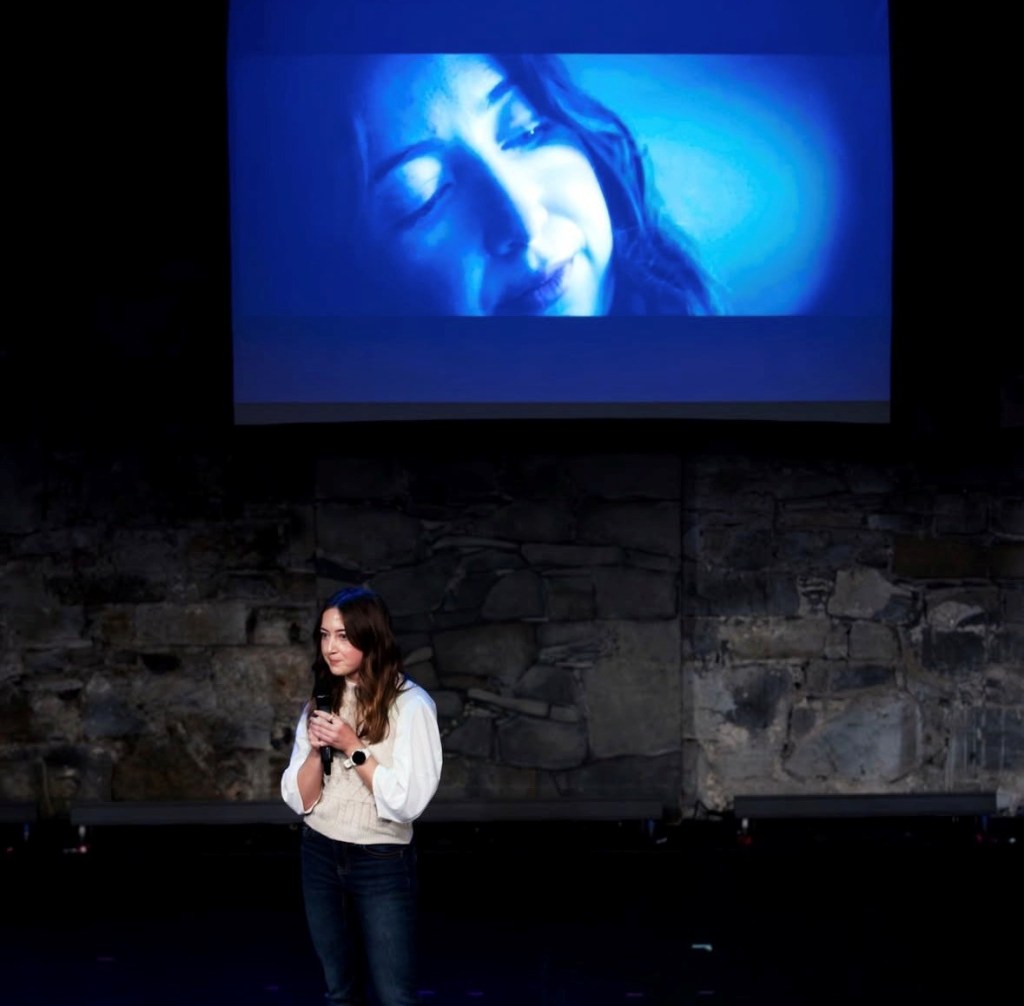
She tells how, in her teenage years, she became interested in the farm and got more involved in the farm duties. Sophie recognises the role of women in her life in inspiring, encouraging and believing in her abilities. Her mother was her inspiration as she balanced a full-time job, family care and farm work. Sophie highlights that this work, typical of many women in agriculture, is often unseen and uncelebrated.
Sophie says that at school she did not feel very confident, but her agricultural science teacher believed in her and encouraged her to apply to Harper Adams University, helping her secure a place and pursue a degree in agriculture.
Another woman farmer was also essential in building Sophie’s career. This dairy farmer, besides having to take care of the farm with a large number of animals, had three young children. But she believed in Sophie and in her competence, work ethic and interest in learning. Sophie recognises that without this woman, she probably would not have her social media account.
Her page now has almost 100k followers, and it is a platform for advocating for agriculture and women farmers. Through this platform, she has built a community and inspired young girls to consider farming careers. Sophie proudly shares about a girl who told her, “When I’m older, I want to be just like you”.
Sophie also reflects on the subtle but persistent and mentally exhausting gender bias she faced in agriculture, from exclusionary language (e.g., an event where they kept saying “who is a dairy man”, “who is a beef man”) to assumptions about gender roles (a planning letter addressed to her, however, the letter said “dear sir”).
Carina Roseingrave
Carina Roseingrave is a full-time farmer at her family-run Burren View Farm outside Crusheen, County Clare, where she farms alongside her brother on 350 acres.
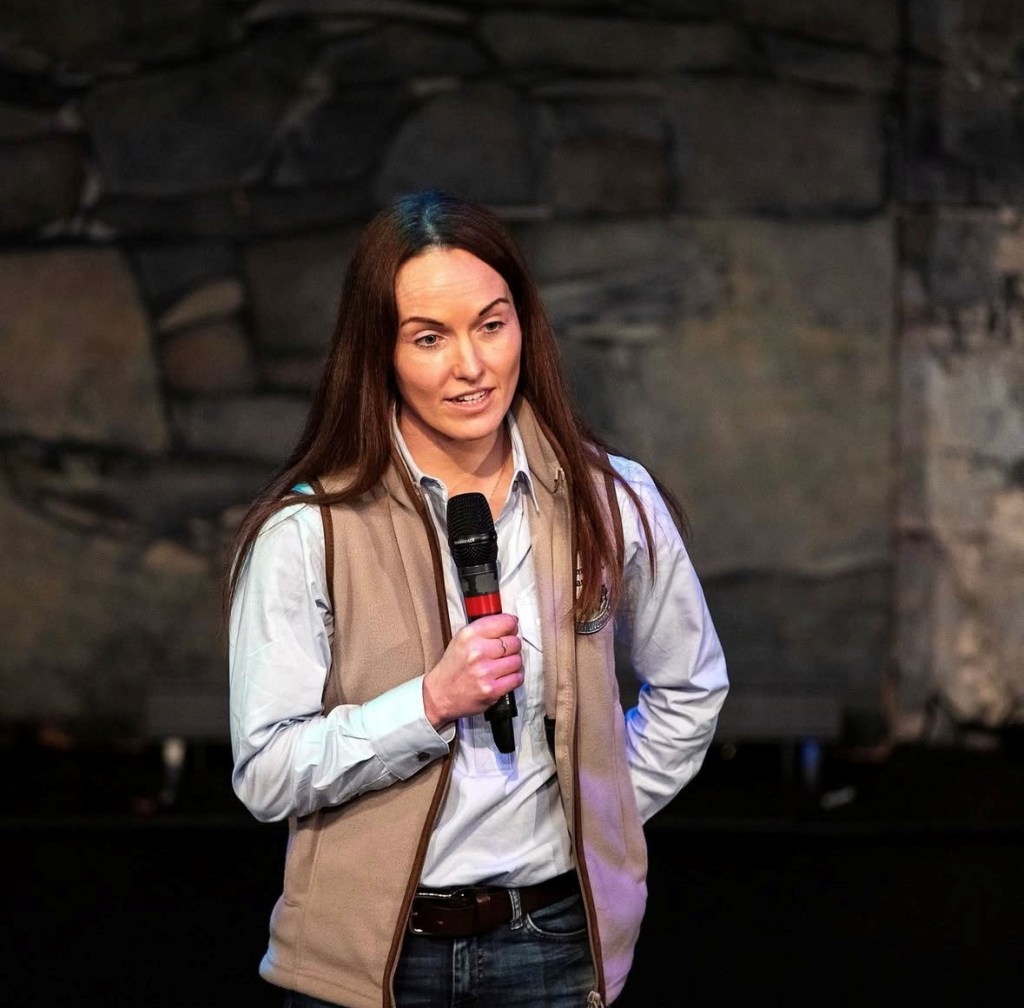
Burren View Farm had always been a suckler farm, for generations, until 2017, when Carina and her brother decided to diversify to make the farm sustainable for them to work full-time. Besides the pedigree Charolais and Limousin herd, they tried dairy farming due to some experience her brother gained while travelling abroad. Despite having no prior experience with dairy farming, Carina now takes pride in and enjoys her mornings seeing the sunrise (and the sunset), bringing the cows for milking. To honour her farm, using milk from her cows and eggs from her hens, she brought to us a smoked egg mousse with aged Charleville cheddar and chive. The taste was glorious: the smooth cheese, the creamy texture of the egg and a hint of chives wrapped in a light but firm crust.
Burren View Farm is now a milk supplier to Kerry Dairy Ireland. With this company, they learned quickly how to be dairy farmers, but something that drove them was their dad’s motto: “If you are going to do something, do it right”, and of course, their concern to keep food and nature connected, producing high-quality milk, beef and eggs.
Carina had her mother and grandmother as examples. Since her dad passed away in 2002, her mam had to take care of five children while working a full-time job. Her grandma lived with them and took care of the children. Carina speaks with emotion about her grandma’s garden, where she grew many different vegetables and kept a few hens, so from a young age, she knew where food comes from.
She praised the care that farmers have for the food they produce, as every day, regardless of the weather (which means a lot in a country like Ireland), they get up to milk their cows, take care of their crops, collect eggs and look after their animals. She then drew attention to how lucky we are to have these products easily available in the supermarket.
Community is very important to her. In 2020, after her mam recovered from cancer, they ran a charity event where they raffled their prized Charolais heifer, Snowdrop. They raised over €6000 for charity to give back to the community. The winner of Snowdrop, a farmer in Donegal, kept in contact with them, sharing information on her wellbeing, her calf and everything, forming a lasting friendship that reflects the strong bonds within agriculture. This experience encouraged them to further develop their pedigree herd.
Carina emphasises the importance of diversification, sustainability and community in modern Irish farming. She is passionate about showing cattle at local agricultural shows and takes pride in seeing her young daughters participate, passing on farming skills to the next generation. Inspired by the strong women in her life, she hopes to continue promoting appreciation for where food comes from and to support the future of Irish agriculture.
Ailbhe Gerrard
Ailbhe farms organically over 80 acres outside Nenagh, Co. Tipperary, on a beautiful lakeside farm along Lough Derg. She describes her land with pride and admiration; she talks about the hills, the fields, hedges, the shores of Lough Derg and her curious and courageous sheep. She farms organic oats (for our porridge) and organic barley (for our whiskey and beer), and she could not leave out beekeeping, which she highlighted as very important to her.
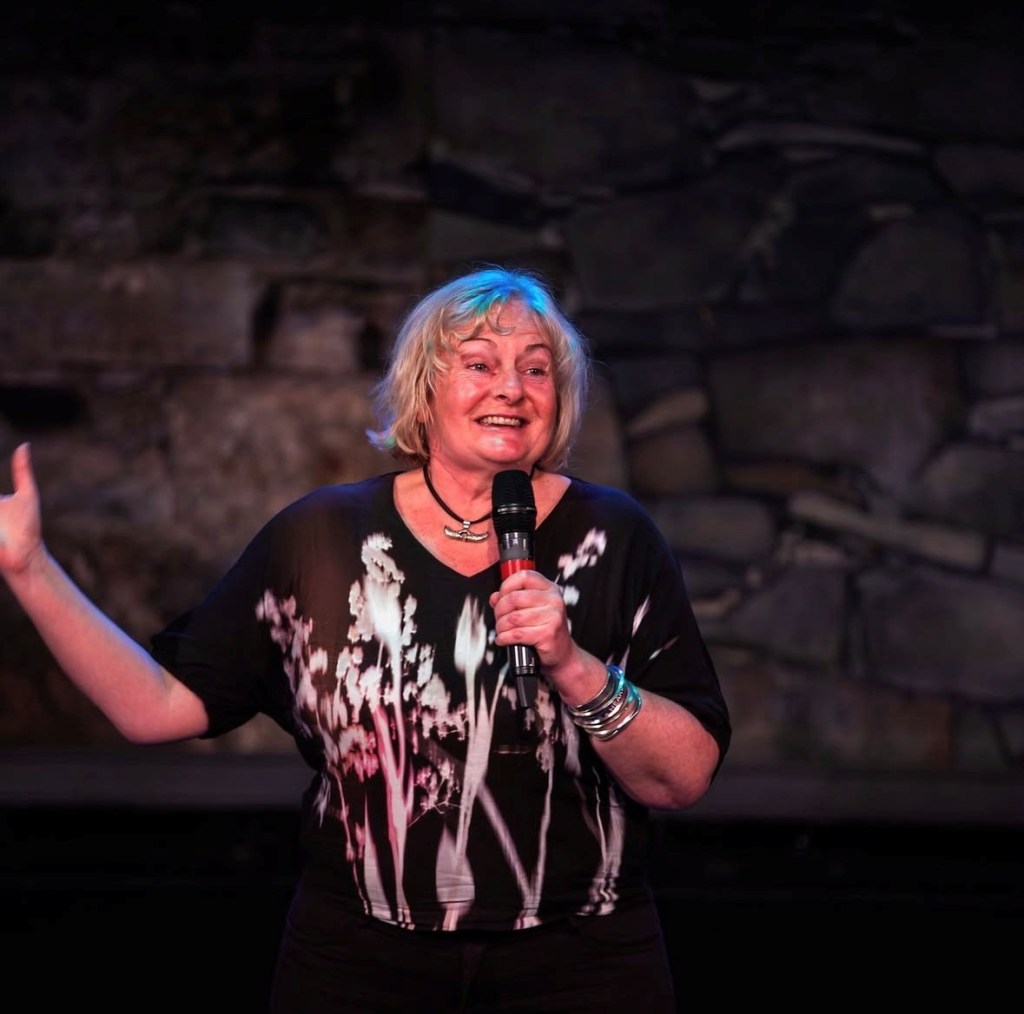
She remembers that this piece of land is very dear to her because it is part of her childhood memories. She grew up very close to where she farms now, where her big family used to grow vegetables, had a few hens, turn hay by hand, and overall lived a very outdoorsy lifestyle. She acknowledges the role of having horses and hens in learning the land and how to grow food. She became a farmer later in life. She moved to the city and became a project manager for construction, but the memories of the Shannon were something she couldn’t ignore. So she moved back to where she grew up and decided that a little piece of land would be enough for her. She asked the owners of that piece of land that she remembered from childhood if they would sell it to her; they agreed, and now it is Brookfield Farm.
The land wasn’t always organic. After decades of the land being used for intensive barley production for animal feed, Ailbhe converted it to organic production and made it much more diverse. She introduced sheep, broadleaf woodlands, orchards, and, obviously, as a beekeeper, she brought the Native Irish Black Bee (Apis mellifera mellifera). Which brings us to the food that represents her farm: a beautiful panna cotta on a bed of chocolate, which seemed to me to be slightly bitter. Of course, the sweetness of the dessert was the highlight: honey, together with thyme and hazelnuts on top to bring a crunchiness to it. A perfect dessert to represent the energy Ailbhe brings.
From the beginning, Ailbhe wanted to bring people into her refuge, inspired by the bees and their sense of community: “the ultimate collaborators and community builders”. She wanted to show people how food is produced, to be an agroecological, creative and educational hub. Ailbhe highlights that there is a tension between caring for the farm, in the sense of creating space for insects and other wild animals, but also making a livelihood. This kind of tension is very difficult for many farmers because, according to Ailbhe, economically, farmers are not doing very well due to the commodity-driven export model that we have.
She reported tensions with her neighbours for choosing to follow the organic path. She faced very strong opposition, including a planning permission that was invalidated, and had to prove that the road that accesses her farm is public and not private, as others were claiming. A more intimidating challenge was the illegal snaring of badgers on her property. She believes that someone invaded the farm and set up the snares.
Despite the challenges, Ailbhe did not give up and continued with her plans. She says it was very costly financially but also in energy, and what helped her were her friends. If it were not for her family, who were very supportive, her friends, and the communities and networks she is part of, the path would have been much more difficult, and the outcome could have been very different.
She then closed her talk with an invitation to visit her thriving farm to see how farming can be, a different kind of farming, a nature-centred one. She also gave a small shout-out to her upcoming book, so keep your eyes peeled – I know I will!
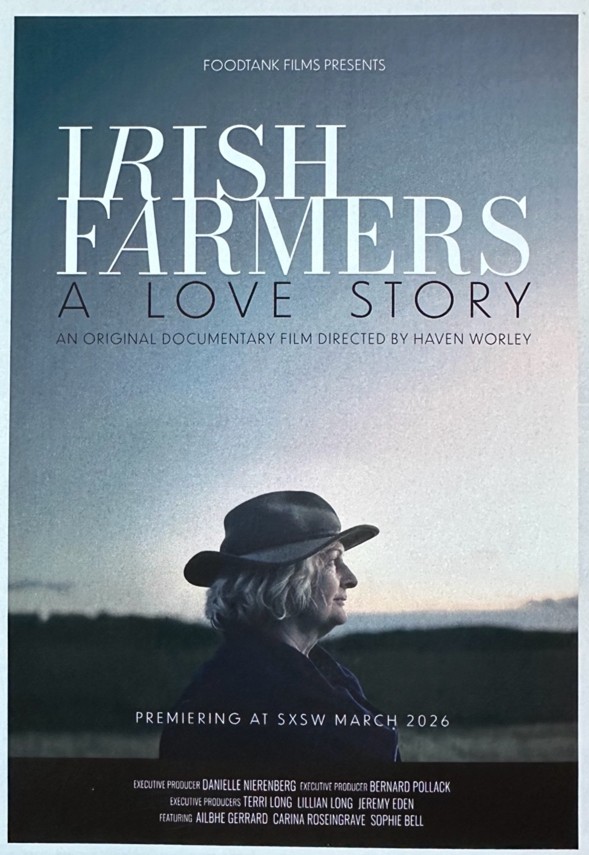
If you missed the event, don’t worry! Their stories will be premiered this March, 2026, in a documentary called: Irish Farmers: A Love Story, directed by Haven Worley.
Many thanks to Dr. Sarah Larragy and Moya Owens for the editing contributions.
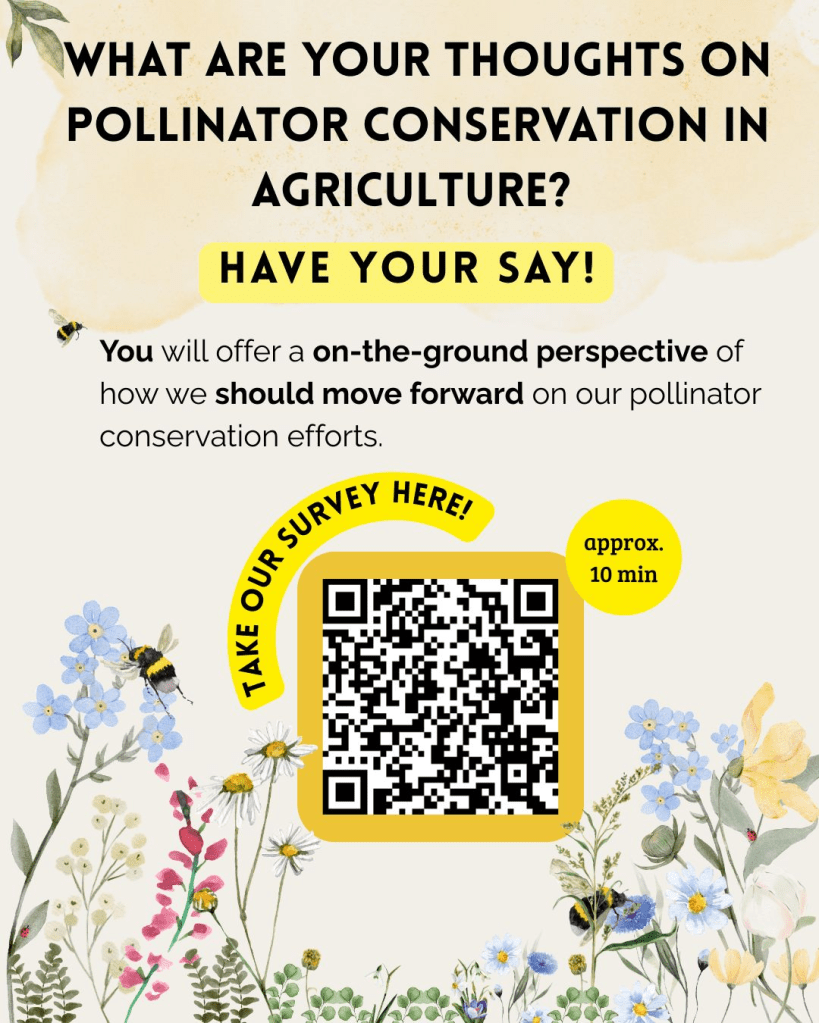
If you are a farmer, and want to contribute to Fernanda’s research, please complete her survey via this link or the QR code below

 Campus Buzz