Written by Prof Jane Stout, co-founder of the All-Ireland Pollinator Plan and the Irish Pollinator Research Network (IPRN), and Research Module lead.
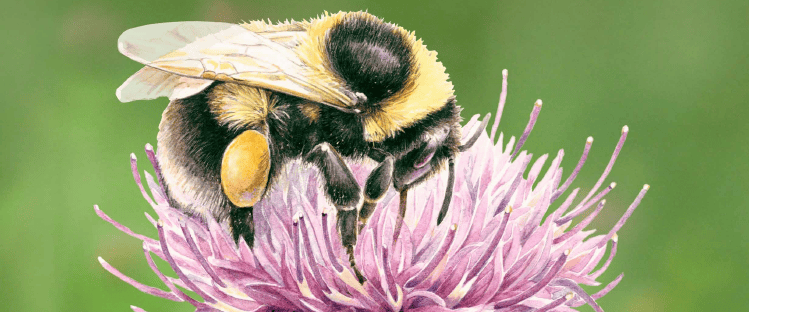
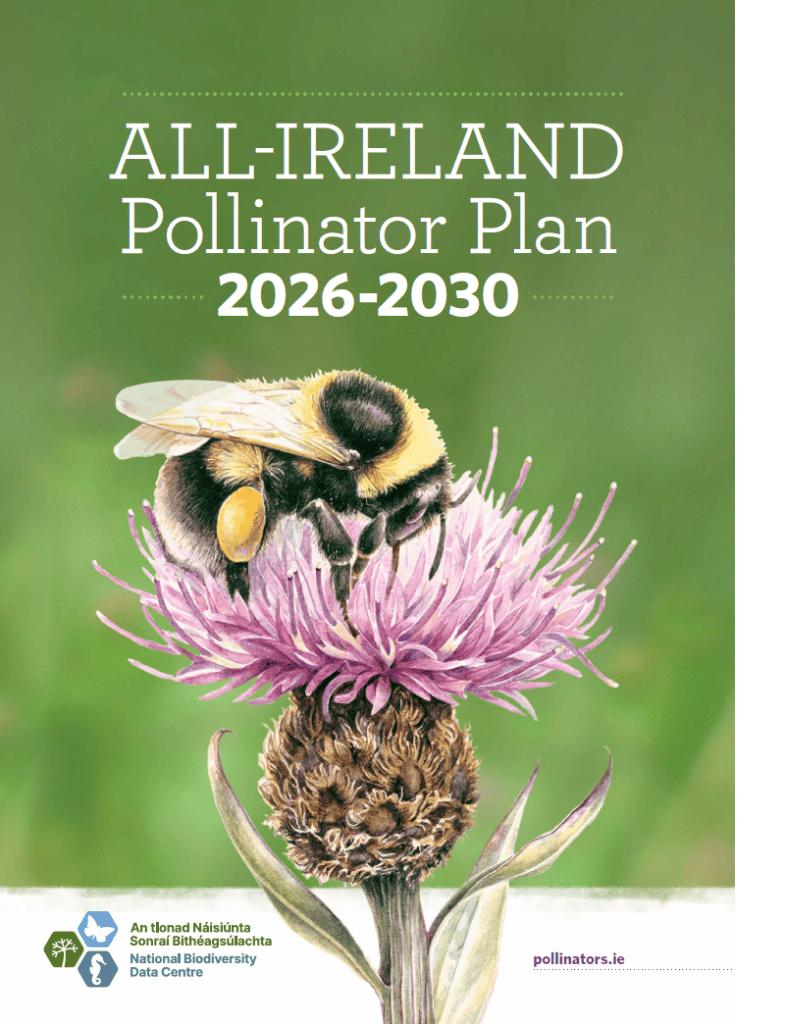
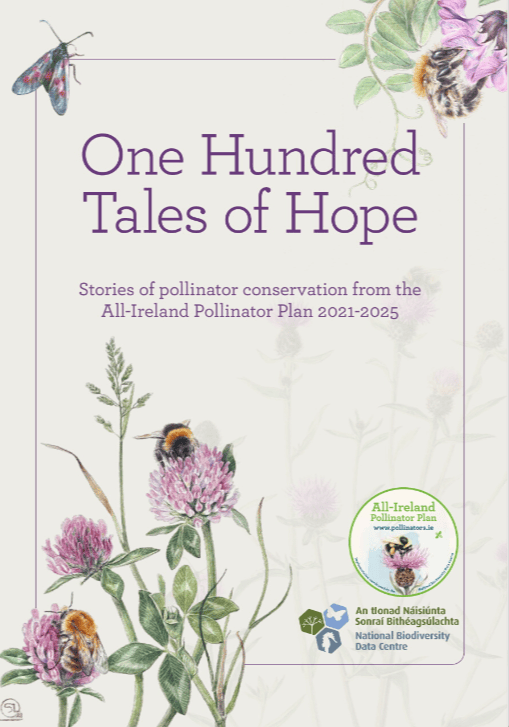
In July 2026, the third phase of the All-Ireland Pollinator Plan was launched. After two successful phases (2015-2020 and 2016-2025), this time, we wanted to build on the huge enthusiasm, engagement and commitment that now exists across the island of Ireland (see the 100 Tales of Hope, an incredible collection of stories from the second phase), but become more ambitious about reaching our 2030 targets of halting and reversing pollinator decline.
The Plan aims to bring together communities, farmers, businesses and public bodies to create pockets of nature every 200 meters across the island of Ireland and create a more biodiversity-rich landscape. Former Trinity College and RestPoll project researcher, Dr Sarah Larragy, delivered a wonderful webinar introducing the new Plan.
The 2026-2030 Plan is organised into Modules addressing key sectors and themes:
Protecting Farmland Pollinators: Supporting farmers with practical, evidence-based agricultural measures.
Creating Buzzing Communities: Mobilizing local towns, community gardens, and volunteer groups.
Local Authority & Public Body Engagement: Standardizing biodiversity practices across public land.
Transport Authority & Public Utilities Engagement: Managing roadside verges, railways, and utility corridors.
Business & Industry Engagement: Assisting companies in creating eco-friendly commercial sites.
Rare & Threatened Pollinator Species: Implementing specialized protection plans for at-risk species like the Great Yellow Bumblebee.
Mapping: Managing the tracking map database to view localized ecological corridors.
Research: Translating university and field research into layman-friendly practices.
Communications: Distributing resource toolkits, media outreach, and public campaigns like “No Mow May”
It is implemented by the National Biodiversity Data Centre, all overseen by the amazing Dr Una FitzPatrick and supported by an incredible team of project officers, including our own research group alumni, Dr Sarah Larragy and Dr Emma King.
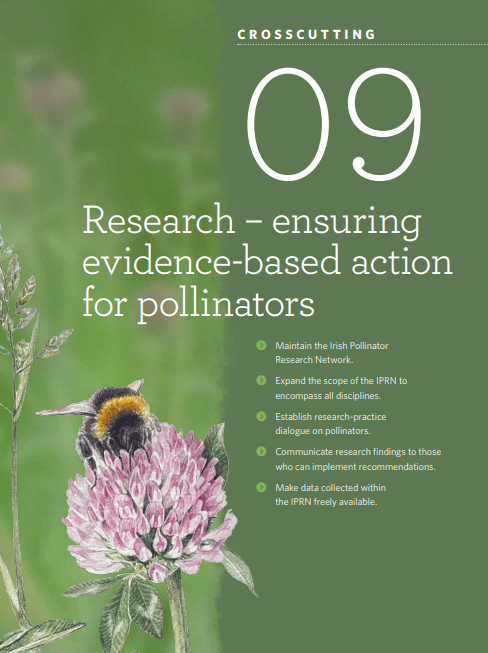
Key to our work in Trinity College, is the Research Module, which cuts across and links in with all the other modules. The role of the Research Module is to ensure that the actions taken for pollinators are evidence-based. This means that practical actions are more likely to work when implemented, which can save practitioners time and money. And it means that the discoveries made can inform relevant policy development.
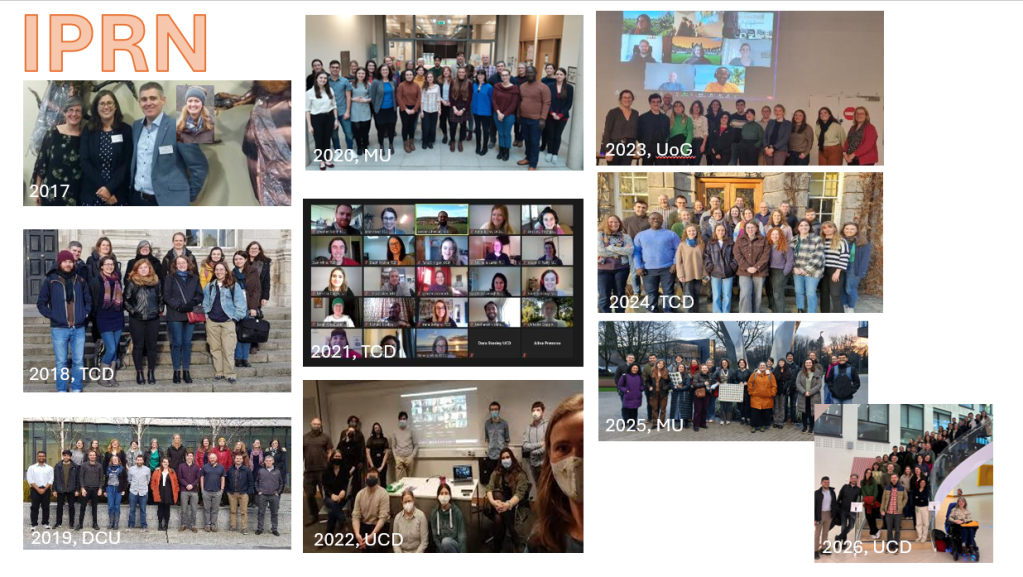
In 2017, we, the researchers, formed the Irish Pollinator Research Network (IPRN), which is a dynamic network of researchers addressing issues and providing the evidence base that supports the Plan. We have met as a group every year (see previous blogs from 2018, 2019, 2021, 2024, 2025, 2026), and maintain the ethos of the IPRN, which is to collaborate and share about our research – our findings, our approaches, our equipment and samples – and to support one another.
Ethos: Great science, great vibes!
The IPRN, including any subgroups, operates under an overarching ethos that prioritises positivity, constructive collaboration, and the cultivation of a welcoming, inclusive, and informal environment. It is a community where researchers are supported and encouraged to conduct excellent science while developing meaningful, collaborative connections with colleagues at all stages of their careers. The network aims to provide a space in which researchers can share ideas openly, engage in informal discussions, and do so in a collegial, enjoyable, and supportive atmosphere.
It’s a wonderful network and one I am very happy and proud to be part of. In the next phase, we are keen to emphasis that this research encompasses all disciplines, not just ecological ones, and already the network includes people working on a wide range of social, economic, and business issues relating to pollinator conservation.
In the next phase of the Pollinator Plan, we also aim to work harder to close the gap between research and practice. Although we have tried to keep up the information flow with our “Dispatches from Researchers” series of blogs (eg https://pollinators.ie/are-new-woodlands-good-for-nature/), in the next phase, we want to also have more face-to-face policy-practice dialogues. This enables us to explain what the research is suggesting (in terms of current status and trends, threats and solutions), and for stakeholders to tell us what they need to know in implementing pollinator conservation and restoration in the field. These research-practice dialogues will be organised in conjunction with the NBDC team.
Finally, we will continue to ensure that the data we collect on pollinators is not just used in the research, but is shared with landowners and other stakeholders and pollinator data/records will be submitted to the appropriate organisation (NBDC, CEDaR) and samples will be lodged in appropriate collections (museums).
Personally, it’s so wonderful to see a thriving pollinator research community across the island of Ireland, working together to understand the problems and help provide insight for the solutions. As researchers, we can’t reverse pollinator decline by ourselves – we need to work with other stakeholders across all sectors and in all organisations. And that’s what we want to do…
Jane Stout is Professor of Ecology in the Discipline of Botany, School of Natural Sciences, Trinity College Dublin. She leads the Plant-Animal Interactions Research Group and is a founder member of the Trinity Business and Nature Hub.
Dramatisation of the headline aside, Natural Capital Accounting (NCA) is a trending framework for ascribing value to ecosystems, that – in the eyes of this particular researcher – has a wide disparity in the potential outcomes it may lead to.
On one hand, we have a means to reshape our current economic systems in a manner that prioritises nature like the essential driving force of life it is. On the other, we have a streamlined methodology for powerful private interests to further commodify the natural world, widening existing wealth gaps and propagating the exploitation of developing countries. Standing at this crossroads, the scientists, economists, conservationists and humanists that recognise the powerful tool NCA might be, must face it for what it could be bastardised into.
“Concern for man himself and his fate must always constitute the chief objective of all technological endeavors… in order that the creations of our mind shall be a blessing and not a curse to mankind. Never forget this in the midst of your diagrams and equations.” – Albert Einstein.
Einstein uttered these words at a speech at the California Institute of Technology on 16 February 1931. Despite Einstein’s words, there still sometimes seems to exist a lack of consideration for externalities during the rigors of research. It’s of course a folly of a system that demands constant advancement and output, otherwise experts face redundancy, but still a flaw in the process none the less. The point I’m overexplaining is we must move cautiously and deliberately with frameworks connecting the living, natural world to monetary values.
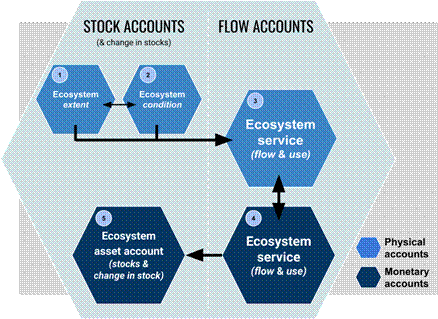
Three paragraphs in, perhaps it’s a decent time to define NCA, and the specific ecological-based aspects I’m referring to. Natural capital is simply all that comes from nature; soil, water, animals, plants, etc. The accounting bit refers to measuring the change in extent and condition of this natural capital, the stock as it’s called. In a more particular context, we have ‘Ecosystem Accounting’ which measures and tracks this stock over time, as well as how humans use it, or the flow of ‘ecosystem services.’ These services again are how humans use the ecosystems they exist in or adjacent to. Generally, they’re divided into four types: provisioning (food, timber), regulating (flood control, carbon sequestration), cultural (recreation areas, sacred sites), and supporting (photosynthesis, the water cycle). Fundamentally, human life and society do not exist without ecosystem services.
Figure from SEEA EA, conceptualising Ecosystem Accounting
At face value, this all sounds great. A system that seeks to monitor and track where ecosystems are, how they’re doing, and what they provide us. The issue lies not in the means or purported ends, but the potential perversion of its goals. Under the System of Environmental Economic Accounting (SEEA), there is an intention to reach a level where monetary values are calculated for ecosystem services and stock, albeit these monetary valuations are not ratified by the UN. The SEEA Implementation Strategy explicitly mentions intended uses for ecosystem accounting (EA) being to drive private and public investment for nature restoration, inform policy, and support current reporting requirements.
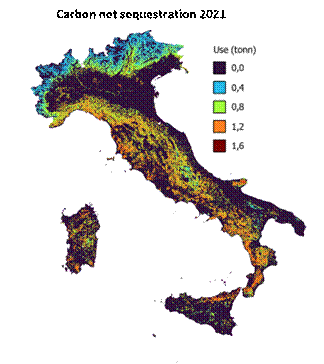
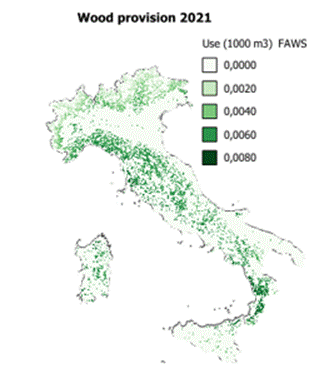
Figures from Mascolo et al. (2025) showing Natural Capital Accounts for Italy in 2021. (left) Net carbon sequestered by ecosystems. (right) Wood provisioning provided by forested areas.
This all sounds excellent, and there have been successful pilot projects and ongoing uses of SEEA EA. At a national scale in Italy, spatially explicit valuation of ecosystem services has improved the allocation of EU Common Agricultural Policy (CAP) subsidies, directing restoration funding to areas indicated for high returns (European Union, 2024; Mascolo et al., 2025). A multi-national SEEA EA pilot initiative helped quantify where forest degradation was avoided in Central and South America, as well as Southeast Asia, and even saw reform of forest repayment schemes in Mexico through the Natural Capital Accounting and Valuation of Ecosystem Services Project (NCAVES) (United Nations Statistics Division & United Nations Environment Programme, n.d.). Some studies even claim that the principles of NCA adopted in green accounting with private corporations have demonstrated improved financial performance (Tjandrakirana et al., 2024). It’s that last example, however, where the cause for concern can arise.
Accusations of politicising a discussion can be brought up when critiques of capitalism, and its impacts on the environment, are contended. Personally – as an independent individual whose views are my own and not any group or institution’s – I see enough categorical and empirical evidence supporting the statement that traditional capitalist systems, and the inherent growth dependency and profit maximization, are contradictory to current climate and biodiversity goals. While it’s encouraging to see organisations willfully partaking in more sustainable practices, it begs the question of whether these goals and practices are maintainable for profit-driven sectors.
Now, credit where credit’s due, that is in a sense the point of NCA and ecosystem accounting. Realign the priorities of financial systems so that profit is not the sole goal, but overall environmental health and human equity is an aim. In a vacuum, monetary systems are not destructive to ecology. Just as there’s exchanges of energy in a rich and dynamic trophic web, humans exchange currency in equally complex economies. That said, I’d safely assume most researchers in the field of NCA would all agree that the relationship between humanity, our economy, and nature needs to be overhauled in order to meet critical ecological goals. Where my previous sentiment was drawing alarms are the various stakeholders that would not view ecosystem accounting as means to change a system, but rather to further perpetuate their own economic power.
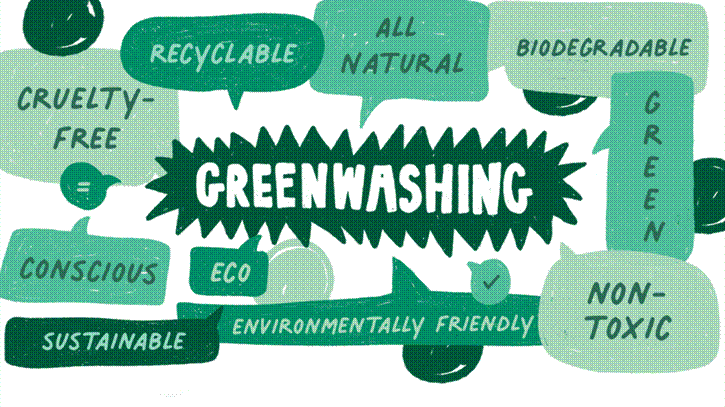
‘Greenwashing’ as it’s called is the new buzzword that really captures where a lot of my worries would lie. Thanks in part to ineffectual policy, or enforcement of existing legislation, countless companies in the developed world sell products labelled as “green” or “sustainable” with no true data to support it. Often the products are actually significantly damaging the environment. The easiest example, which the veil has been pulled back a little, is plastics and recycling. It’s very well documented that only a fraction of plastic products are truly recycled, and even the process of recycling them has its impacts, yet many companies still push “100% recyclable container” or “packaged made of 50% recycled plastic.” It’s predatory marketing practices harvesting a premium from environmentally conscious consumers.
Lets imagine greenwashing, but on a systemic scale rather than just the marketing and retail level. Weaponising NCA methods, companies whose industrial practice, regardless of any adjustments they can make, damage the environment (fossil fuels, strip-mining) could use ecosystem accounting to minimise and mask their impacts. One objective critique of NCA is, while there are standards in place, the operationalising of SEEA EA is largely site/stakeholder dependent. Accounts must be developed with goals in mind and vary region by region. Now, if a fossil-fuel company wipes out a protected habitat, there is not much data manipulation to be done to mask that, but what could be done is active minimisation of the wider impact. Ensuring condition and ecosystem service accounts downplay what this ecosystem provided, and perhaps even upscaling what other land the company may own has.
Yes, I’m jumping several steps ahead and making very large and brash assumptions, but that was precisely my point with the Einstein quote. His work, however indirect, contributed to the atomic bomb, and he even signed a letter with others warning the U.S. government of Germany’s atomic potential, a decision he would later voice regrets on learning more about how far they were. Despite that, America’s advancements in the 1930s/40s led the world to a nuclear era with unforeseen risks and consequences. Could physicists have treaded more carefully and brought us instead into an age of safe, nuclear energy? Similar questions, not quite as heavy questions could be asked when developing valuations for ecosystems. How do we, as NCA researchers, avoid a similar mistake and prevent for-profit private enterprises from misusing the principles of ecosystem accounting?
I’ve worked in the field for less than a year, so obviously have no answers myself. Moreover, there are countless distinguished experts in the NCA landscape who have had these same worries and asked the same questions. This is just the outward reflections of someone that has dove in and been inundated with a fascinating new perspective on quantifying and understanding humanity and our relationship with nature. Frankly, I worry it is too anthropocentric, plain and simple. It takes something that should be inherent, care for nature, and frames it in a transactional manner: nature good = humans good. If used as intended and responsibly, could NCA still contribute to our separation from nature? We frame it as capital – nature is an asset. I disagree; nature is us. We are innately part of the formula, not one side of an equation: nature good + humans good = Earth good.
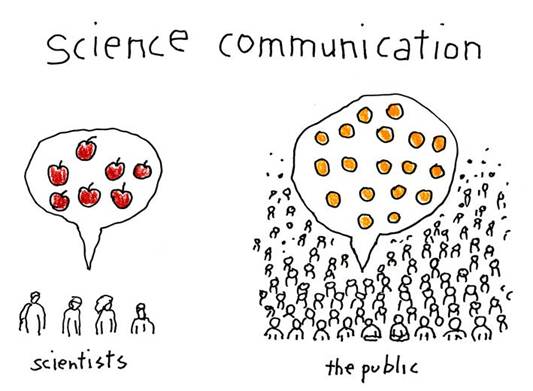
Science Communication cartoon by Tom Dunne
But, as a realist rather than idealist, ecosystem accounting is a practical solution regarding an already degraded relationship. Perhaps as it becomes mainstream, develops and improves, that inherent sense of caring for nature will be restored. In many ways, natural capital serves to speak on protecting biodiversity and improving sustainability in terms the people with significant impact understand. It’s the language of policymakers that fret about GDP, and the vernacular of corporations that cause the larger scale impacts. An ecologist’s understanding of something means little if it can’t be communicated to people making decisions. Creating ecosystem accounts is a form of communicating info many experts already know. On a macro-scale, it’s “laymen’s terms” for describing ecosystems, how they’re doing, and how important they are.
As we continue advancing Natural Capital Accounting, especially those of us developing new methods to quantify ecosystem services and their valuations, the responsibility is not abstract. I work on experimental recreation-related services accounts using relatively novel methods and a dataset with inherent bias. They offer an interesting perspective into understanding how people feel about and use an ecosystem. In the wrong hands, the accounts could easily be used to misrepresent the true sentiment of a community for a natural area. That’s a powerful tool that should be handled properly.
“The creations of our mind shall be a blessing and not a curse to mankind,” Einstein said. It’s not the ecosystem accounts alone that determine which contrivance of humanity it shall be; it’s the structures and systems that use it that decide. We can communicate nature as an asset but must make it clear that nature’s value is irrespective of its ability to serve people. Nature is valuable to humans. When we restore those last two words, we turn our relationship with nature into a transaction.
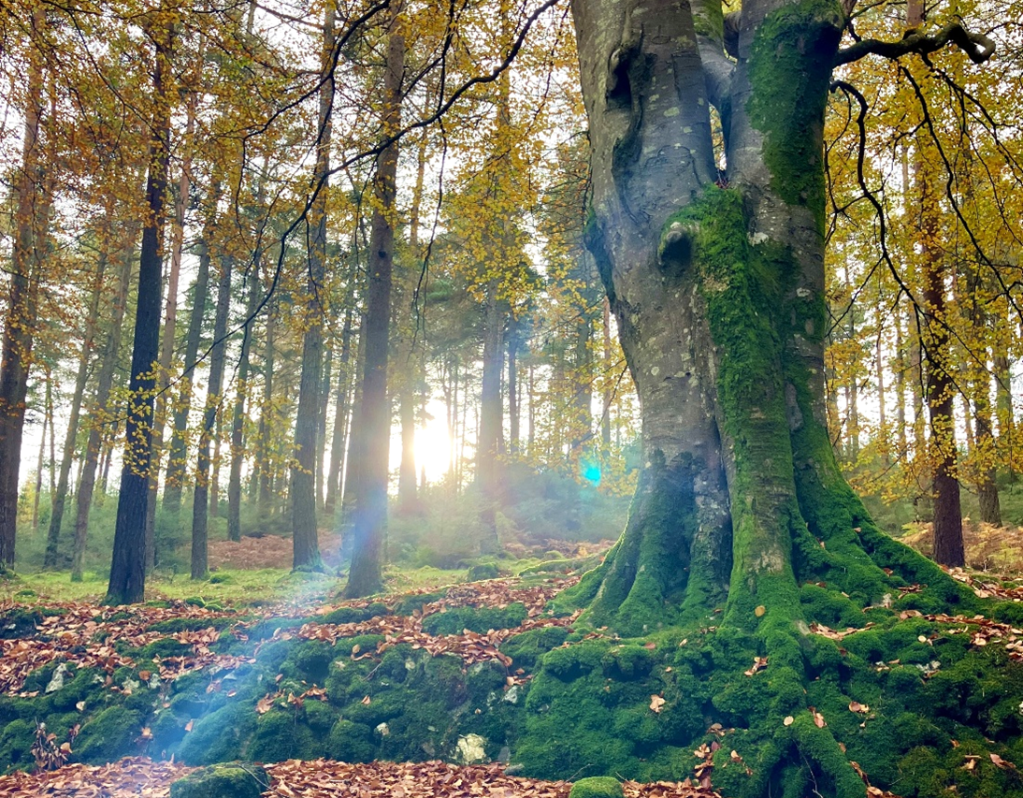
A photo of something ‘valuable’, from a walk in Co. Wicklow, Ireland
References
European Union. (2024). Regulation (EU) 2024/3024 of the European Parliament and of the Council of 27 November 2024 amending Regulation (EU) No 691/2011 as regards introducing new environmental economic account modules (SEEA EA). Official Journal of the European Union, L 3024.https://eur-lex.europa.eu/eli/reg/2024/3024/oj/
United Nations Statistics Division & United Nations Environment Programme. (n.d.). Natural Capital Accounting and Valuation of Ecosystem Services Project (NCAVES). SEEA UN Project Portal.https://seea.un.org/home/Natural-Capital-Accounting-Project
Tjandrakirana, R. D. P., Ermadiani, E., & Aspahani, A. (2024). The impact of environmental performance, green accounting, and corporate social responsibility (CSR) on financial performance. International Journal of Humanities, Education and Social Sciences (IJHESS), 4(3). https://doi.org/10.55227/ijhess.v4i3.1335
Written by Fernanda Azevedo, whose PhD work focuses on how farmers feel about pollinator conservation in Ireland
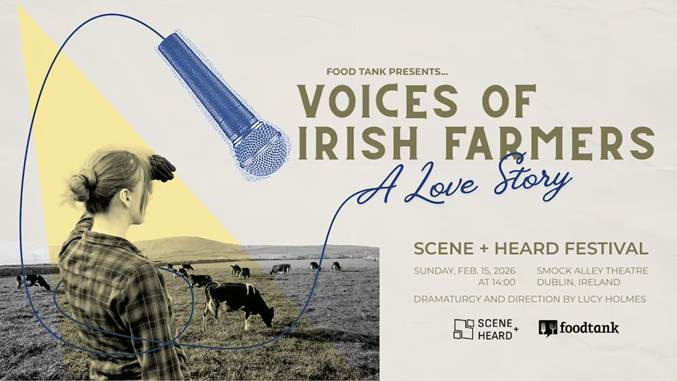
After a stretch of very little sun in Dublin, on a lovely afternoon, the day after Valentine’s Day, we went to the Smock Alley to watch a love story. No ordinary story, but one carrying the weight of the Irish women who chose to be farmers, in what is a very male-dominated profession in Ireland. The love they have for their farms, their animals and the responsibility to the environment and the food they produce.
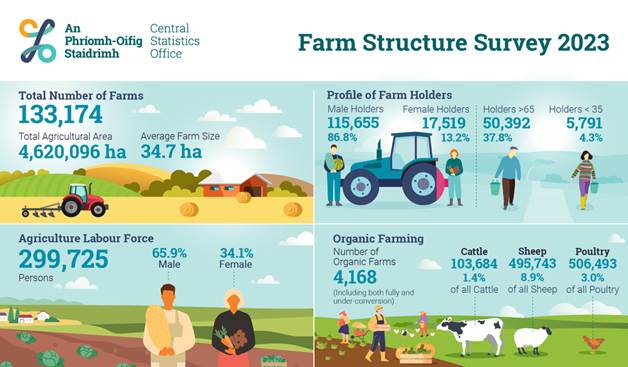
According to the CSO (Central Statistics Office) in 2023, only 13.2% of farms are owned by women.
We had the opportunity to get to know and celebrate the story of three generations of women farmers, and we were able to taste a little piece of their farms in beautiful bites that represented their stories.
That afternoon felt like stepping into three living, breathing farms and into the lives of the women who sustain them. Through their stories and the flavours they shared, we experienced agriculture as something deeply personal, rooted in family, resilience, community and care.
Sophie’s story reminded us of the determination required to challenge gender bias and build confidence in spaces that are not always welcoming. Carina’s journey highlighted the power of diversification, community bonds and generational strength, showing how farming is sustained not only by land but by people who show up for one another. Ailbhe’s path revealed the courage it takes to reimagine farming, to centre nature, education and biodiversity while navigating economic and social tensions and the power of being part of a community to a farmer.
Together, their voices carried a common thread: farming is not just production; it is stewardship, memory, responsibility, community and hope. It is early mornings in harsh weather, unseen labour, difficult decisions, and unwavering commitment. It is also sweetness, like yoghurt, smoked cheese and honey, created through collaboration, persistence and care.
Leaving the theatre, it was impossible not to feel a deeper appreciation for the food on our plates and for the women who, despite representing only a small percentage of farm owners in Ireland, are shaping the future of agriculture. Their stories invite us to slow down, to question the systems behind our food, and to recognise that farming can be many things: innovative, community-driven, nature-centred and profoundly human.
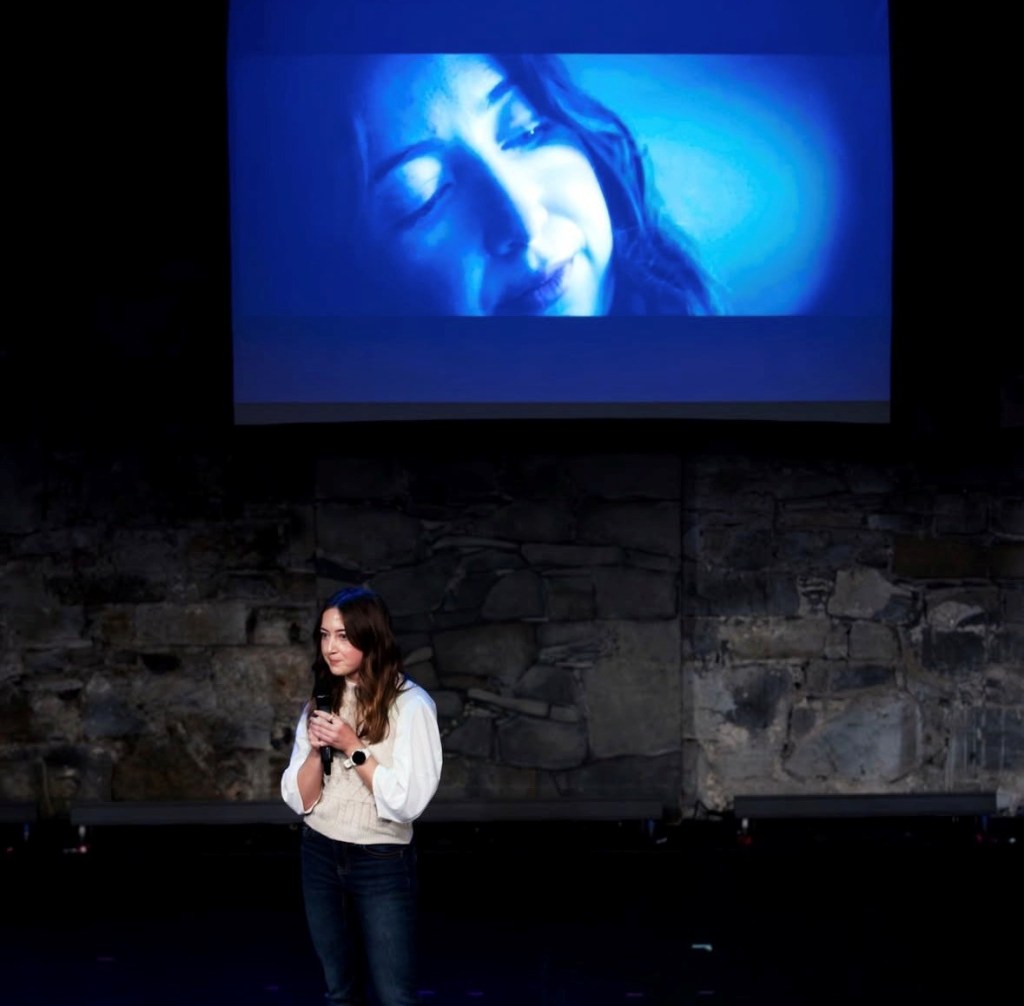
Sophie Bell
The first to tell her story was Sophie Bell. She is a young farmer from Co. Cavan who farms 57 acres while also working full-time off farm as a social media advocate for agriculture and young women farmers. Originally, it was a dairy farm with her grandad and gradually became a beef farm with her dad. In 2022, Sophie entered a partnership with her father and started contract rearing dairy heifers. Not by coincidence, the bite that represented her farm was a whipped yoghurt with milk curd, lemon and dill. A very light yoghurt with a gentle acidity from the lemon and the surprise of dill on a slightly crunchy base.
She tells how, in her teenage years, she became interested in the farm and got more involved in the farm duties. Sophie recognises the role of women in her life in inspiring, encouraging and believing in her abilities. Her mother was her inspiration as she balanced a full-time job, family care and farm work. Sophie highlights that this work, typical of many women in agriculture, is often unseen and uncelebrated.
Sophie says that at school she did not feel very confident, but her agricultural science teacher believed in her and encouraged her to apply to Harper Adams University, helping her secure a place and pursue a degree in agriculture.
Another woman farmer was also essential in building Sophie’s career. This dairy farmer, besides having to take care of the farm with a large number of animals, had three young children. But she believed in Sophie and in her competence, work ethic and interest in learning. Sophie recognises that without this woman, she probably would not have her social media account.
Her page now has almost 100k followers, and it is a platform for advocating for agriculture and women farmers. Through this platform, she has built a community and inspired young girls to consider farming careers. Sophie proudly shares about a girl who told her, “When I’m older, I want to be just like you”.
Sophie also reflects on the subtle but persistent and mentally exhausting gender bias she faced in agriculture, from exclusionary language (e.g., an event where they kept saying “who is a dairy man”, “who is a beef man”) to assumptions about gender roles (a planning letter addressed to her, however, the letter said “dear sir”).
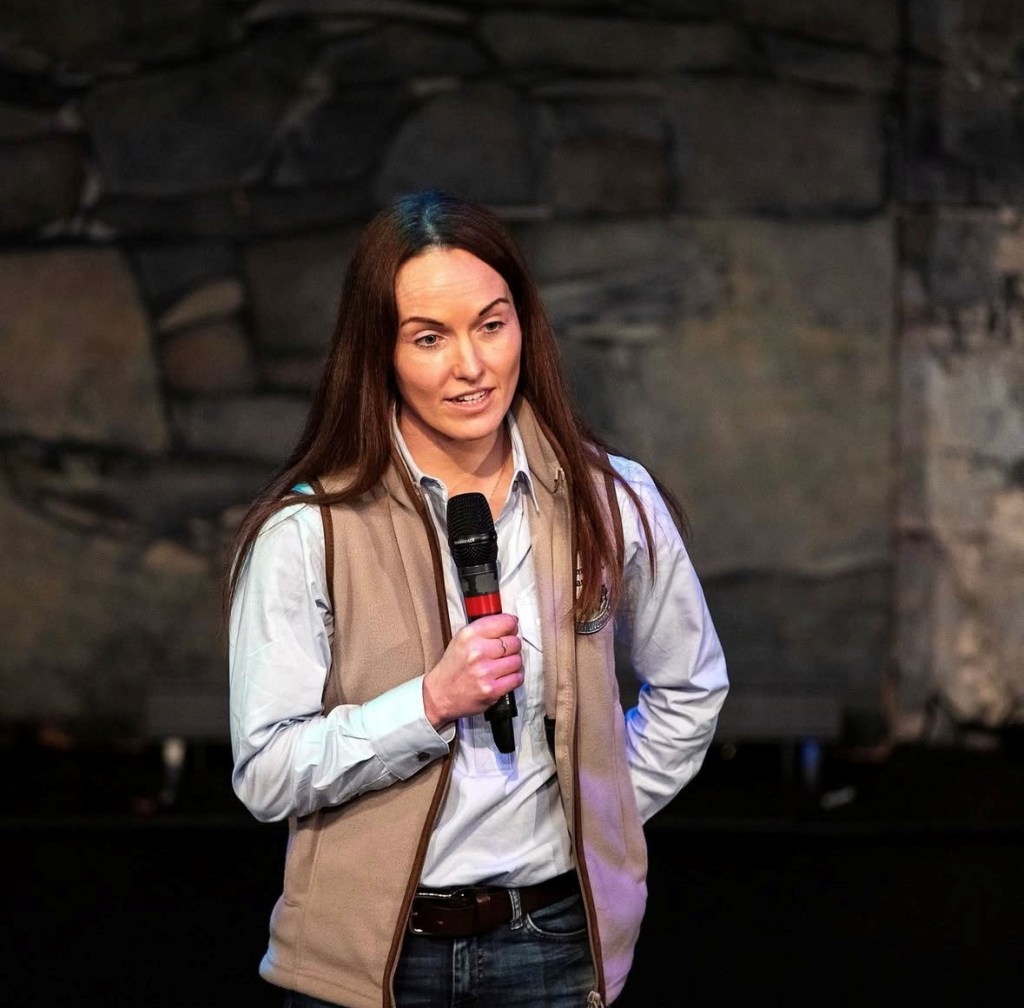
Carina Roseingrave
Carina Roseingrave is a full-time farmer at her family-run Burren View Farm outside Crusheen, County Clare, where she farms alongside her brother on 350 acres.
Burren View Farm had always been a suckler farm, for generations, until 2017, when Carina and her brother decided to diversify to make the farm sustainable for them to work full-time. Besides the pedigree Charolais and Limousin herd, they tried dairy farming due to some experience her brother gained while travelling abroad. Despite having no prior experience with dairy farming, Carina now takes pride in and enjoys her mornings seeing the sunrise (and the sunset), bringing the cows for milking. To honour her farm, using milk from her cows and eggs from her hens, she brought to us a smoked egg mousse with aged Charleville cheddar and chive. The taste was glorious: the smooth cheese, the creamy texture of the egg and a hint of chives wrapped in a light but firm crust.
Burren View Farm is now a milk supplier to Kerry Dairy Ireland. With this company, they learned quickly how to be dairy farmers, but something that drove them was their dad’s motto: “If you are going to do something, do it right”, and of course, their concern to keep food and nature connected, producing high-quality milk, beef and eggs.
Carina had her mother and grandmother as examples. Since her dad passed away in 2002, her mam had to take care of five children while working a full-time job. Her grandma lived with them and took care of the children. Carina speaks with emotion about her grandma’s garden, where she grew many different vegetables and kept a few hens, so from a young age, she knew where food comes from.
She praised the care that farmers have for the food they produce, as every day, regardless of the weather (which means a lot in a country like Ireland), they get up to milk their cows, take care of their crops, collect eggs and look after their animals. She then drew attention to how lucky we are to have these products easily available in the supermarket.
Community is very important to her. In 2020, after her mam recovered from cancer, they ran a charity event where they raffled their prized Charolais heifer, Snowdrop. They raised over €6000 for charity to give back to the community. The winner of Snowdrop, a farmer in Donegal, kept in contact with them, sharing information on her wellbeing, her calf and everything, forming a lasting friendship that reflects the strong bonds within agriculture. This experience encouraged them to further develop their pedigree herd.
Carina emphasises the importance of diversification, sustainability and community in modern Irish farming. She is passionate about showing cattle at local agricultural shows and takes pride in seeing her young daughters participate, passing on farming skills to the next generation. Inspired by the strong women in her life, she hopes to continue promoting appreciation for where food comes from and to support the future of Irish agriculture.
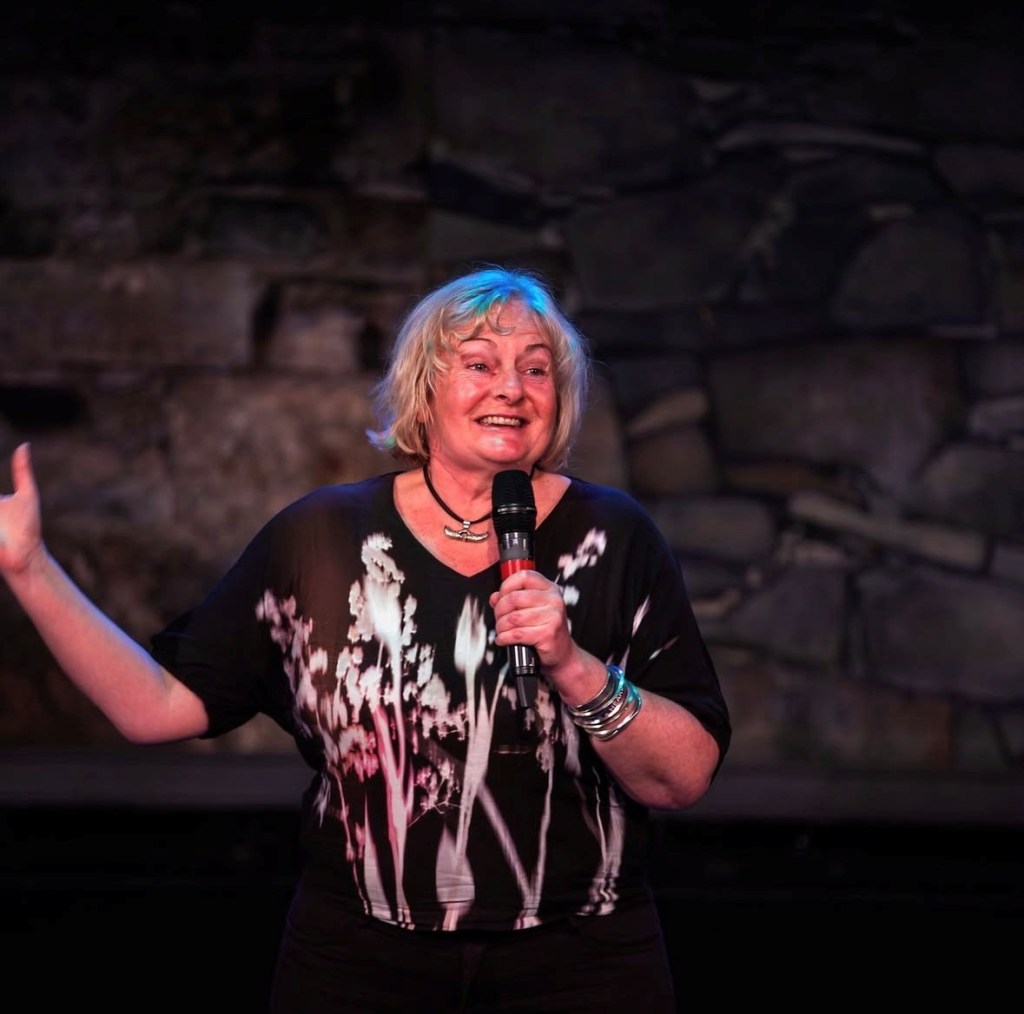
Ailbhe Gerrard
Ailbhe farms organically over 80 acres outside Nenagh, Co. Tipperary, on a beautiful lakeside farm along Lough Derg. She describes her land with pride and admiration; she talks about the hills, the fields, hedges, the shores of Lough Derg and her curious and courageous sheep. She farms organic oats (for our porridge) and organic barley (for our whiskey and beer), and she could not leave out beekeeping, which she highlighted as very important to her.
She remembers that this piece of land is very dear to her because it is part of her childhood memories. She grew up very close to where she farms now, where her big family used to grow vegetables, had a few hens, turn hay by hand, and overall lived a very outdoorsy lifestyle. She acknowledges the role of having horses and hens in learning the land and how to grow food. She became a farmer later in life. She moved to the city and became a project manager for construction, but the memories of the Shannon were something she couldn’t ignore. So she moved back to where she grew up and decided that a little piece of land would be enough for her. She asked the owners of that piece of land that she remembered from childhood if they would sell it to her; they agreed, and now it is Brookfield Farm.
The land wasn’t always organic. After decades of the land being used for intensive barley production for animal feed, Ailbhe converted it to organic production and made it much more diverse. She introduced sheep, broadleaf woodlands, orchards, and, obviously, as a beekeeper, she brought the Native Irish Black Bee (Apis mellifera mellifera). Which brings us to the food that represents her farm: a beautiful panna cotta on a bed of chocolate, which seemed to me to be slightly bitter. Of course, the sweetness of the dessert was the highlight: honey, together with thyme and hazelnuts on top to bring a crunchiness to it. A perfect dessert to represent the energy Ailbhe brings.
From the beginning, Ailbhe wanted to bring people into her refuge, inspired by the bees and their sense of community: “the ultimate collaborators and community builders”. She wanted to show people how food is produced, to be an agroecological, creative and educational hub. Ailbhe highlights that there is a tension between caring for the farm, in the sense of creating space for insects and other wild animals, but also making a livelihood. This kind of tension is very difficult for many farmers because, according to Ailbhe, economically, farmers are not doing very well due to the commodity-driven export model that we have.
She reported tensions with her neighbours for choosing to follow the organic path. She faced very strong opposition, including a planning permission that was invalidated, and had to prove that the road that accesses her farm is public and not private, as others were claiming. A more intimidating challenge was the illegal snaring of badgers on her property. She believes that someone invaded the farm and set up the snares.
Despite the challenges, Ailbhe did not give up and continued with her plans. She says it was very costly financially but also in energy, and what helped her were her friends. If it were not for her family, who were very supportive, her friends, and the communities and networks she is part of, the path would have been much more difficult, and the outcome could have been very different.
She then closed her talk with an invitation to visit her thriving farm to see how farming can be, a different kind of farming, a nature-centred one. She also gave a small shout-out to her upcoming book, so keep your eyes peeled – I know I will!
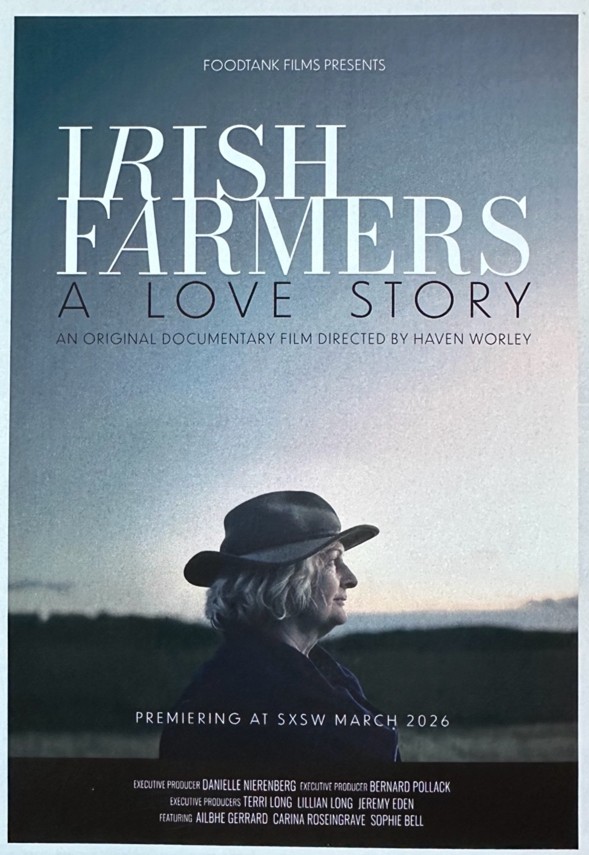
If you missed the event, don’t worry! Their stories will be premiered this March, 2026, in a documentary called: Irish Farmers: A Love Story, directed by Haven Worley.
Many thanks to Dr. Sarah Larragy and Moya Owens for the editing contributions.
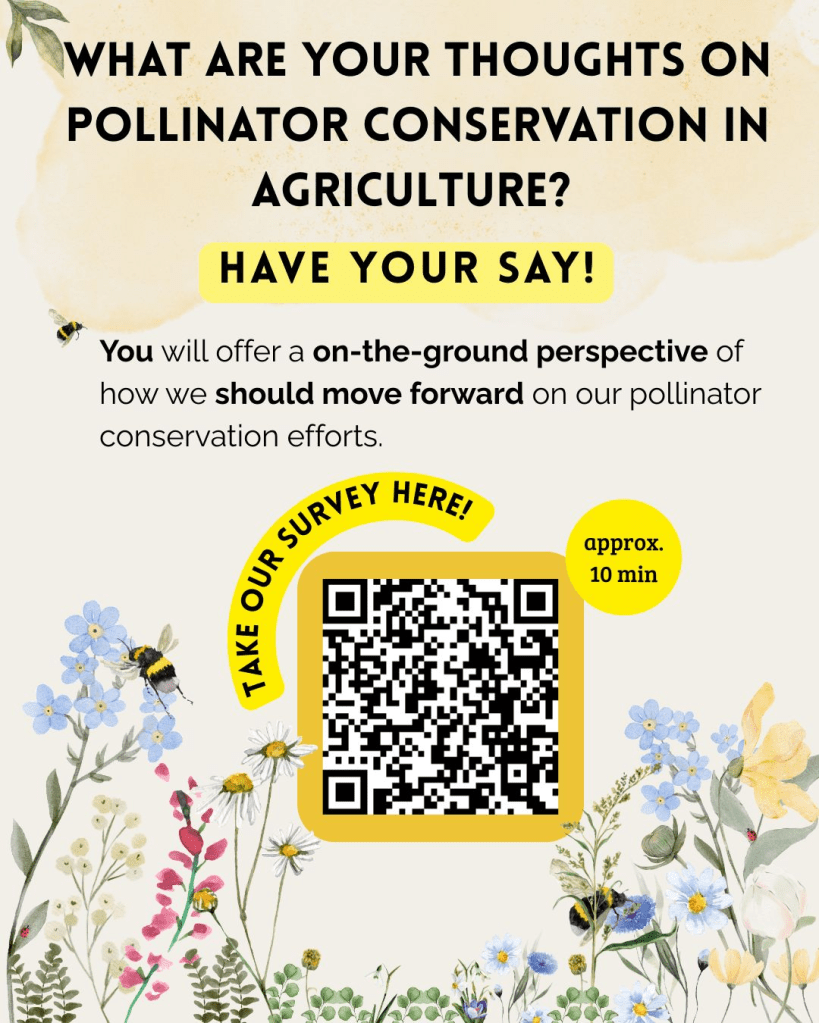
If you are a farmer, and want to contribute to Fernanda’s research, please complete her survey via this link or the QR code below
The Teagasc Farmland Biodiversity Group led by Dr Saorla Kavanagh, (Department of Environment, Soils and Land Use, Johnstown Castle) invites applications for a fully funded 4-year PhD. The PhD candidate will be registered at Trinity College Dublin and co-supervised by Professor Jane Stout, Professor of Ecology, School of Natural Sciences.
Project Background and Description Pollinator decline is a key threat to biodiversity conservation and the provision of ecosystem services. One third of Ireland’s bee species are under threat, with intensification and homogenisation of agricultural landscapes considered the principal driver. Diversifying habitats and understanding farmer attitudes towards biodiversity are key to halting further pollinator decline. Semi-natural habitats on the farm, for example, hedgerows, woodlands and trees, and wetland areas including ponds can provide valuable food and nesting resources for pollinators. In Ireland, there is little data on just how valuable ponds are for pollinators. Restoring biodiversity-friendly habitats and designing evidence-based actions that benefit biodiversity on the farm are crucial to meet the requirements of the EU’s Biodiversity Strategy and Nature Restoration Regulation, and to inform Policy for Agri-Environment measures. The aim of this PhD is to identify the benefits of ponds for pollinators, and gain an understanding of farmers’ knowledge of farmland biodiversity. Barriers around implementing biodiversity measures on the farm and solutions to these barriers will be identified.
Candidate Profile The ideal candidate will:
Hold at least an upper second class honours (or equivalent) Bachelor or Masters degree in, entomology, plant science, zoology, environmental science, or another related discipline
Have demonstrable analytical skills in the field and/or laboratory, and in data handling, analysis and presentation
Have the capacity/willingness to think critically and creatively, and apply multidisciplinary techniques to address hypothesis-driven questions
Work well in a multi-disciplinary team, and be able to work independently
Have excellent oral and written communication skills
Be willing to travel to field sites to conduct fieldwork and interact with landowners/farmers
Hold a full clean driving licence and able to drive in Ireland
Meet Trinity postgraduate entry requirements. See English language requirements here.
Funding This is a 4-year PhD project funded by the Teagasc Walsh Scholar Programme and covers an annual stipend of €25,000, and student fees of up to a maximum of €6,000. Project costs will be covered.
Application procedure Please send a CV and a 1-2 page personal statement detailing your interest in the project Tuesday, June 24th 2025 via email to Dr Saorla Kavanagh saorla.kavanagh@teagasc.ie quoting the reference number (2025037) in the subject field. Your CV should include the name and contact details of two references. In your personal statement, please explain both why you are specifically interested in this PhD project and why you are a strong candidate to undertake it. Interviews will take place (online) Friday, July 4th 2025.
Project start date: September 2025 Please send all inquiries to Dr Saorla Kavanagh Saorla.kavanagh@teagasc.ie
By Moya Owens, Research Assistant with the ANTENNA Project at TCD
In recent years the decline in wild insect pollinators has increased dramatically, causing huge concern among the pollinator monitoring community. The 2023 EU Pollinators Initiative has set out a number of actions to be taken by the EU and the Member States to help reverse the decline in pollinators, with the first action defined as ‘establishing a comprehensive monitoring system. The current EU-wide Pollinator Monitoring Scheme (EU-PoMS) provides a methodology for transnational pollinator monitoring however many gaps still remain. Modern technologies (such as camera traps, sensors, robotics) can help to address these concerns, with the aim of overcoming key monitoring gaps by increasing taxonomic and geographic coverage, speed and accuracy.
The ANTENNA project (MAkiNg Technology work for moNitoring polliNAtors) is an EU wide project with an overarching goal of filling key monitoring gaps through advancing novel technologies which complement EU-wide pollinator monitoring schemes. The project will address the following objectives:
Advance automated sample sorting and image recognition tools from individual prototypes to systems adoptable by practitioners, through a co-design approach;
Expand pollinator monitoring to under-researched pollinator taxa, ecosystems, and pressures;
Quantify the added value of a broad range of novel monitoring systems in comparison and combination with ‘traditional’ methods in terms of information gains related to economic costs;
Provide a framework for integrative monitoring by combining multiple data streams and for developing routines for near real-time forecasting models as bases for early warning systems;
Upscale from local demonstrations to the implementation of large-scale transnational pipelines and provide context-specific guidance for the choice and combination of monitoring methods and indicators for policy and end-users.
Field work
ANTENNA is organised into 5 work packages, including improving and testing new monitoring technologies, integrative modelling and large scale implementation. Here at Trinity, we are going to be testing novel technologies in the field alongside traditional methods of pollinator monitoring. This involves deploying two camera traps in the field: a DIOPSIS camera, developed by Faunabit and a MiniMon camera, developed by members of the ANTENNA team. These cameras use image recognition tools to record and identify insects. Alongside using this technology, we will conduct transects and pan trapping on a minimum of 5 sites in Co. Kildare, meaning a busy field season for us!
Next steps
Along with fieldwork, we are also involved in identifying the needs of stakeholders ie. members of the pollinator community (such as ecologists, entomologists, researchers). We have developed an online survey which aims to identify the limitations of current monitoring approaches, opportunities for improvement and desired outcomes (eg. Integration of technologies with EU monitoring schemes). This survey represents the first step of a co-design process, with the information gathered summariesed to inform other tasks in the project and to optimise large-scale implementation which is the ultimate aim of the project. Additionally we are going to produce a roadmap for enhanced European wide pollinator monitoring. The report will outline a pathway for implementing the novel technology at large EU scales, and will include information on the status of the new technologies, guidance of complementary use and a cost benefit analysis.
This work is supported by the Environmental Protection Agency (EPA) through the Biodiversa+ program. Irish ANTENNA work is led in Trinity College Dublin by Prof Jane Stout, in collaboration with Dr Jess Knapp (Lund University).