Written by Prof Jane Stout, co-founder of the All-Ireland Pollinator Plan and the Irish Pollinator Research Network (IPRN), and Research Module lead.
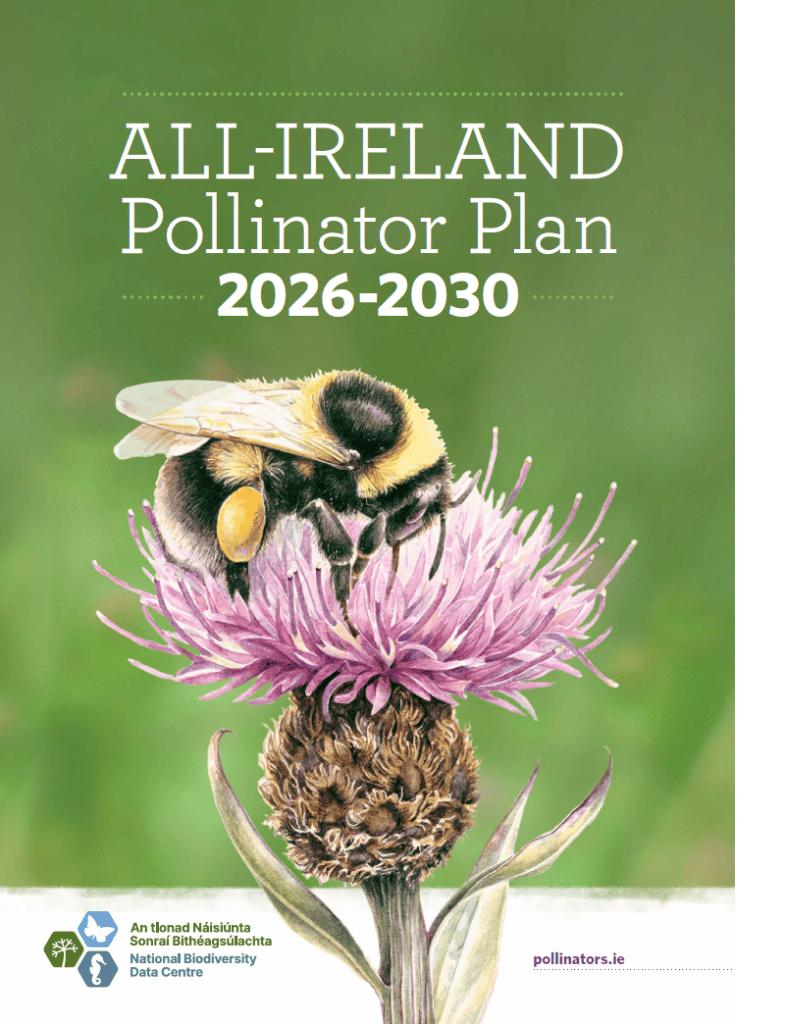
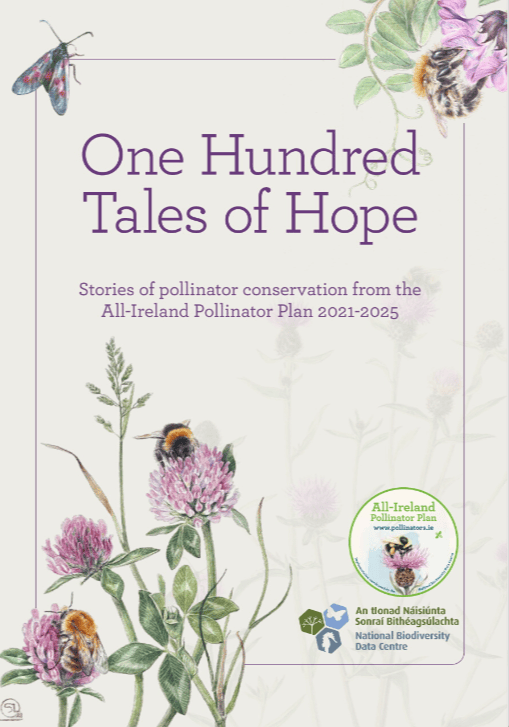
In July 2026, the third phase of the All-Ireland Pollinator Plan was launched. After two successful phases (2015-2020 and 2016-2025), this time, we wanted to build on the huge enthusiasm, engagement and commitment that now exists across the island of Ireland (see the 100 Tales of Hope, an incredible collection of stories from the second phase), but become more ambitious about reaching our 2030 targets of halting and reversing pollinator decline.
The Plan aims to bring together communities, farmers, businesses and public bodies to create pockets of nature every 200 meters across the island of Ireland and create a more biodiversity-rich landscape. Former Trinity College and RestPoll project researcher, Dr Sarah Larragy, delivered a wonderful webinar introducing the new Plan.
The 2026-2030 Plan is organised into Modules addressing key sectors and themes:
| Protecting Farmland Pollinators: Supporting farmers with practical, evidence-based agricultural measures. |
| Creating Buzzing Communities: Mobilizing local towns, community gardens, and volunteer groups. |
| Local Authority & Public Body Engagement: Standardizing biodiversity practices across public land. |
| Transport Authority & Public Utilities Engagement: Managing roadside verges, railways, and utility corridors. |
| Business & Industry Engagement: Assisting companies in creating eco-friendly commercial sites. |
| Rare & Threatened Pollinator Species: Implementing specialized protection plans for at-risk species like the Great Yellow Bumblebee. |
| Monitoring: Running systematic pan-trapping, transects, and Flower-Insect Timed Counts (FIT Counts). |
| Mapping: Managing the tracking map database to view localized ecological corridors. |
| Research: Translating university and field research into layman-friendly practices. |
| Communications: Distributing resource toolkits, media outreach, and public campaigns like “No Mow May” |
It is implemented by the National Biodiversity Data Centre, all overseen by the amazing Dr Una FitzPatrick and supported by an incredible team of project officers, including our own research group alumni, Dr Sarah Larragy and Dr Emma King.
Key to our work in Trinity College, is the Research Module, which cuts across and links in with all the other modules. The role of the Research Module is to ensure that the actions taken for pollinators are evidence-based. This means that practical actions are more likely to work when implemented, which can save practitioners time and money. And it means that the discoveries made can inform relevant policy development.
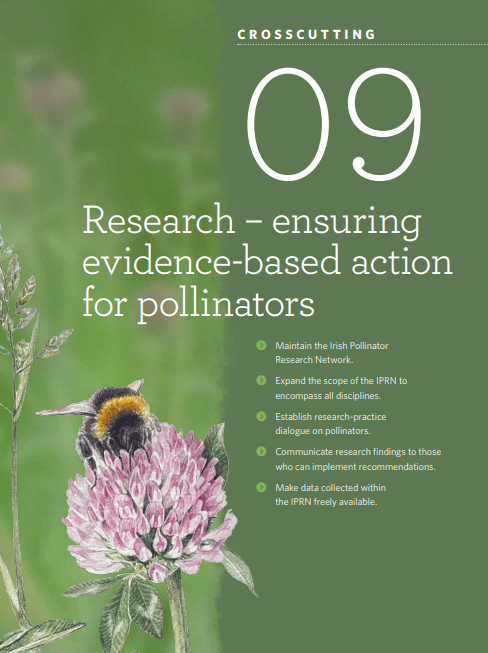
In 2017, we, the researchers, formed the Irish Pollinator Research Network (IPRN), which is a dynamic network of researchers addressing issues and providing the evidence base that supports the Plan. We have met as a group every year (see previous blogs from 2018, 2019, 2021, 2024, 2025, 2026), and maintain the ethos of the IPRN, which is to collaborate and share about our research – our findings, our approaches, our equipment and samples – and to support one another.
| Ethos: Great science, great vibes! |
| The IPRN, including any subgroups, operates under an overarching ethos that prioritises positivity, constructive collaboration, and the cultivation of a welcoming, inclusive, and informal environment. It is a community where researchers are supported and encouraged to conduct excellent science while developing meaningful, collaborative connections with colleagues at all stages of their careers. The network aims to provide a space in which researchers can share ideas openly, engage in informal discussions, and do so in a collegial, enjoyable, and supportive atmosphere. |
It’s a wonderful network and one I am very happy and proud to be part of. In the next phase, we are keen to emphasis that this research encompasses all disciplines, not just ecological ones, and already the network includes people working on a wide range of social, economic, and business issues relating to pollinator conservation.
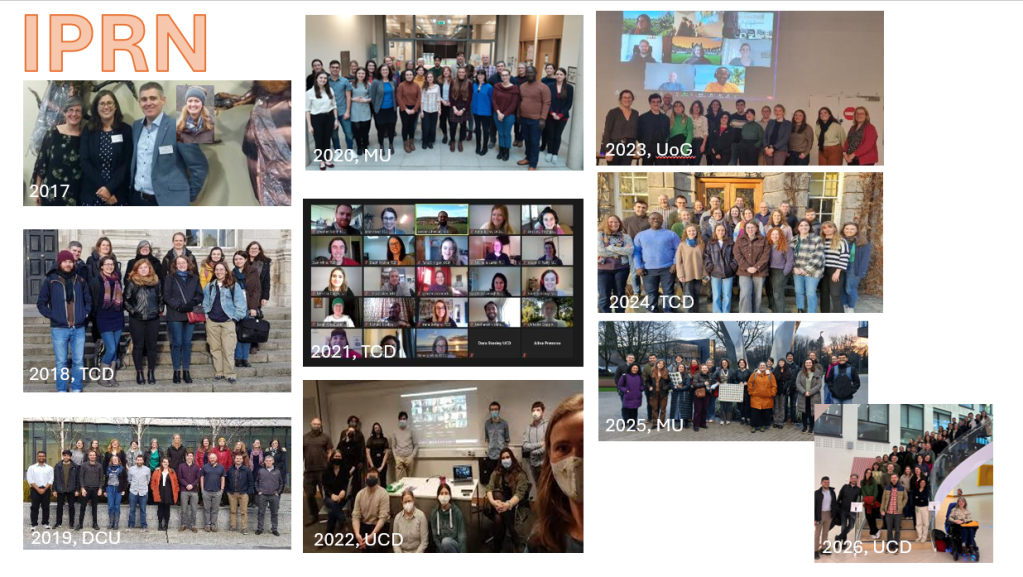
In the next phase of the Pollinator Plan, we also aim to work harder to close the gap between research and practice. Although we have tried to keep up the information flow with our “Dispatches from Researchers” series of blogs (eg https://pollinators.ie/are-new-woodlands-good-for-nature/), in the next phase, we want to also have more face-to-face policy-practice dialogues. This enables us to explain what the research is suggesting (in terms of current status and trends, threats and solutions), and for stakeholders to tell us what they need to know in implementing pollinator conservation and restoration in the field. These research-practice dialogues will be organised in conjunction with the NBDC team.
Finally, we will continue to ensure that the data we collect on pollinators is not just used in the research, but is shared with landowners and other stakeholders and pollinator data/records will be submitted to the appropriate organisation (NBDC, CEDaR) and samples will be lodged in appropriate collections (museums).
Personally, it’s so wonderful to see a thriving pollinator research community across the island of Ireland, working together to understand the problems and help provide insight for the solutions. As researchers, we can’t reverse pollinator decline by ourselves – we need to work with other stakeholders across all sectors and in all organisations. And that’s what we want to do…
Jane Stout is Professor of Ecology in the Discipline of Botany, School of Natural Sciences, Trinity College Dublin. She leads the Plant-Animal Interactions Research Group and is a founder member of the Trinity Business and Nature Hub.


