Blog by Moya Owens, Research Assistant on the ANTENNA project in the School of Natural Sciences at Trinity College Dublin
May 20th marked World Bee Day, where the world celebrates the tiny pollinators that play a huge role in our lives. Bees are one of the most important members of our ecosystems and provide an important ecosystem service in pollination. In Ireland, we have 100 bee species: 78 solitary bee species, 21 species of bumblebee and 1 honeybee. Sadly, bee populations are declining, both in Ireland and across the globe. Six out of the 100 bee species in Ireland are listed as critically endangered on the IUCN regional red list for Ireland. Celebrations like World Bee Day serve as a reminder of the importance of bees (as well as other pollinators!) to our ecosystems, and gives us an opportunity to highlight the crucial and necessary research that we are carrying out at Trinity to protect our pollinator species.
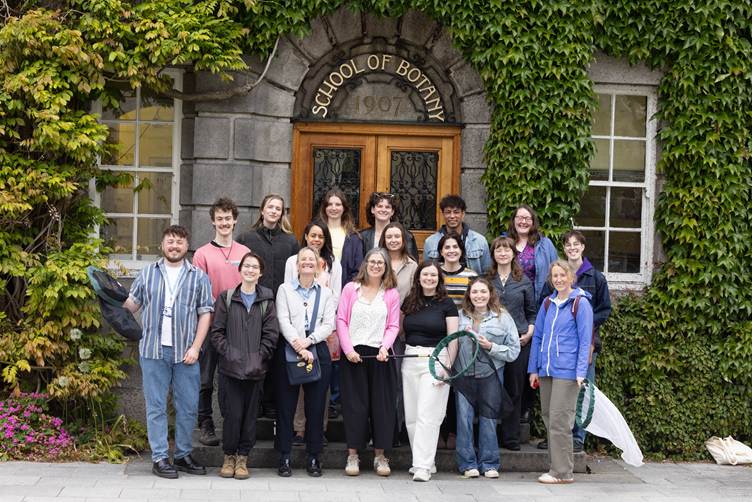
Figure 1 Celebrating World Bee Day at Trinity
To celebrate World Bee Day 2026, we organised a Pollinator Workshop focusing on the monitoring efforts that are being carried out by researchers at Trinty and the National Biodiversity Centre. Prof. Jane Stout introduced the workshop, emphasising the importance of monitoring pollinators and the collection of data in order to have up to date trends on insect populations. This set the scene for a morning of flash presentations from researchers involved in pollinator monitoring (Fig. 3) which then led to some interesting discussion surrounding challenges, monitoring gaps and opportunities within monitoring schemes.
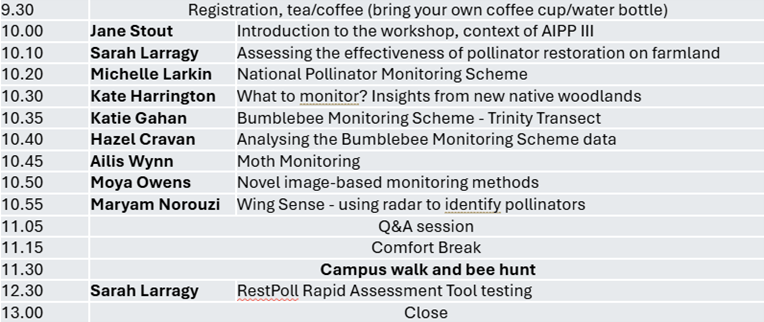
Figure 2 The agenda for the day
One of the main challenges with insect monitoring is surrounding variability – there are so many things to consider before even getting into the field to monitor! Insects are incredibly variable year to year and can be sensitive to environmental stressors which results in population fluctuations. Pesticides, habitat loss and climate change all impact our insect species and negatively impact populations. Additionally, the weather plays a huge role in insect activity and detection. Insects like warm, sunny weather conditions so choosing when to survey is crucial in order to detect insect activity (spoiler alert – Ireland is not the best at giving us sunny, dry weather). There are also gaps within monitoring schemes – monitoring methods don’t capture the whole picture, which is why projects like Wing Sense and ANTENNA can help fill these gaps. Novel technologies can capture richness over a wider spatial and temporal scale, improving our data and giving us a better understanding of population trends. We also discussed the new EU Pollinator Monitoring Scheme (EU-PoMS) which is being rolled out from 2027. Under the Nature Restoration Law, all EU Member States are required to reverse the decline in pollinators by 2030 – an ambitious task, but a good starting point that will hopefully a) Increase awareness surrounding the decline of pollinators and b) Lead to the implementation of effective measures that will improve pollinator diversity across Europe.
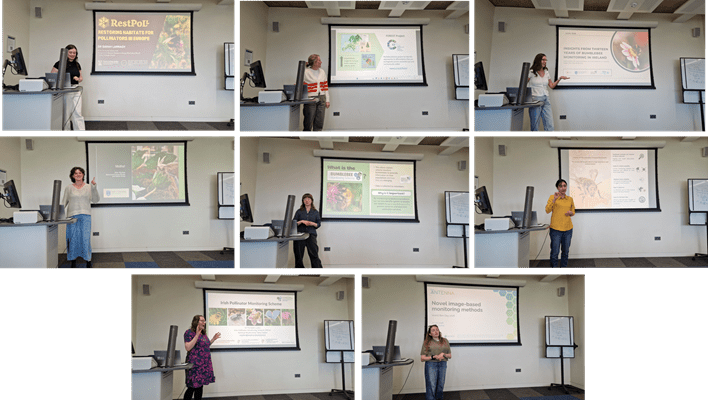
Figure 3 Researchers presenting their projects. L-R: Dr. Sarah Larragy, Dr. Kate Harrington, PhD student Hazel Cravan, Research Masters student Ailis Wynne, MSc student Katie Gahan, Dr. Maryam Morouzi, Dr. Michelle Larkin, Research Assistant Moya Owens
After the presentations and discussions, we took advantage of the dry weather and went on a bee hunt on campus. We found lots of insects flying about – honeybees (Apis mellifera), mining bees (Andrena spp.), white-tailed bees (Bombus lucorum agg.) and early bumblebees (Bombus pratorum). It was a great day celebrating all things bee – until next year!
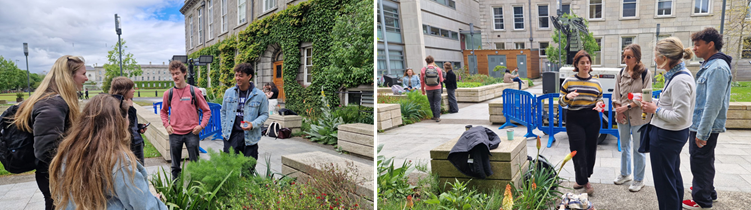
Figure 4 Enjoying learning about bees!
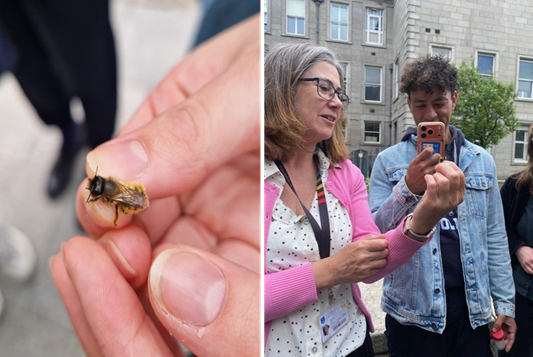
Figure 5 L: Red Mason Bee Osmia bicornis and R: Jane showing off a male Bombus pratorum


