On Thursday the 29th of November RestPoll hosted its 3rd Living Lab workshop! This event was a partnership between RestPoll, and FarmBioNet, in collaboration with Biorbic, and it occurred in the context of (and as final event of) the BioEconomy Ireland Week 2026.
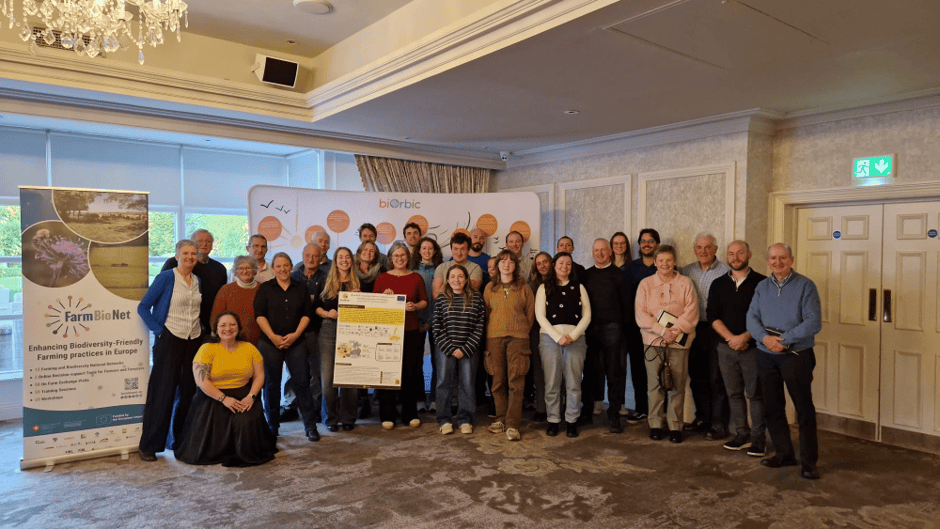
The workshop brought together participants belonging to different backgrounds (farmers, farmer advisor, and researchers from different disciplines and institutions) to explore a range of innovative decision-support tools developed by both projects. What we call “tools” are effectively resources helping people to support biodiversity and habitat restoration (mainly in farmland)!
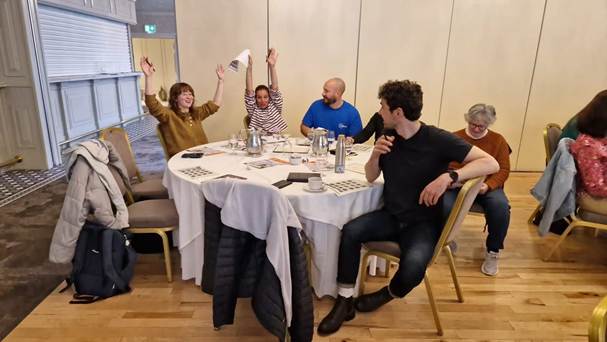
The day began with coffee and networking, followed by a Mexican wave by the participants to tune in to the right vibe!
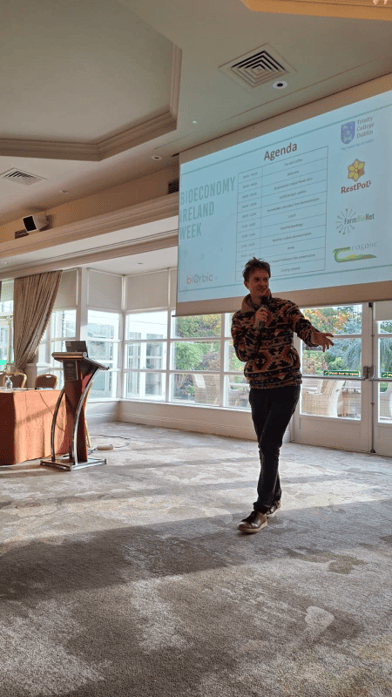
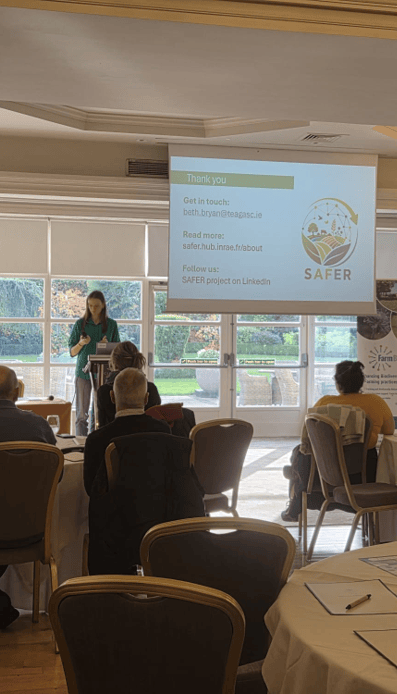
The first talk was from Ian Martin introducing Biorbic and their activities. This was followed by a presentation of Beth Bryan which talked about the SAFER project (Strengthening Agricultural landscape multiFunctionality through expansion of agroecological farming in EuRope), which aims to support the large-scale transition to agroecological farming in Europe, by investigating the knowledge gaps and by mobilising a European network of Living Labs.
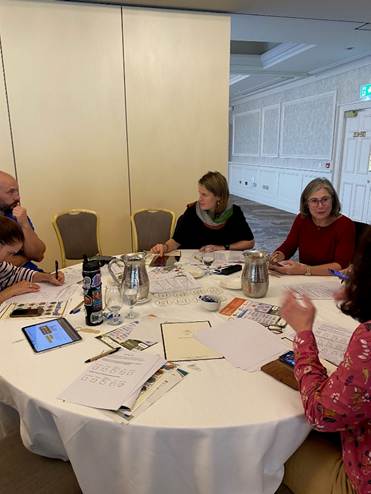
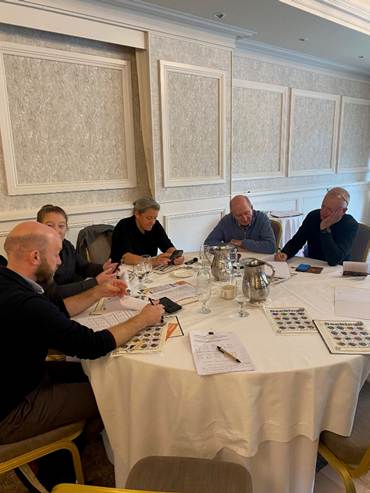
The morning continued with the workshop organized by FarmBioNet. Saorla Kavanagh, from Teagasc, introduced their new tool, a Biodiversity-Friendly Farming Cost-Benefit Calculator. This is a decision-support tool designed to help farmers understand the economic impact of biodiversity friendly farming (BFF) practices, to support informed on-farm decisions. The workshop goal was to revise the weighting on the financial side of the tool. The participants were divided in groups to discuss which financial and social benefits and costs are related to different BFF practices and to give their opinion on the Irish-specific value on the operational cost and benefit associated with some of these BFF.
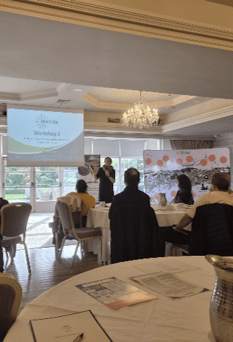
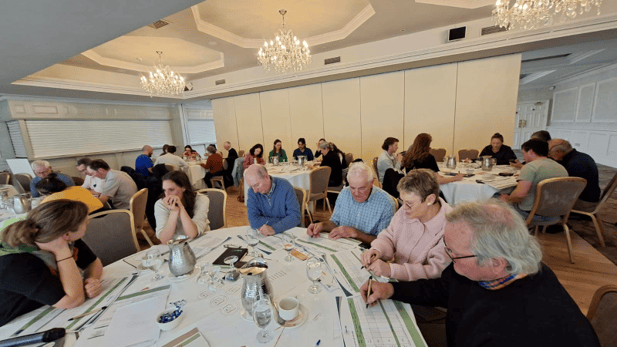
At this point, a lunch and a coffee were exactly what we needed!
After the break, Jane Stout from Trinity College Dublin introduced the second session of the day. To keep the buzz going Ian Martin and Irene Bottero organised a BeeBingo! The bingo gave the opportunity to audience to familiarise with the incredible Irish bee diversity (since all the species shown in the Bingo cards were found on the Living Lab farms during the summer, by the RestPoll team conducting fieldwork)! Special prizes were offered to the lucky winners of the Bingo and consisted in swatches to identify insects offered by the National Biodiversity Data Centre (NBDC) and other gadgets offered by BiOrbic!
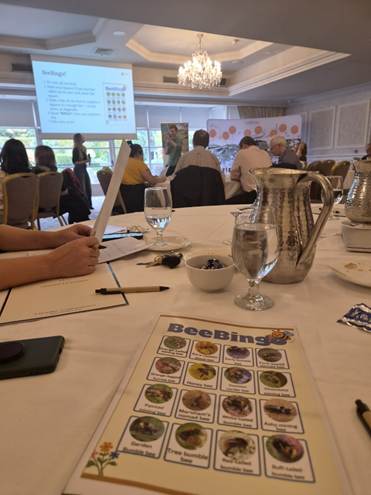
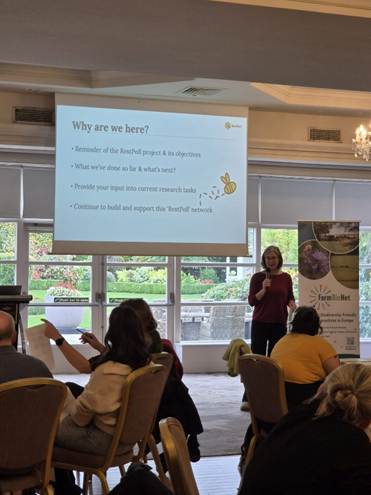
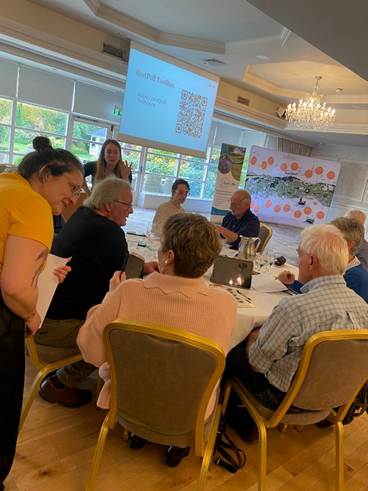
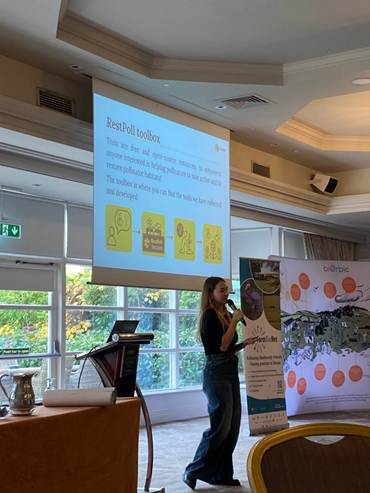
After the bingo, it was the turn of Irene Bottero from Trinity College Dublin, to present the RestPoll project and its goals – enabling society to reverse the decline of pollinators and permanently restore wild pollinator habitats! During her presentation she showed the progress that was made in the last year, she introduced the wide team working for RestPoll both in Ireland and across other (fifteen!) European countries and she stressed the importance of the Living Lab workshops as main source for sharing different perspectives on the issue of pollinator restoration and biodiversity conservation, in agricultural settings. She finally introduced the new tool designed by RestPoll – the RestPoll Toolbox! This is a website that collates interactive, free, and personalized resources, designated to empower everyone to take action to restore pollinator habitats! Participants were therefore asked to divide in different groups representing the stakeholders (farmers, farmers advisors, and researchers) to try and use the website and provide feedback by filling anonymous questionnaire and by participating to an open discussion.
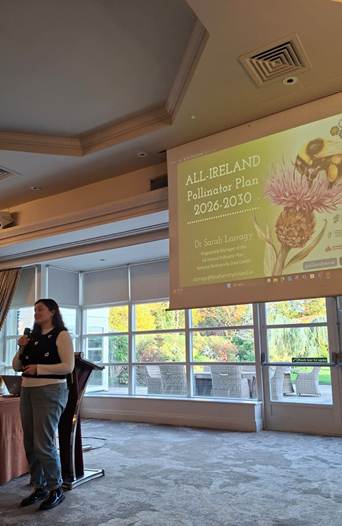
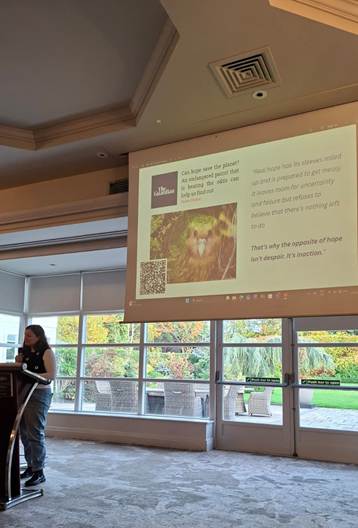
The day ended on a touching note of hope and positivity brought by Sarah Larragy, who, in addition to presenting the progress and new objectives of the All Ireland Pollinator Plans (AIPP), reminded everyone of the importance of “real hope” which bring people together to make the world a better place. Sarah cited the words from Helen Pilcher’s article: “Real hope has its sleeves rolled up and is prepared to get messy. It leaves room for uncertainty and failure but refuses to believe that there’s nothing left to do. That’s why the opposite of hope isn’t despair. It’s inaction.”
Events like these perfectly fit into this definition. With engaged participation and with the collaboration of different stakeholders it is possible to make the difference and to take action and support biodiversity and habitat restoration.
This day was made possible largely thanks to the farmers, farm advisors and researchers who worked collaboratively to explore ways of making farmland more sustainable.
Thanks to Saorla Kavanagh, Meritxell Grau Butinyac, Irene Bottero and Ian Martin for organizing the workshop and to all the mediators and guests, including Jane Stout, Sarah Larragy, Jessica Knapp, Aisling Moffat, Moya Owens, Fernanda Azevedo, Katie Gahan and Aobh Keating.


