Blog

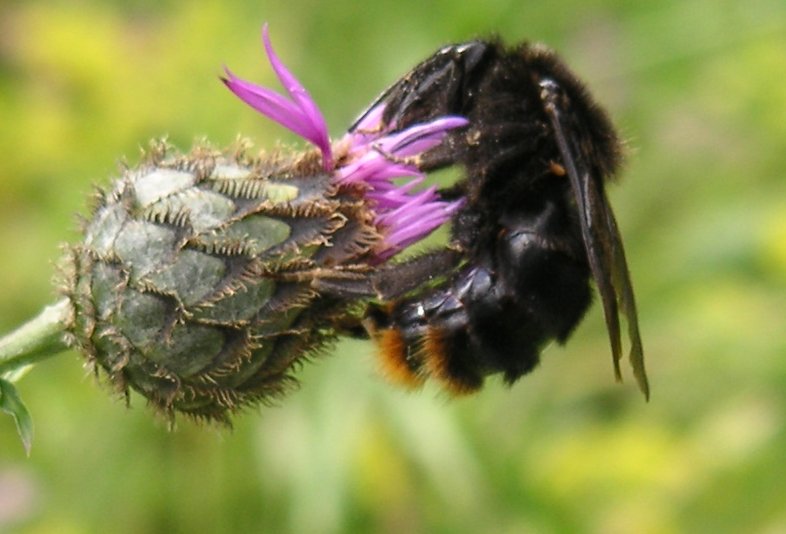
A bee feeding on a cornflower in the middle of diverse grassland, with many other flower species visible in the background.

ZooSoc Takeover: Should the law mind its own B(ee)sense?

A look at the role of regulation in facing pollinator decline.

The vital role of science in researching the importance of pollinators and their role in food production and the protection of the environment is well established. However, a further trans disciplinary approach is required to spread the message of their importance and to convince society at large that we all need to play a part in addressing pollinator decline. As a Law student with a strong passion for the environment, I am interested in the practical realisation of such an approach.

Upon my selection for the Trinity Hall environmental team this year, I was encouraged, by my reading of the All Ireland Pollinator Plan, to attempt to create a pollinator friendly haven on the grounds of Hall. By cordoning off an area of Hall’s land and encouraging the growth of pollinator friendly plants, we could do our bit to reverse the decline in Ireland’s pollinator population, thus benefitting both the environment and the population of Hall.

WildFlowerLawnsandMeadows
A pollinator friendly grassland! Image credit: Wild Flower Lawns and Meadows.

My desire to implement such an initiative was surprisingly compounded by my first year legal studies. At the end of our final lecture in my favourite module of the year, entitled Legislation and Regulation, our lecturer imparted some apt words of wisdom. He acknowledged that even though both legislation and regulation are oftentimes used to break down and tear apart human behaviour, they can also be used to create and to positively influence both individual behaviour and society at large.

This sentiment may appear aspirational, particularly in the context of environmental law. However, application of some of the substantive lessons taught in the module revealed to me that attitudes towards the environment may be altered without having to rely on the imposition of explicit legislation or regulation.

A different approach, that of reliance on a duality of subtle regulation, must be adopted. This duality includes, first and foremost, regulation by norms.

Convincing people that it is socially beneficial to act in an environmentally friendly manner begins with the implementation of schemes such as the Pollinator Plan. Educating people on the importance of pollinators and publicly displaying pollinator friendly gardens affects a subconscious attitude change in how people understand pollinators and their important role in biodiversity. Over time, and through the increased advertisement of this message, it becomes the norm to adapt one’s garden to become more pollinator friendly. Once this norm takes hold, it is regulated by people, for people, through peer pressure and desire to maintain a reputation.

droitenvironnement
The importance of balanced regulation in addressing the environment. Image credit: Cabinet Salès.

This method of regulation is compounded by the next – regulation by architecture. The introduction of pollinator friendly gardens on the rooftops of high rise apartment buildings and office blocks could augment the behaviour of their residents and workers respectively. Just as architectural changes like speed bumps make people conscious of their driving speed, the clever placement of such gardens has the power influence one’s desire to affect positive pollinator change.

pollinator-friendly-rooftop-garden
A pollinator friendly rooftop garden. Image credit: Amanda Carlucci, theNatureFan.com.

Dependence on such indirect forms of regulation could allow an environmental attitude change to be achieved not through reliance on a forced rhetoric of environmental awareness, against which people often feel compelled to rebel, but through the implementation of visible environmentally friendly initiatives, designed to subconsciously encourage people to be increasingly mindful of their own environmental impact.

Buoyed by recent success in creating pollinator friendly plots in Trinity Hall and by the ecological areas blooming with pollinator plants here on campus, I believe that the Trinity Campus Pollinator Plan can be the start of such an environmental mindfulness movement.

This week ZooSoc are taking over CampusBuzz! Expect a new blog everyday written by student members of the society. Today’s entry was written by Caoimhe White (@ZooSoc). Caoimhe is in her 1st year of Law at TCD. Her main areas of interest are environmental and animal welfare policy.

ZooSocTakeover2


ZooSoc Takeover: Learn your A, Bee, Cs

Bee Alert! A KEY to Identifying Irish Bumblebees

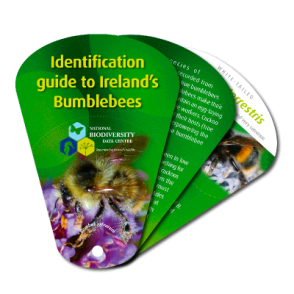
Here in Ireland, we have 20 species of bumblebee. Telling them apart can be quite difficult for amateur naturalists, but hopefully this key can help you distinguish between the Irish Bumblebees!bumblebee-swatch

If you do find a bumblebee and think you have successfully identified it, you should send a photo of it into the National Biodiversity Data Center (NBDC)

Also available from the NBDC are handy swatches for Bumblebee Identification available for €6.

Before you can start identifying your bumblebees you’ll need to know your insect body parts. The thorax is the middle segment of insects, and is the part from which the wings and legs are attached. The abdomen is the large back part of the insect and is divided into a variable number of segments.

generic_bee

ZooSoc Takeover: How to Bee Helpful

There are 20 species of bumblebee in Ireland. These fuzzy little insects play a key role in pollination. However, pesticides, climate change and disease are causing declines in bumblebee populations worldwide. As part of the “Irish Pollinator Initiative” a “Bumblebee Monitoring Scheme” has been set up. This citizen-science monitoring programme will provide a long-term dataset on changes in bumblebee populations over time in Ireland.

You can enjoy a nice walk around local parks or gardens while doing your bit to save the bees. Why not walk around campus and see how effective our Campus Pollinator Plan is!

Here is how you help collect data for the programme:

1. Learn your bumblebeesbumblebee-swatch

Before you go out into the field you’ll need to be able to identify some of the more common bumblebee species (check out Eoin’s blog, going live tomorrow!). The National Biodiversity Data Centre has a fantastic little swatch on bumblebee identification that can fit in your pocket. You can order one here.

2. Pick a route

Your route needs to be 1-2km in length, which would take under an hour to complete while walking slowly. If you’re in Dublin pick a park, or take a trip outside the M50 to find somewhere green! When you decide on a location make sure to let the organizers of the monitoring programme know.

3. Choose a day

To get accurate results you’ll need to monitor bumblebees on this route on eight separate occasions between March and October. Try to avoid collecting data in consecutive weeks and try to do the walks between 11:00 and 17:00 on days when weather conditions are suitable for bumblebees.

spring-tree-flowers-meadow-60006
One of the great things about surveying bees is they tend to prefer nice weather too! Image credit: Pixabay, Creative Commons.

4. Record the bumblebees you see

Walk slowly along the route and count the number of each species of bumblebee you see within 2.5m either side of you. Make sure to write down the start and finish time of the walk and record the following conditions: average temperature, wind direction and wind speed (using the “Land Conditions” guide in the Beaufort Scale).

5) Upload Online

Once you have collected your data you can upload it online here.

A more detailed description of the monitoring scheme with full instructions can be found here.

Bombus_rupestris-_side_(rupestris01)
The red-tailed cuckoo bee (Bombus rupestris) is one of Ireland’s four endangered bumblebee species. Image source: Andreas Schmitt, Wikimedia Commons.
By collecting these data you will allow researches, such as ecologists in Trinity, to study the long-term population dynamics of bumblebees, which is vital for their protection. So if you contribute to the “Bumblebee Monitoring Scheme” you can enjoy some time out in the natural world while feeling good for helping to save the bees!

This week ZooSoc are taking over CampusBuzz! Expect a new blog everyday written by student members of the society. Today’s entry was written by James Orr (@ZooSoc). James is in his 4th year of Zoology at TCD. His main areas of interest are trophic ecology, rewinding, and plant-animal interactions. He has a passion for wildlife photography – www.jamesorrphoto.com.

ZooSocTakeover2

A honeybee feeding on a purple inflorescence (possibly an Echinops species)

ZooSoc Takeover: The Birds and the Bees

Ah spring. The bright mornings, the stretch in the evenings, the weather finally nice enough that you should definitely start to study. But you don’t. Instead you take a leisurely stroll around college, soaking up the ambiance; watching birds building their nest/stealing your chips, butterflies landing on the noses of freckled children, bees, humming through the…

Hang on, when was the last time you saw a bee? Could it have been a wasp? What even is a pollinator?

Anthidium_February_2008-1.jpg
Solitary bee Antidium florentinum. Image credit: Alvegaspar, Wikimedia Creative Commons.

This Trinity Week, Professor Jane Stout will be launching the campus pollinator plan with the aim of increasing biodiversity and awareness thereof within the college grounds. By way of introduction, let’s take a look at some of the core concepts that you have forgotten/have yet to actually hear about pollinators.

The Buzz from the Hive – Origin Story

In spring 2016, Prof Jane Stout contacted my colleague Susie Bioletti about establishing a research apiary at Trinity as part of the new Campus Pollinator Plan. With the assistance of “Estates and Facilities” and the donation of space by TCD’s Department of Mechanical & Manufacturing Engineering, the way was clear by summer. Following a rest over Winter, the hive is now gearing up for the 2017 season and, over the next year, our monthly blog, “The Buzz from the Hive”, will follow the progress of the colony.

IMG_1486
Watching your honeybees entering and leaving the hive on a sunny lunch time has to be one of the beekeeper’s favourite pastimes.

The sight of foraging honeybees returning to the hive is one that never loses its appeal for beekeepers. That’s why when Susie requested assistance to install a colony of bees on the rooftop of the Parsons Building, I jumped at the opportunity. The prospect of doing hive inspections at lunchtime, only a stone’s throw from both our offices, was irresistible. Once safety protocols were duly satisfied, the nuc — a starter home for bees, arrived in the boot of Susie’s car. Once safely ensconced in the apiary, we were free to begin swapping our favourite beekeeping anecdotes — Susie and I work in very different areas of College (neither of which are connected to pollinator research) but we both share a common interest in bees, underscoring their universal appeal.

Soon, the colony was ready to be transferred into a new full-size hive, painted Trinity blue of course. A subsequent check identified that the young queen is present and laying, and stores are in ample supply for a burgeoning colony. A good start by all accounts and the planted environment of Trinity’s campus should provide for all the needs of the hive.

IMG_1484.JPG
Before long, our colony had outgrown its nuclear (starter home) and was ready to move into its new premises – all decked out in Trinity Blue!

Bees are a fascinating insect, not least due to their remarkable communication systems. Their primitive looking meanderings belie a complex social network that can also be seen in their cousins, the ants. Information is transmitted by many modes, including chemical messages in the form of pheromones. Blends of organic compounds are secreted by the glands of bees and serve to regulate the activities of the colony, which can be regarded as a super-organism. The various castes of bees influence different aspects of hive life including reproduction, building and defence. This ancient method of communication is something akin to a live news stream, complete with feedback loops, and provides an efficient means for a hive of sometimes more than 50,000 bees to co-exist with a singular purpose.

Keep an eye out next month for more news from the hive!

Marcus Phelan is the Senior Technical Officer for Trinity’s Hazardous Materials Facility and Susie Bioletti is the Head of Preservation and Conservation at the Library. Together, they are our campus beekeepers and will be writing a regular segment for Campus Buzz on “The Buzz from the Hive”.