Second Irish RestPoll Living Lab workshop

Written by Dr Sarah Larragy, Postdoctoral researcher in Botany, School of Natural Sciences, Trinity College Dublin, working on the EU-funded RestPoll project

On the 3rd November 2025, we hosted our second RestPoll Living Lab workshop on Derrymullen Farm, Allenwood, Co. Kildare. Our host, Willie Mulhall, is an organic beef farmer who has recently become one of Farming for Nature’s newest ambassadors (Fig. 1; read about all Willie does on his farm for nature here)!

We set up shop for the day in Willie’s cattle shed – which had been transformed into the cosiest of rustic living rooms for our workshop (Fig. 2). Participants were treated to a full spread of pastries and hot drinks for breakfast, kindly provided by the aptly named Queen Bee coffee, and many more baked goods provided by researchers Moya Owens and Fernanda Azevedo (which were – we learned later – the fruits of ‘stress-baking’ in the days leading up to the workshop!). Considering the grey and gloomy November weather, we had great attendance from researchers and farmers, and also were lucky to have representatives from both local and national government, Teagasc Signpost advisory service and agribusiness (Kepak group). Researchers included four individuals from the RestPoll project (Sarah Larragy, Fernanda Azevedo, Mariia Fedoriak, Zehra Başaran), Saorla Kavanagh (Research Officer for Farmland Biodiversity in Teagasc, FarmBioNet, SAFER project), Aisling Moffat and Beth Bryan (SAFER project, UCD, Teagasc), Moya Owens (TCD, Antenna project), Clementine Sitouleux (TCD, Teagasc), Sirus Rasti (Erasmus plus student based at TCD), and Sarah Browne (previous TCD RestPoll field assistant).

Figure 1 Our host, Willie Mulhall, manages an organic, “home bred and home fed” beef farm in Derrymullen, Co. Kildare. Willie was involved in the Protecting Farmland Pollinators project, in which he doubled his pollinator points by taking on actions to support biodiversity, and has recently become a Farming for Nature ambassador (congratulations Willie!).

Figure 2 Pictures from the second annual Living Lab workshop in the Irish Case Study Area of Co. Kildare.

A massive thank you to our host Willie, and to all our enthusiastic and generous participants for attending and bringing so much positivity to the day.

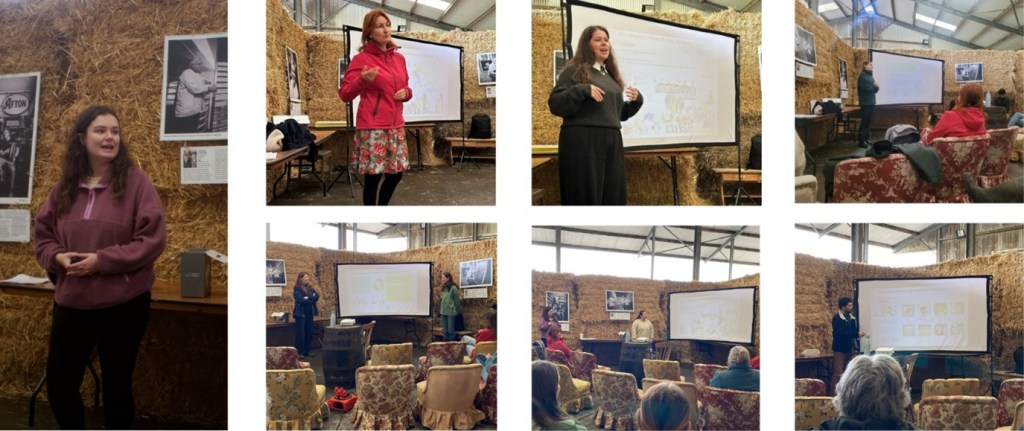
Restpoll updates and future plans
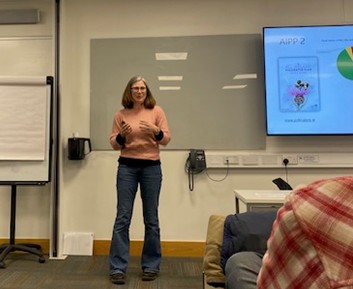
Somehow, the overcast day still let enough light in to cause issues with the projector’s visibility – but once all brightness settings were maximised, Sarah proceeded with the official welcome to participants and gave them all a run-down of progress made so far in the RestPoll project.
To catch everybody up, Sarah reminded the consortium that RestPoll is a Horizon Europe funded project that is all about restoring habitats for pollinators in agricultural settings using a stakeholder-driven approach.
In Ireland, approximately one-third of our bee species are threatened with extinction, with similar worrying trends for butterflies and hoverflies. The key factors of pollinator decline and their links to agricultural practices were outlined (e.g. habitat loss, pesticide use), but it was made very clear that farmers face many challenges that disrupt or impact their capacity to help biodiversity on their farms.
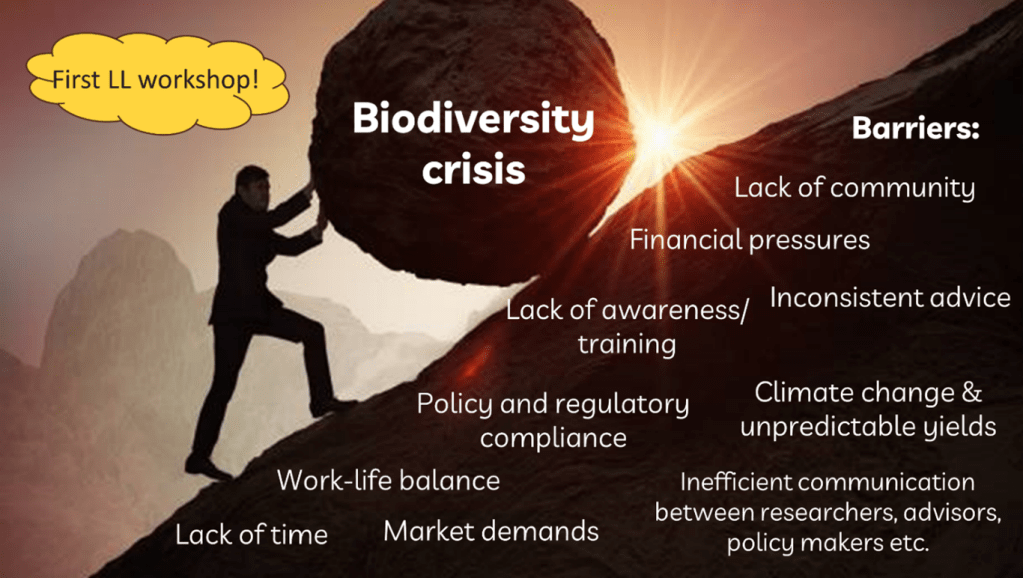
In fact, many of these challenges were discussed at the first Irish RestPoll Workshop in 2024. Sarah was inspired by a recent talk from Sean McCabe (Head of Climate Justice and Sustainability, Bohemian Football Club) to visualise these barriers as the Sisyphus-esque dilemma of pushing a rock – the biodiversity crisis – up a steep hill composed of capacity limiting issues facing farmers in agriculture (Fig. 3). To extend this analogy, RestPoll is a holistic, interdisciplinary project that hopes to address both rock and hill alike.

Figure 3 Farmers face many barriers that can impact their capacity to support biodiversity on their farms.

To meet these objectives, RestPoll has a central ‘living lab’ approach in which stakeholders such as farmers, advisors, policy makers and more are invited to come together for two-way discussions and provide input into the research underway in the project (what we call “co-design”).
Sarah gave updates on the progress of several tasks underway on the RestPoll project.
Field work:
All partnering institutions in RestPoll are tasked with establishing a Case Study Area to test the effectiveness of restoration measures on pollinators. We have now a fully established Case Study Area in Co. Kildare area which includes 21 farms (beef and arable), composed of 10 farms previously involved in the Protecting Farmland Pollinators EIP, and 11 that were not. We are conducting pollinator surveys alongside hedgerows on all of these farms, where we monitor for bees, hoverflies and butterflies (Fig. 4). We have completed one full round of pollinator surveys in the summer of 2025, and will conduct a second round of surveys in the summer of 2026. These results will feed into a larger meta-analysis by the RestPoll team to understand the overall effectiveness of restoration measures for pollinators in agricultural settings.

Figure 4 A highlight reel from our field work last summer!

Pollinator Restoration Toolbox development:
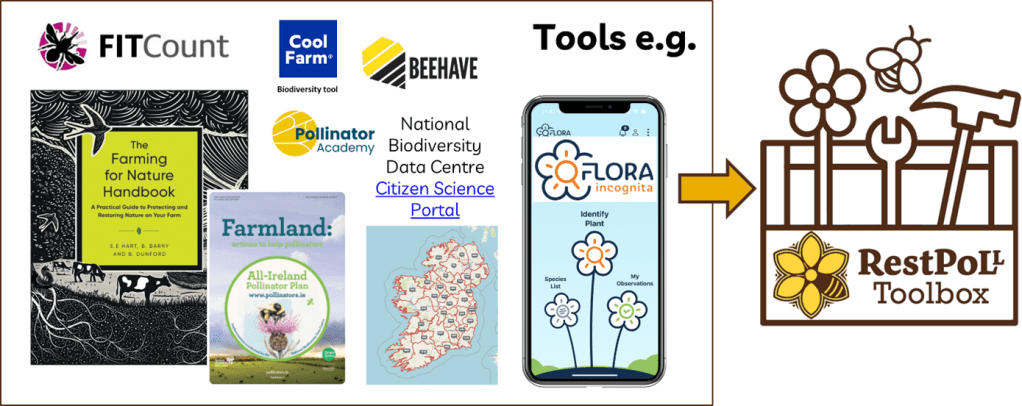
Trinity College is leading a task on developing a RestPoll Pollinator Restoration Toolbox, which will bring together practical tools and resources to support pollinator-friendly management. As part of this, we launched a survey on the use of pollinator tools and combined it with several other ongoing surveys to reduce the time burden on stakeholders. The results are now summarised in a blog post. In the long term, all collected tools will be organised into an easy-to-navigate website where users can filter by theme and quickly find resources that suit their needs (Fig. 5).

Figure 5 Development of the RestPoll Toolbox

RestPoll AGMs (2024, 2025):
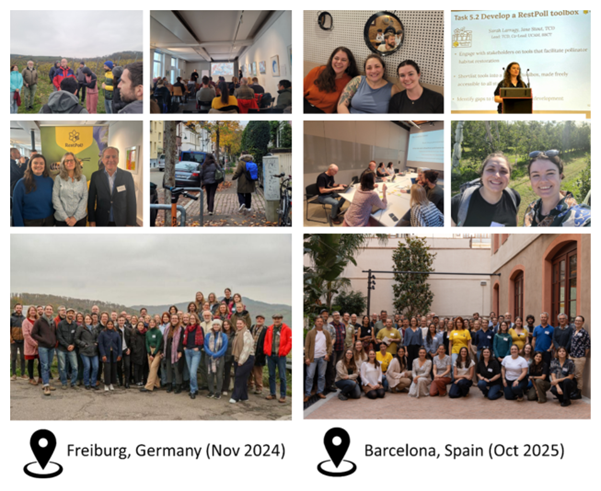
Sarah also highlighted participation in two recent RestPoll AGMs—first in Freiburg (Nov, 2024) and then in Barcelona (Oct 2025)—where we met with colleagues, ran workshops, and shared project updates (Fig. 6).

Figure 6 Highlights from the RestPoll AGM 2024 and 2025

Strengthening collaborations:
Sarah spoke about our growing collaborations. Following feedback from last year’s Living Lab workshop, we established a formal partnership with the VALOR project, which proved to be a very positive and productive experience. This collaboration helped inspire the creation of a wider effort by Dr Tom Breeze to review ongoing EU projects and explore opportunities for alignment, shared learning, and joint activities. This will be hugely useful in maintaining the momentum and effective production of outputs from all projects going forward.
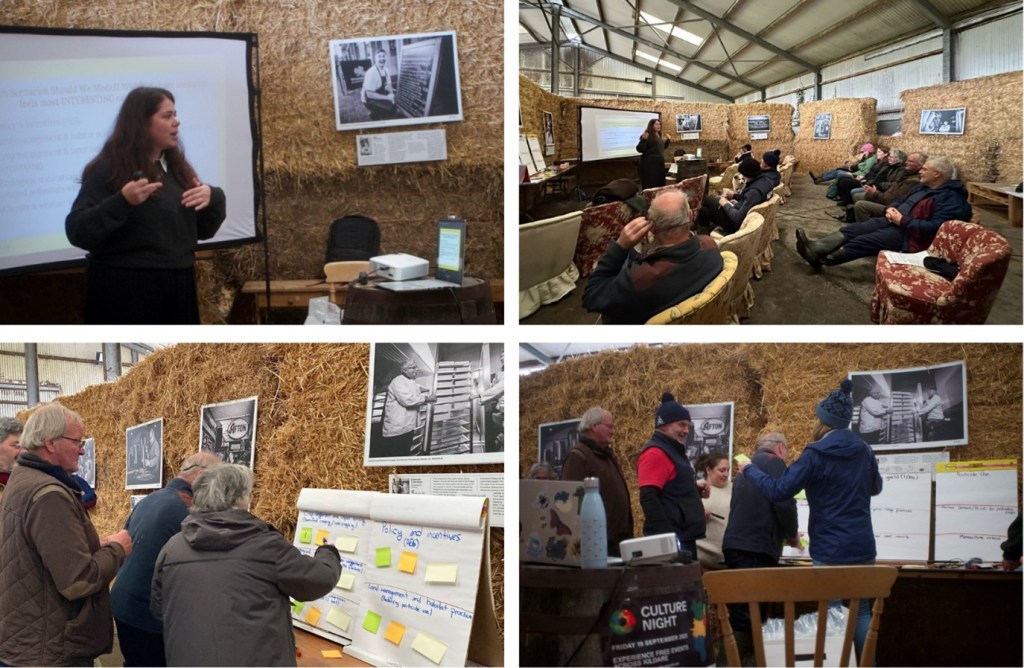
Finally, Sarah emphasised how deeply researchers appreciate the commitment, engagement and input farmers bring to these projects, and thanked them for being champions of biodiversity conservation. Sarah shared how RestPoll colleagues have reacted with genuine excitement and admiration on hearing about the enthusiasm of the Irish RestPoll Living Lab network and so encouraged them to keep up the important work. “There is something really special going on here [in this community of Irish farmers], and heads, both in Ireland and abroad, are turning to the important work you are all doing here”, Sarah finished on an encouraging note.

Rapid fire research rounds
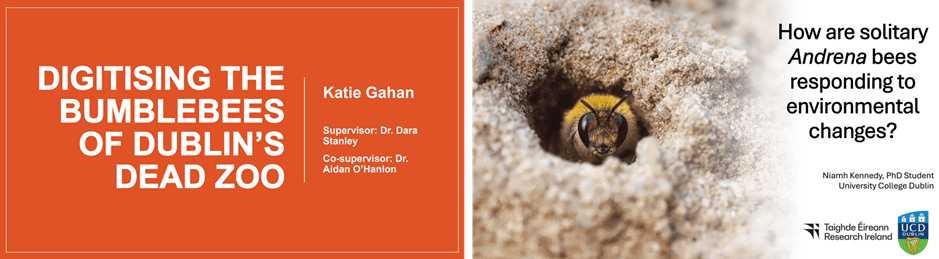
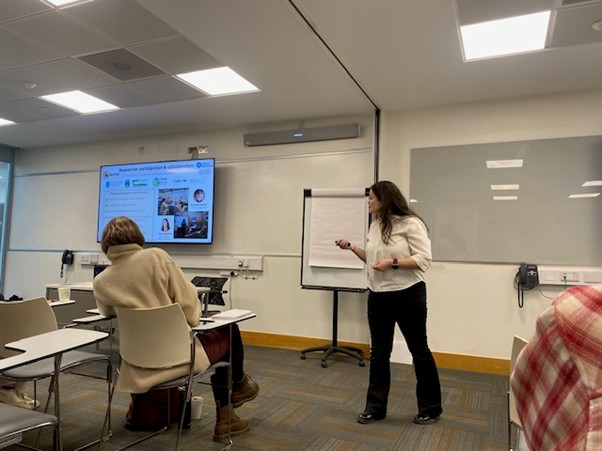
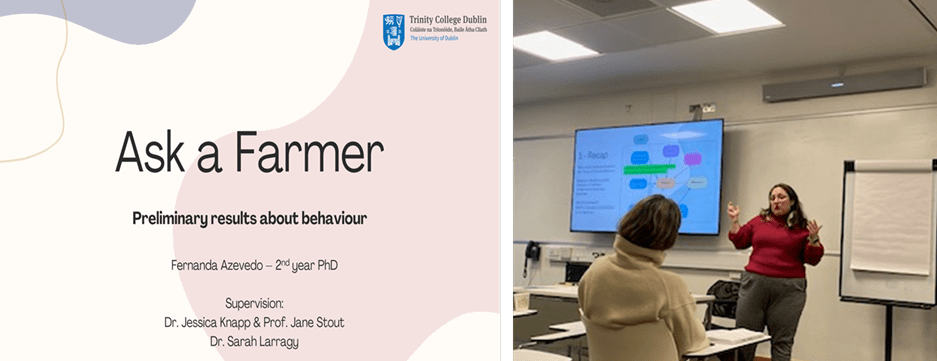
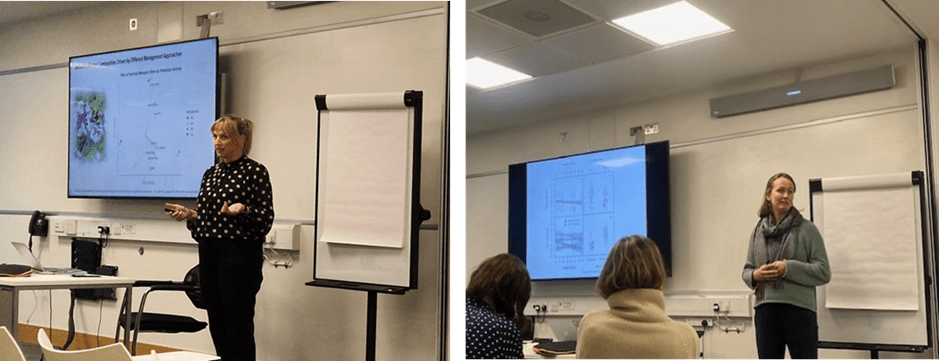
Following the presentation of RestPoll updates, we ran a “rapid fire research round” to put names on faces of the many researchers working on the several biodiversity-related projects currently running (Fig. 7). Many of these have similar objectives and themes to the RestPoll project, which provide ample opportunity for cross-project collaboration and synergy. This was useful particularly for PhD students and post-doctoral researchers who have just begun and plan to engage with these stakeholders in the future.

To read more about the researchers or the projects going on at the moment, see the following links:
FarmBioNet: Farmer-focused Biodiversity and Agricultural Knowledge Network – Dr Saorla Kavanagh (Teagasc)
SAFER: Strengthening Agricultural landscape multiFunctionality through expansion of agroecological farming in EuRope – Dr Saorla Kavanagh (Teagasc), Dr Dara Stanley (UCD), Dr Aisling Moffat (Teagasc, UCD), Beth Bryan (Teagasc, UCD).
Ponds for Pollinators PhD project – Clementine Sitoleux (TCD, Teagasc)
Ask a Farmer PhD project – Fernanda Azevedo (TCD)
Antenna (bonus blog here) – Moya Owens (TCD)
• And, of course, RestPoll (another bonus blog here):
o Dr Sarah Larragy (Irish LL lead; TCD)
o Zehra Başaran (RestPoll LL coordinator; CIHEAM, France)
o Prof Mariia Fedoriak; Yuriy Fedkovych Chernivski National University)

Figure 7 Some of the researchers who introduced themselves during the Rapid Fire Research Rounds. Top row (L-R): Sarah Larragy, Mariia Fedoriak, Zehra Başaran, Clementine Sitoleux. Bottom row (L-R): Aisling Moffat, Beth Bryan, Sarah Larragy, Fernanda Azevedo, Sirus Rasti.

“The Farmer’s Say” activity (with Fernanda Azevedo)
Fernanda led an activity designed to test her behavioural framework which she has developed in her first year her PhD project (Fig. 8).

However, before starting this activity, a farmer in attendance asked for the floor to share their reflections on what makes Ireland a “magic place” for biodiversity conservation in agriculture. First, they said there have been many successful case studies and positive experiences with researchers where farmers have been listened to rather than to be spoken down to, which is often the norm (see BurrenBeo, Protecting Farmland Pollinators, Danú Farming Group). By meeting with researchers and fellow farmers on these projects, they have received permission and confidence to join the conversation and have a voice. It was also highlighted by the farmer that love for nature is embedded in the psyche of Irish farmers.
This set the tone perfectly for Fernanda’s activity, “The Farmer’s Say”. Fernanda’s PhD research delves into the sociological side of pollinator conservation in agriculture. She will investigate the key factors (e.g. beliefs, attitudes, context) that influence farmers to take (or not take) action for biodiversity on their farms.

Figure 8 RestPoll workshop attendees participate in Fernanda’s activity “The Farmer’s Say”

In the activity, attendees were presented with a “Mentimeter” link (or print-out sheets where technology proved unruly). Fernanda then guided participants through several statements and asked that they rate each from 1 to 5 on how strongly they resonated with them. Many of these statements were prompts for discussion, the main points of which are summarised below.
• “Farmers should be happily farming, not worrying about paperwork”: A key point of discussion included the topic of payment schemes to support farmers in taking up biodiversity-friendly farm management practices. Several farmers in attendance felt that the administration burden of these schemes on the farmer actively discourages involvement by farmers. Farmers also expressed concerns about being penalised by scheme auditing or as a result of ineffective or misaligned communication between organisations involved. Words used to describe the ideal payment scheme included low-admin, fair, results-based, bespoke, and choice. However, there were also some fears expressed that being a part of incentive schemes or credit schemes could impact autonomy and ownership over the farm and its resources.
• Need to improve education, training and advice: Farmers and other participants stressed that more effective, ecology-focused education is needed for the next generation of farmers. They felt that if we empower the farmer, then the results will come naturally. One opportunity highlighted was the efficacy of farmer-to-farmer knowledge exchange. Farmers felt that once they had “permission” given to them by their fellow farmers and reassurance that it is “alright” to do a certain action, they would have the confidence to proceed.
• With regards to pollinator or biodiversity-related tools, farmers asked specifically for tools that might provide advice that was either specific to or could be adapted to their own farming situation. The opportunity of satellite imagery to be used for the mapping of habitat and biodiversity actions was also suggested by participants.
• Spread the message “It’s nice to be ugly” – Participants described the pressure to have ‘tidy’ looking farms and suggested the need for a mindset shift towards appreciating ‘scruffy-looking’ biodiversity-friendly measures. There was also the feeling that farmers supporting biodiversity must be appreciated more. It was felt that through empowering farmers with data of the species found on their farms, they can show evidence of the positive impacts of their land management practices.
• ‘Low-hanging fruit’: There are many actions that are beneficial to nature that likely won’t impact the productivity of the land and may even provide productivity benefits e.g. improving populations of natural enemies of pests. Importantly, FarmBioNet is doing work towards identifying these low-cost, high-gain actions.
The results of this activity will help Fernanda strengthen her theoretical framework on the key factors influencing farmer behaviour to move towards more biodiversity-friendly farming practices and will provide the basis for individual interviews with farmers in early 2026 (if you are interested in participating in these interviews, reach out to Fernanda at: deolivef@tcd.ie)


Farm walk
After lunch, we went on a short farm walk between showers of rain, during which we met the resident pigs and horse—an unexpected highlight that everyone seemed to enjoy (Fig. 9). As we moved around the farm, discussions naturally continued, with participants revisiting many of the themes raised in the earlier session.

Figure 9 Workshop participants on a farm walk around Derrymullen Farm, led by Willie Mulhall.

Making a socio-economic model (with Zehra Başaran)
The next activity was led by PhD researcher, Zehra Başaran, who travelled all the way from the International Centre for Advanced Mediterranean Agronomic Studies (CIHEAM) in Montpellier, to attend the Irish Living Lab workshop. Zehra presented her approach to developing a socio-economic model which aims to help predict agricultural outcomes of ecological actions taken to support pollinator conservation. The goal of the activity was, first, to familiarise stakeholders with the concept of modelling (i.e. a simplified version of a real-life situation that helps us understand processes, predict what might happen, and test different situations). Then, Zehra had discussions with farmers on various aspects of this model to ensure that it accurately reflects stakeholders’ specific decision-making needs.
Finally, Zehra invited participants to interact and provide feedback on specific aspects of this model using sticky notes and flipcharts (Fig. 10). Participants learned a lot in this exercise on how models can be developed and applied to farming and biodiversity conservation!

Figure 10 Zehra hosted an activity on creating a socio-economic model during the afternoon.

Horizon scanning (with Mariia Fedoriak)
At the end of the workshop, our colleague, Prof Mariia Fedoriak (from Yuriy Fedkovych Chernivski National University, Ukraine; Fig. 11), carried out short interviews with farmers as part of the RestPoll horizon-scanning task. She is visiting all RestPoll case-study areas to identify the key barriers and opportunities farmers face in restoring and maintaining pollinator habitats. These conversations will help build a clearer picture of emerging challenges, future needs, and the kinds of support that would most effectively enable farmers to enhance pollinator-friendly management across different regions.

Figure 11 Prof Mariia Fedoriak visited the Irish Case Study Area to conduct ‘horizon scanning’ interviews with farmers for the RestPoll project.

Take home messages
Across the sessions, several common themes emerged:
• The importance of practical, bespoke and low-admin supports for farmers,
• The need for effective and clear communication between stakeholder groups (farmers, researchers, policy makers, advisory service and industry),
• The value of nature and biodiversity beyond payments, and
• Concerns about the future of farming for younger generations.
Most importantly, the day highlighted the strength of this community — people from different backgrounds and roles coming together with a shared interest in supporting biodiversity and farming in Ireland.
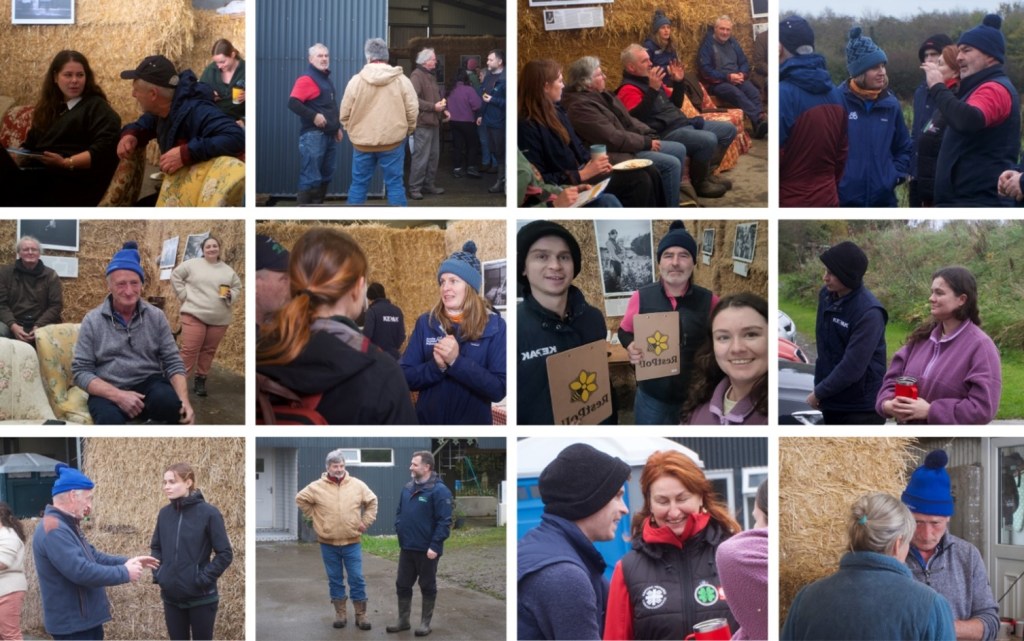
It was deeply encouraging to see such genuine cross-sector interaction, with industry and environmentally focused farmers exchanging views openly (Fig. 12). This kind of cooperation and dialogue across perspectives felt particularly valuable and was a very exciting aspect of the workshop. We were so grateful for the helpful feedback provided by all participants on our research tasks – your insights will directly shape the next steps of our work!
We hope the workshop felt as positive and worthwhile for you as it did for us, and we look forward to sharing updates and results back with you very soon!

Figure 12 The workshop maintained a highly positive, collaborative atmosphere, with strong engagement among and between the various stakeholder groups contributing to its success.

Tired of the winter blues? Read about our summer of farmland pollinator surveys!

Written by Dr Sarah Larragy, Postdoctoral researcher in Botany, School of Natural Sciences, Trinity College Dublin, working on the EU-funded RestPoll project, and Moya Owens, Research Assistant in Botany, School of Natural Sciences, Trinity College Dublin, working on the ANTENNA project.

As we trudge our way through the dark and grey wintertime, it is no wonder we are reminiscing over sunny, insect-filled days. The People and Nature group saw a very busy season last summer, which brought us to and from farms all around the Co. Kildare area to conduct pollinator research! Our travelling troupe of bug catchers this summer included:
• Dr Sarah Larragy (post-doc, RestPoll)
• Fernanda Azevedo (PhD student, RestPoll)
• Moya Owens (Research Assistant, ANTENNA)
• Michalis Cristou (Biodiversity and Conservation MSc student)
• Sarah Browne (Research Assistant)
• Katie Gahan (Research Assistant)
• Daan Mathijssen (Summer intern)
• Sirus Rasti (Erasmus plus student)

Figure 1 The TCD RestPoll fieldwork team (a lovely bunch 😊 – thanks for all your help!)


This work contributed to two pollinator-related EU projects being conducted by members of the lab:
RestPoll: Restoring pollinator habitats across European agricultural landscapes (see Sarah’s blog here)
ANTENNA: Making technology work for monitoring pollinators (see Moya’s blog here)

RestPoll field work

As part of RestPoll, we are collecting field data to see if restoration measures for pollinators are effective. Many of our farms were previously involved in Protecting Farmland Pollinators and carry out many practices that are likely to benefit our busy bees and other pollinators. These biodiversity friendly actions include reduced hedgerow cutting, reducing or eliminating insecticide use, increasing the area of field margins and letting ‘weeds’ grow in unfarmed areas.
To conduct our RestPoll field work, it was clear we were in for an intense season of insect counting (tough work but someone’s got to do it!). The traditional methods for surveying pollinators generally involve a transect walk – this is where one walks at a slow pace while keeping their eyes peeled for any bees, hoverflies or butterflies that pass through their path. Once we spot a pollinator, we note down the species and – should we spot them enjoying a floral treat – the plant species it visits. Over the summer, we conducted three rounds of pollinator transects and floral coverage surveys across 21 beef and tillage farms in the Co. Kildare region – and have the farmers’ tans to prove it!
Antenna field work

Overlapping with the RestPoll fieldwork was the much more technologically-advanced project, ANTENNA, conducted by Moya Owens (supervised by TCD alumni Dr Jessica Knapp, now based in Lund University!). Pollinator surveys have been conducted across 6 different countries in Europe, which included four rounds of surveys on five different sites in Co. Kildare.
ANTENNA is investigating the feasibility of using fancy, solar-powered cameras to conduct pollinator monitoring. It aims to compare these high-tech approaches to traditional methods, like transecting and pan trapping. While transects are the traditional and usually the core methodology for any pollinator monitoring project, there are limitations such as not being able to see, or identify, everything you spot in the field. Oftentimes, you need to catch an insect to find out what species it is, and sometimes this requires careful examination under microscopes. Also, insects can often be difficult to catch. You may not think it, but chasing a butterfly down in a field full of boisterous cattle or waist-high wheat is a surprisingly humbling experience. Indeed, Sarah L. faced an unusually specific conundrum one day when a cow made off with her butterfly net, presumably for its own scientific pursuits.
Other traditional methods, such as pan-trapping (multi-coloured buckets of soapy solution to catch insects) have the downfall of being a form of attractant, lethal sampling – an approach we are trying to reduce to mitigate negative effects on pollinator populations. Considering these limitations, technological approaches may be a solution to gathering much needed data on pollinator richness and abundance trends, as traditional methods are time-consuming and often require some level of lethal sampling.
The cameras being tested in ANTENNA were a DIOPSIS 2.0 Insect Camera (Fig. 2A, Fig. 3) and a MiniMon camera (Fig. 2B).

Figure 2 Cameras being used in ANTENNA project include a DIOPSIS 2.0 Insect Camera (A) and a MiniMon camera (B).

The DIOPSIS camera is a fully automated system designed to detect, monitor and document insect populations, produced by Faunabit in The Netherlands. When an insect lands on the yellow screen, the camera captures high resolution images which are then uploaded to a server via Wi-Fi. Images are then processed using the image recognition model developed by Naturalis.
In terms of the MiniMon camera, this was developed by the ANTENNA team, with the aim of being a user-friendly, cost-effective camera. Unlike the DIOPSIS camera, which monitors continuously, the MiniMon camera takes a burst of five pictures every minute. As shown in Fig. 1, there is a custom-made flower plate containing 3-D printed artificial flowers which attract insects. As well as recording insects we found, we also took note of floral coverage around each stake (2m radius).

Figure 3 Katie, Sarah B. and Moya did trojan work bringing these cameras around to different sites to conduct 6-hour bouts of surveying! Here they are on day one of successfully setting up the DIOPSIS camera.

Fun finds
Over the course of the summer, we found some amazing insects, from painted lady butterflies (Vanessa cardui) to orange-tailed mining bees (Andrena haemorrhoa). Below we share with you our catches of the season!
Research Assistant Sarah B.’s main memories from this season include finding the Common Tiger hoverfly (Helophilus pendulus; Fig 4 A) and peacock butterfly (Aglais io). Another stand out moment from the summer was finding 5 small tortoise shell (Aglais urticae) butterflies on field scabious (Knautia arvensis). Katie Gahan, another Research Assistant working with us this summer, enjoyed the field full of common spotted orchids (Dactylorhiza fuchsii).

Figure 4 Some of our fun finds during field work season! A. Common tiger hoverfly (Helophilus pendulus). B. Common spotted orchid (Dactylorhiza fuchsia). C. The large carder bumblebee (Bombus muscorum). D. Many tortoiseshell butterflies (Aglais urticae) foraging on field scabius (Knautia arvensis). E. Peacock butterfly (Aglais io). F. A new buff-tailed bumblebee (Bombus terrestris) queen.

“My catch of the season was finally seeing a Large Carder Bee (Bombus muscorum) for the first time! I caught a male on one of the last days of surveying, which was even more exciting as it meant I got to hold him since males don’t sting! After I caught this one, we saw a couple more flying along the transect which was super exciting. This was probably the best day in the field for me!” – Moya

Figure 5 Moya only delighted with the male Bombus muscorum she found!

“My fun find is not exactly rare, but it is very beautiful – it is the buff-tailed bumblebee queen. In this picture we see a new queen who is likely preparing for her upcoming winter diapause by stocking up on nectar and pollen. I studied buff-tailed bumblebees during my PhD, so I always enjoy seeing these beautiful (and huge!) queens during such a vital part of their lifecycle. I also really loved seeing so many butterflies out after several mild seasons – a particular favourite was the painted lady butterfly (Fig. 6)” – Sarah L.
“I remember a day during our third round of surveys on Kepak farm where there were so many butterflies of different species out – it was really beautiful!” – Fernanda

Figure 6 A painted lady butterfly (Vanessa cardui).

A big thank you to the field work team for all their hard work this summer, it is so appreciated! And a sincere thank you to the farmers who let us come and count insects on their farms (and sometimes treated us to cups of tea!) – we couldn’t do this work without your support!

PhD opportunity: Ponds for pollinators

Teagasc PhD Walsh Scholars Opportunity: “Ponds for Pollinators”
Walsh Scholars Ref Number: 2025033

The Teagasc Farmland Biodiversity Group led by Dr Saorla Kavanagh, (Department of Environment, Soils and Land Use, Johnstown Castle) invites applications for a fully funded 4-year PhD. The PhD candidate will be registered at Trinity College Dublin and co-supervised by Professor Jane Stout, Professor of Ecology, School of Natural Sciences.

Project Background and Description
Pollinator decline is a key threat to biodiversity conservation and the provision of ecosystem services. One third of Ireland’s bee species are under threat, with intensification and homogenisation of agricultural landscapes considered the principal driver. Diversifying habitats and understanding farmer attitudes towards biodiversity are key to halting further pollinator decline. Semi-natural habitats on the farm, for example, hedgerows, woodlands and trees, and wetland areas including ponds can provide valuable food and nesting resources for pollinators. In Ireland, there is little data on just how valuable ponds are for pollinators. Restoring biodiversity-friendly habitats and designing evidence-based actions that benefit biodiversity on the farm are crucial to meet the requirements of the EU’s Biodiversity Strategy and Nature Restoration Regulation, and to inform Policy for Agri-Environment measures.
The aim of this PhD is to identify the benefits of ponds for pollinators, and gain an understanding of farmers’ knowledge of farmland biodiversity. Barriers around implementing biodiversity measures on the farm and solutions to these barriers will be identified.


Candidate Profile
The ideal candidate will:

  • Hold at least an upper second class honours (or equivalent) Bachelor or Masters degree in,
    entomology, plant science, zoology, environmental science, or another related discipline
  • Have demonstrable analytical skills in the field and/or laboratory, and in data handling, analysis
    and presentation
  • Have the capacity/willingness to think critically and creatively, and apply multidisciplinary
    techniques to address hypothesis-driven questions
  • Work well in a multi-disciplinary team, and be able to work independently
  • Have excellent oral and written communication skills
  • Be willing to travel to field sites to conduct fieldwork and interact with landowners/farmers
  • Hold a full clean driving licence and able to drive in Ireland
  • Meet Trinity postgraduate entry requirements. See English language requirements here.

Funding
This is a 4-year PhD project funded by the Teagasc Walsh Scholar Programme and covers an annual stipend of €25,000, and student fees of up to a maximum of €6,000. Project costs will be covered.


Application procedure
Please send a CV and a 1-2 page personal statement detailing your interest in the project Tuesday, June 24th 2025 via email to Dr Saorla Kavanagh saorla.kavanagh@teagasc.ie quoting the reference number (2025037) in the subject field. Your CV should include the name and contact details of two references. In your personal statement, please explain both why you are specifically interested in this PhD project and why you are a strong candidate to undertake it. Interviews will take place (online) Friday, July 4th 2025.


Project start date: September 2025
Please send all inquiries to Dr Saorla Kavanagh Saorla.kavanagh@teagasc.ie

ANTENNA – Making technology work for monitoring pollinators

By Moya Owens, Research Assistant with the ANTENNA Project at TCD

In recent years the decline in wild insect pollinators has increased dramatically, causing huge concern among the pollinator monitoring community. The 2023 EU Pollinators Initiative has set out a number of actions to be taken by the EU and the Member States to help reverse the decline in pollinators, with the first action defined as ‘establishing a comprehensive monitoring system. The current EU-wide Pollinator Monitoring Scheme (EU-PoMS) provides a methodology for transnational pollinator monitoring however many gaps still remain. Modern technologies (such as camera traps, sensors, robotics) can help to address these concerns, with the aim of overcoming key monitoring gaps by increasing taxonomic and geographic coverage, speed and accuracy.

The ANTENNA project (MAkiNg Technology work for moNitoring polliNAtors) is an EU wide project with an overarching goal of filling key monitoring gaps through advancing novel technologies which complement EU-wide pollinator monitoring schemes. The project will address the following objectives:

  1. Advance automated sample sorting and image recognition tools from individual prototypes to systems adoptable by practitioners, through a co-design approach;
  2. Expand pollinator monitoring to under-researched pollinator taxa, ecosystems, and pressures;
  3. Quantify the added value of a broad range of novel monitoring systems in comparison and combination with ‘traditional’ methods in terms of information gains related to economic costs;
  4. Provide a framework for integrative monitoring by combining multiple data streams and for developing routines for near real-time forecasting models as bases for early warning systems;
  5. Upscale from local demonstrations to the implementation of large-scale transnational pipelines and provide context-specific guidance for the choice and combination of monitoring methods and indicators for policy and end-users.

Field work

ANTENNA is organised into 5 work packages, including improving and testing new monitoring technologies, integrative modelling and large scale implementation. Here at Trinity, we are going to be testing novel technologies in the field alongside traditional methods of pollinator monitoring. This involves deploying two camera traps in the field: a DIOPSIS camera, developed by Faunabit and a MiniMon camera, developed by members of the ANTENNA team. These cameras use image recognition tools to record and identify insects. Alongside using this technology, we will conduct transects and pan trapping on a minimum of 5 sites in Co. Kildare, meaning a busy field season for us!

Next steps

Along with fieldwork, we are also involved in identifying the needs of stakeholders ie. members of the pollinator community (such as ecologists, entomologists, researchers). We have developed an online survey which aims to identify the limitations of current monitoring approaches, opportunities for improvement and desired outcomes (eg. Integration of technologies with EU monitoring schemes). This survey represents the first step of a co-design process, with the information gathered summariesed to inform other tasks in the project and to optimise large-scale implementation which is the ultimate aim of the project. Additionally we are going to produce a roadmap for enhanced European wide pollinator monitoring. The report will outline a pathway for implementing the novel technology at large EU scales, and will include information on the status of the new technologies, guidance of complementary use and a cost benefit analysis.

This work is supported by the Environmental Protection Agency (EPA) through the Biodiversa+ program. Irish ANTENNA work is led in Trinity College Dublin by Prof Jane Stout, in collaboration with Dr Jess Knapp (Lund University).