Blog

Pollination Research in Trinity: Agrochemicals and Plant-Pollinator Interactions

I am a postdoctoral research associate at Trinity College Dublin. My advisor is Prof. Jane Stout and I am funded on a Marie Curie Sklodowska Fellowship. It’s a two year program for foreign scholars to study in the EU, and my proposal for the fellowship addressed the impact of agricultural runoff (fertiliser and herbicide) on the structure of the interactions between pollinators and the weedy plants that grow on the edge of agricultural fields. To better understand the way that low concentrations of fertiliser and herbicide can change the way plants and pollinators interact, I have designed a field experiment.
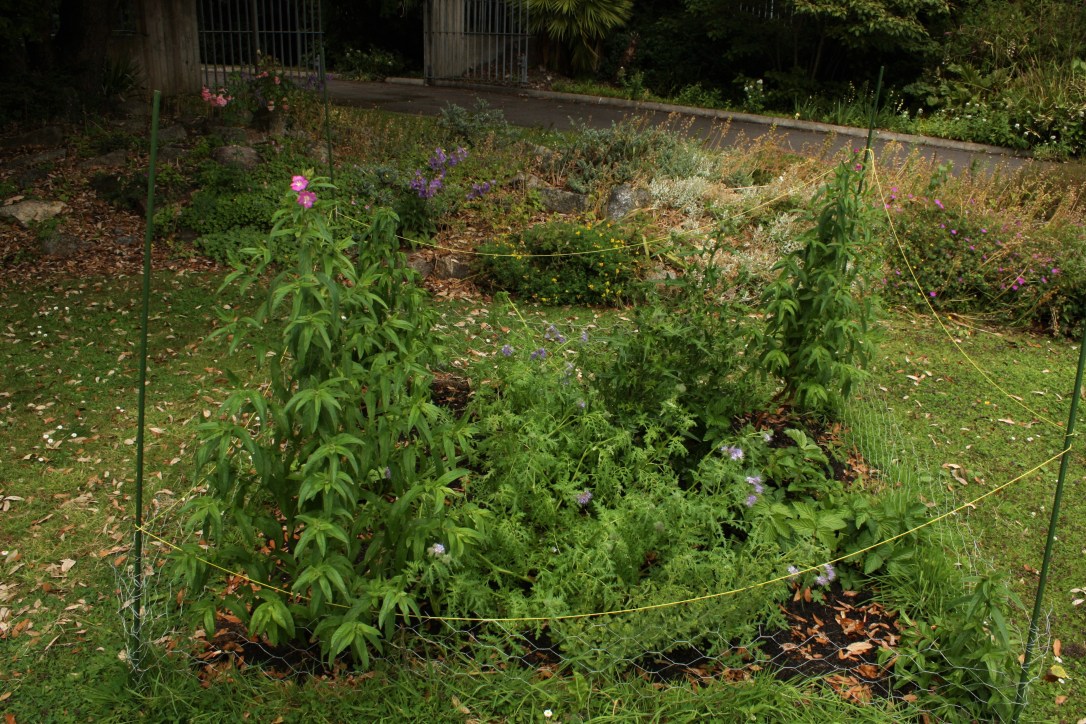
TCD 1 (4)
One of my research plots. Image credit: Laura Russo.

The field experiment involves 4 treatments: a control (only water), and very low concentrations of herbicide, fertilizer, and a combination treatment of fertiliser and herbicide. This means that I have four experimental plots, replicated at four sites in south Dublin (16 total plots). These 2x2m plots are then planted with the same community of weedy plants: Plantago lanceolata, Filipendula ulmaria, Epilobium hirsutum, Cirsium vulgare, Origanum vulgare, Hypochaeris radicata, and Phacelia tanacetifolia. All of these are native perennials to Ireland, except the Phacelia, which is both non-native and annual.
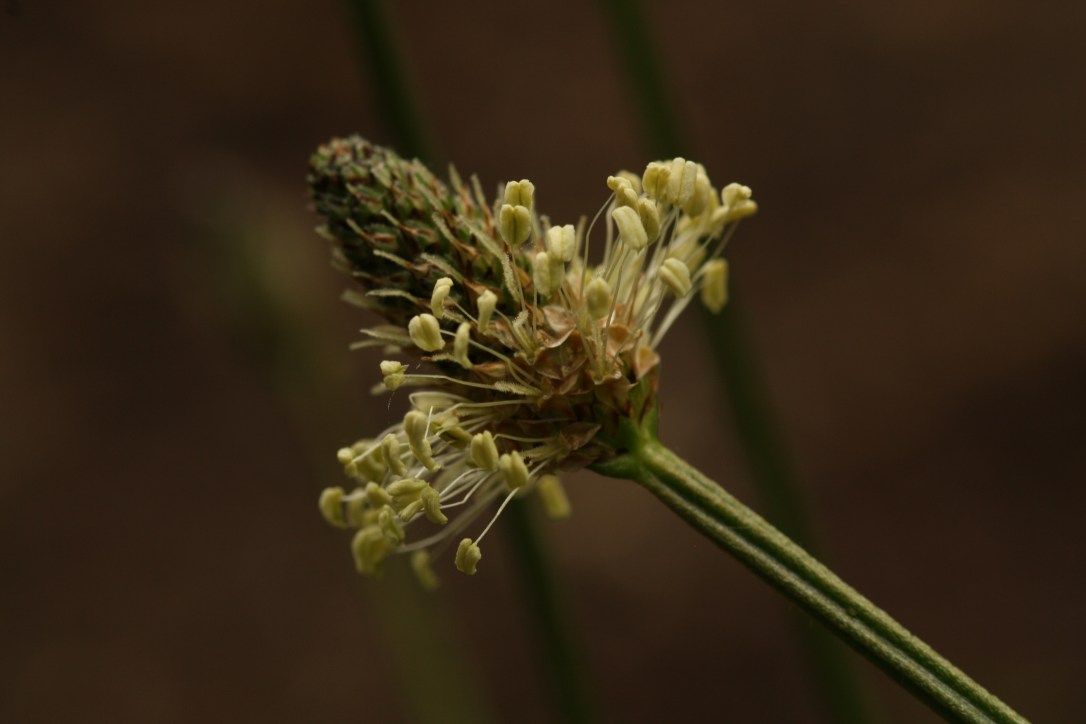
IMG_6413
The flowers of Plantago lanceolata. Image credit: Laura Russo.

I’ve been applying the experimental treatments throughout the spring, and once the plants began to flower, I started collecting data on the interactions between the plants and their pollinators in the different treatments, to see if pollinators react differently to plants that have been exposed to low levels of herbicide or fertilizer.

I’m accompanying this field experiment with a glasshouse experiment where I treat different potted individuals with the same low concentration runoff levels and then measure changes in their pollen and nectar, a likely mechanism for any possible changes in their interactions with pollinators.

IMG_6468
Epilobium hirsutum flower with pollen. Image credit: Laura Russo.

It’s too soon to tell whether my treatments are having an effect on the pollinators, but I am gathering a lot of exciting data, both on the health of the plants, and on the nature of their interactions with insects.

I’m also interested in adding new replicates next year, so contact me if you have space for four 2x2m pollinator garden plots!

Dr Laura Russo (@lrusso08) is a postdoctoral research fellow at Trinity funded by a Marie Curie Sklodowska Fellowship. She is studying the impact of agricultural runoff, both fertilizer and herbicide, on communities of plants and their insect pollinators (https://www.tcd.ie/Botany/staff/stout/project-effects-of-fertilisation.php).
The Buzz From The Hive: July

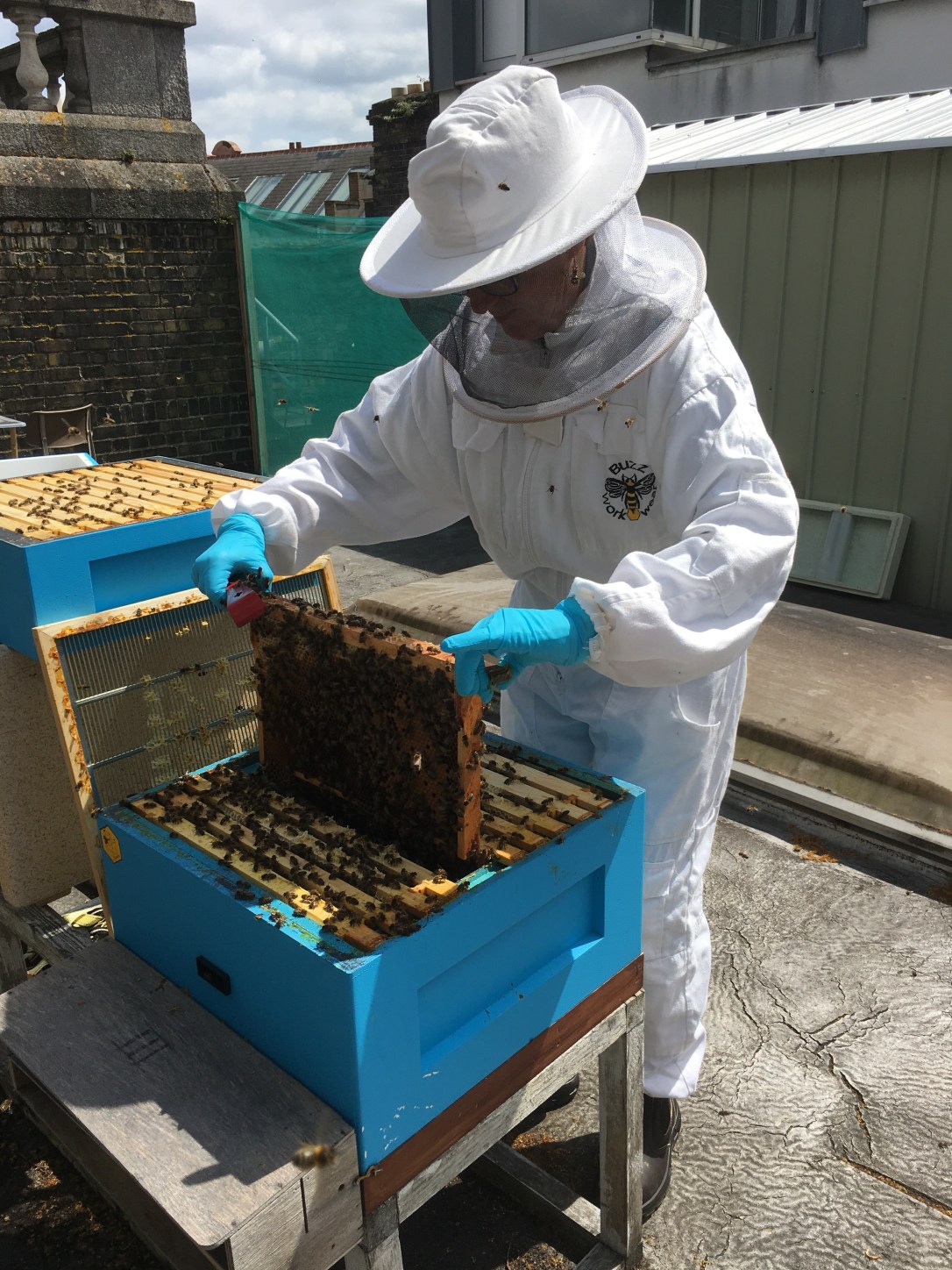
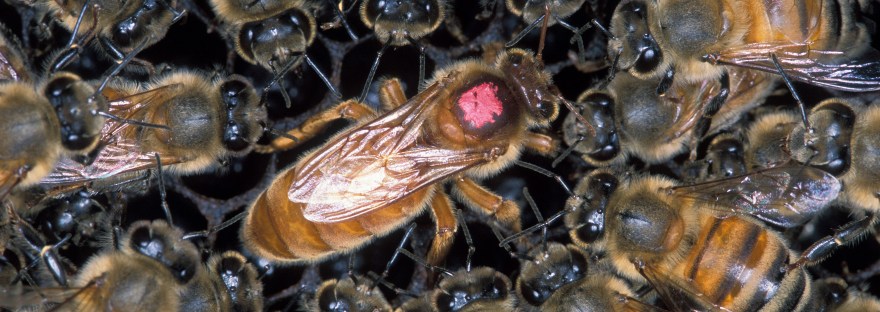
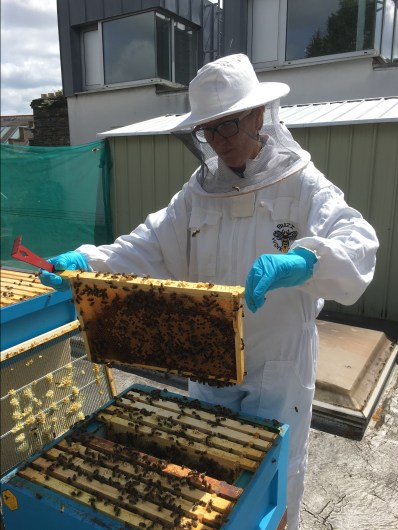
The big news for July (and other beekeepers will appreciate how big this is!) is that our colony has “survived” the swarming season largely intact. This has been both helped and hindered by our highly productive, and newly coroneted Queen Mebh. As colonies grow and fill up the spaces in their hive, they want to swarm to produce a daughter colony. As this can weaken the original colony, we try to manage the process. This year in mid-June, we achieved this by creating a “split”. This is where you move a queen cell (a modified version of the standard egg cell which is big enough to house a growing queen), along with several frames of brood (bee larvae), and several hundred house bees into a miniature hive known as a “nuc”. A full sized “national hive” has 11 frames, whereas a nuc contains just 6 frames, just enough space for a developing colony.

image002

The queen emerged in the nuc  around the 22nd of June, and is now laying. Over the next couple of months, the colony will hopefully grow big enough to sustain the queen over the coming Winter period. To add to the apiary’s genetic diversity, we acquired a well-established nuc of bees last week, thanks to a generous gift from a beekeeper in Kilternan. This nuc will graduate to a full sized colony in August. We are delighted to be on track to meet our goal for 2017: to have two hives and a nuc of bees going into the Winter

In the meantime, our bees have also been participants in two research projects. The first is a study of the pollen the bees are collecting, using a pollen trap at the entrance to the blue hive. Pollen from different types of plants can have different shapes, and by examining the pollen under a microscope, it’s possible to identify how broad the honeybees’ diets have been. Our colony is being compared with pollen taken from an experimental bumblebee colony located on the Parson’s building alongside our honeybees. The results will be evaluated against 8 other apiary sites in the city and outskirts where the experiment is also being conducted. The second is a study being carried out by the University of Western Australia on honeybee venom as a potential ingredient in breast cancer treatment. We provided 40 worker bees for venom extraction by a visiting researcher, and hope we have been able to contribute to a successful outcome for this important initiative.


As we head towards the end of summer we hope our bees will find a bounty of nectar to put into their stores, and a little extra to cover their rent. Tá samhradh sona!

image003

Crowning Trinity’s Queen

Scientists face a great challenge in educating the public about what they do and, most importantly, why they do it. Engaging the wider world is incredibly important, particularly when scientific research requires societal understanding and buy-in to be at its most effective.

Not long ago, Trinity College Dublin launched a Campus Pollinator Plan – the first of its kind in Ireland – to help bees and other pollinators survive and thrive. To propagate the message, and hopefully inspire other institutions to follow suit, we came up with a plan to engage and inspire our staff, students, and visitors via social media.

We asked for help in naming our queen bee – our black-and-yellow matriarch – who has been sitting (and working) atop her honeycomb throne in a newly installed campus beehive for the past few months. We hoped we would receive a good few suggestions.

IMG_1484
As anyone who’s read our “Buzz from the Hive” will know, Trinity’s queen has been installed, along with her retinue of workers, just awaiting a name!

We were blown away by the response, as over the course of the 28-day competition hundreds of ideas came flooding in. Not just from Trinity-affiliated individuals, but from people based in Dublin, Cork, Belfast, and from far further afield again. We had entries from Thailand, Germany, and Brazil, as bee-lovers sent us their suggestions from over 20 countries around the globe.

Some were weird and some were wonderful. Some came with a detailed explanation behind them. All of them came from people engaging with the wider research taking place here, and in Ireland. We also put together a series of #pollinatorfacts that contained one nugget of interesting info a day, and people loved them. As a societal awareness campaign, it was a huge success.

Trinity Bees-9
The name the queen campaign was a tremendous success, with entrants coming from far and wide, and from all ages. Image credit: Paul Sharp/sharppix.

So which name was chosen? Last Friday, we officially crowned ‘Queen Medb’.

The panel behind the choice had a tough time whittling the options down, but chose Medb for three main reasons: Medb was a strong female leader prominent in old Irish mythology, Medb is said to mean ‘she who intoxicates’, and Mebh has the same roots as the English word ‘mead’ – a drink made from honey.

Given that our queen must be strong in body and spirit (she may lead up to 60,000 bees at some point), will use biological chemicals to influence the decisions of her colony, and will oversee the production of honey, this seemed the right choice. Dublin resident Cormac McMullan was randomly selected from those who suggested the name, and wins a copy of The Bee Book and the first jar of harvested honey for his efforts.

Trinity Bees-1
Our queen naming ceremony took place last Friday. Pictured above at the naming of the queen bee were beekeeper and Trinity SU President, Kevin Keane, busy bees Emilie (4) and Molly (2), Professor Jane Stout and recent graduate Eoin Dillon. Image credit:Paul Sharp/sharppix.

Some honourable mentions that were very closely considered included Beelizabeth, Melissa (Greek for honey bee), (Royal) Tara, Polly(nator), Fódla (Irish goddess), Trinibee and Beeram Stoker, while other popular ideas included Beeyonce, Bee McBeeface, and HoneyComber McGregor.

We now hope Queen Medb’s reign will be long and prosperous, and that Trinity’s Campus Pollinator Plan will be the first of many that take off, both in Ireland and abroad.

Thomas Deane is the press officer for the Faculty of Engineering, Mathematics and Science, Trinity College Dublin.

The Burren: Marrying Farming and Conservation

Agriculture is often suggested as one of the main drivers of pollinator loss by causing damages to their habitats and resources. But we can’t stop our food production and for this production we need pollinators. Both have to continue side by side. A good management of farming area can resolve this issue, providing both good agricultural outputs and good habitat for pollinators.

IMG_0581 copyright
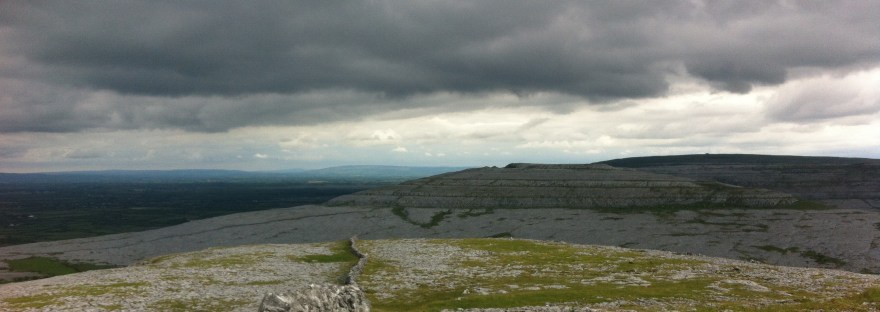
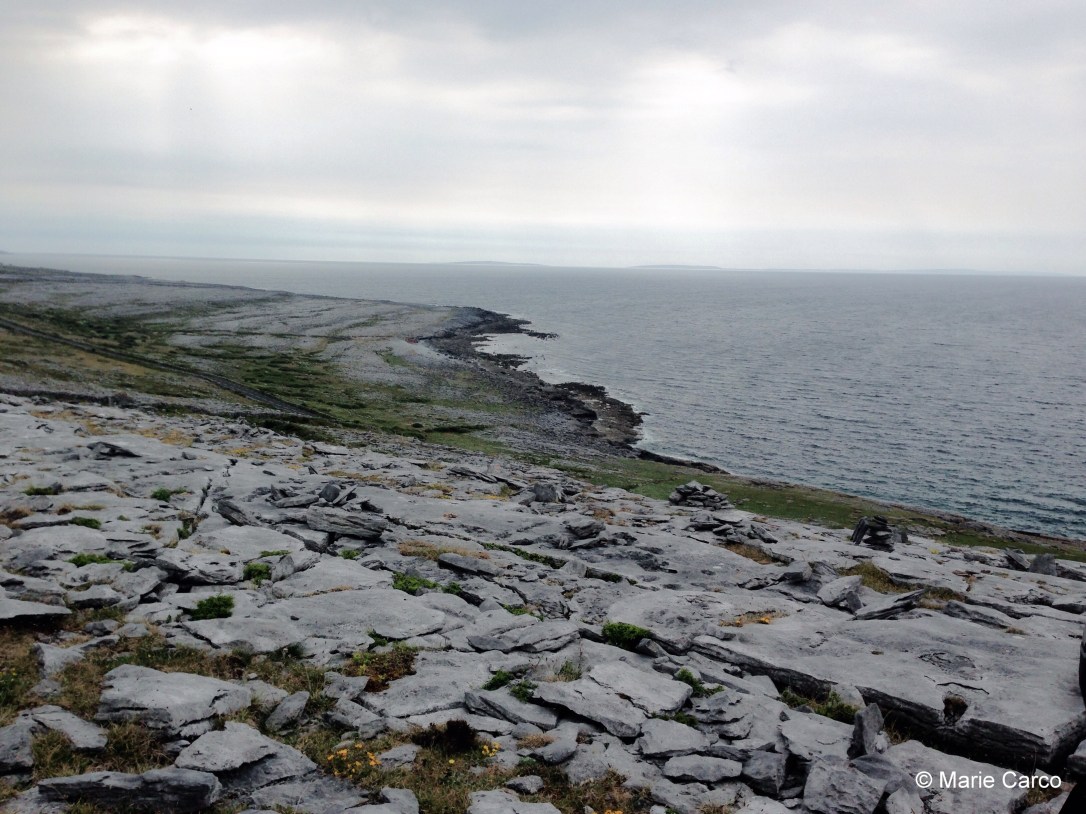
The limestone paving is one of the key habitats in the Burren region. Image credit: Marie Carco.

The Burren region is situated on the seaboard in the west of Ireland, and is a successful example economically viable agriculture for farmers while also having benefits for biodiversity. This limestone landscape has a really rich flora (more than 600 of Ireland’s 900 native plant species are found in the Burren) and as a result it is also an important place for the pollinator diversity, especially bumblebees.

You can find several different bumblebee species including one in decline in Europe, the Shrill carder bee (Bombus sylvarum)which has its main Irish stronghold in the Burren. Some observations also notify the rarest Great yellow bumblebee’s presence (Bombus distinguendus). Both are late emerging species and endangered in Ireland.

RSCN9941 copyright
Great Yellow bumblebee (Bombus distinguendus), one of Ireland’s rarest bee species, has been confirmed on the Burren. Image credit: Dara Stanley.

Burren biodiversity is intimately linked to a traditional farming called « winterage », where livestock graze upland limestone grassland during the winter and move to lowland more fertile (but less diverse) grassland during the summer. This allows late summer wild flowers to grow up during summer and set seed, which also creates an incredibly diverse pantry for pollinators.

During the 1970’s, changes in agricultural management appeared in the Burren and elsewhere in Ireland supported by national and European schemes. The switch of traditional practices to conventional farming led to an increase in the earlier mowing of silage, grazing of limestone grassland during summer, or housing of livestock during winter. The diversity of late summer wildflowers specific to limestone grassland were reduced by grazing, or sometimes with scrub encroachement. As the result nesting habitats and forage resource for pollinators were also damaged, especially for the late emerging species.

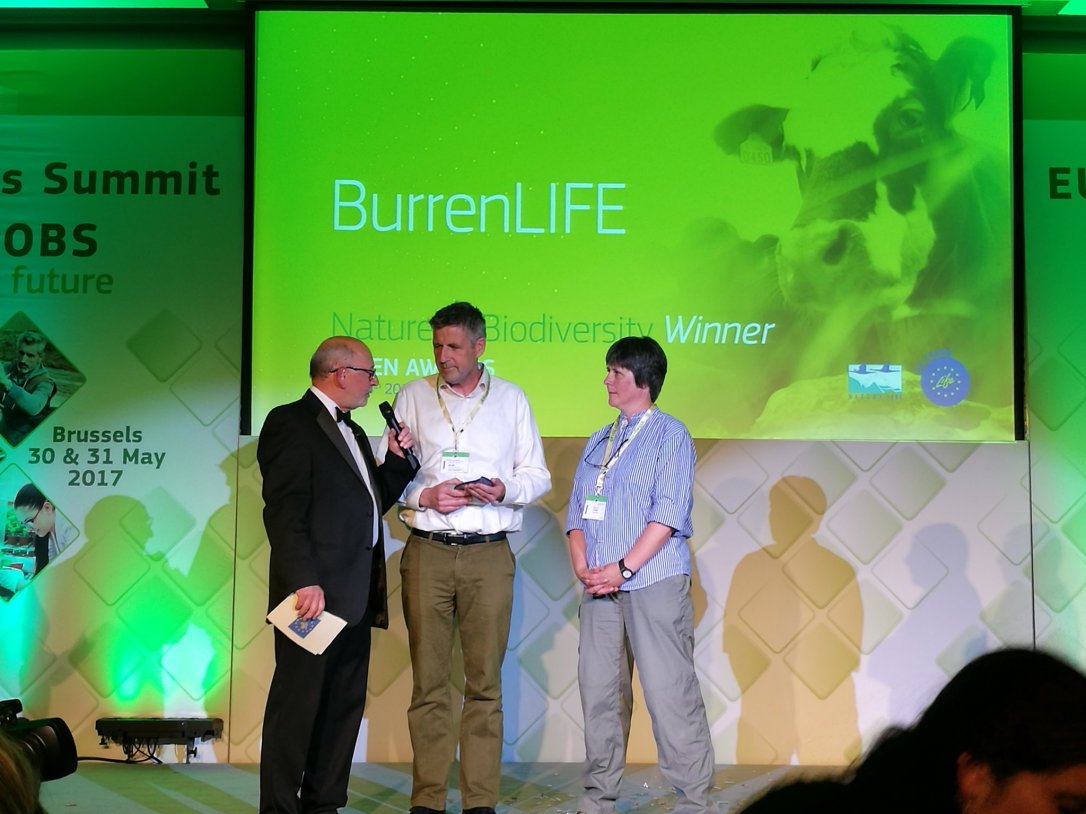
In 2005 the BurrenLIFE project was established to develop local practical solutions to the agricultural issues that threatened the priority habitats in the Burren. Mostly funded by the EU LIFE-Nature Programme, it was a partnership between the National Parks and Wildlife Service, Teagasc (the Agriculture and Food Development Authority) and the Burren Irish Farmers Association. The BurrenLIFE project was a result based agri-environment scheme, where farmers received payment for the ecological integrity of their land, among other factors, leading to environmental health turning into incomes per hectare for the farmer. Land with high health scores permitted to the farmer receive a high payment, whereas nothing was received if fields had a low (under 5) scores. Farmer also received payments for the improvement of water access and paths to grassland for the livestock to develop winter grazing. The project finished in 2010 with a great success (the project jointly won the EU “Best Nature” Green Award this year).

DBF4XXmXkAAeGce.jpg-large.jpg
BurrenLIFE’s Brendan Dunford and Sharon Parr accept the EU’s “Best Nature” Green Award Image credit: Burren LIFE.

Currently the next phase of the project, Burren Programme (2016-2022), covers about 300 farmers across the Burren. The programme promotes floral diversity, and most likely by consequence safe habitats for pollinators. The ecosystem services for farmers improved also.

Traditional grazing methods increase wildflowers, and so improves the quality of habitats for pollinators. In turn wild pollinators enhance the quality of grassland, as they permit a better diversity and quantityof grazing for cattle food production and so enhance the quality of production. Burren Life Programme has been successful in maintening and promoting floral plant diversity characteristics to the Burren (You can read “Farming and the Burren” from Brendan Dunford for more information). Research is currently being carried out by Michelle Larkin (NUI Galway) to investigate whether this good management of farmland could have a positive effect on pollinator’s populations also.

Marie Carco is working with Trinity graduate and PhD holder Dr Dara Stanley (Lecturer in Plant Ecology at NUI Galway, @DaraStanley). Marie is in the first year of her Master’s in Biology, Ecology and Evolution at the University of Bordeaux.

Beyond Bees

If you’re a bee you are 100% focussed on collecting pollen to feed to your young. This makes bees our most important pollinators, but not our only ones. Lots of other insects also visit flowers to feed on nectar. In doing so, these insects accidentally move some pollen around – just not so much or so deliberately. To help our non-bee pollinators we need to be more insect friendly. The more insects of all types, the more pollination!

Eristails in flight_Isobel Abbott
Eristalis hoverflies are known for their “rat-tailed” larvae which are aquatic, using their “tails” as a breathing apparatus. Image credit: Isobel Abbott. 

Hoverflies come second in the pollinating awards – this is mainly because some of them mimic bees, and being hairy like bees, pollen is more likely to stick to their bodies as they move from flower to flower. We have 180 hoverfly species in Ireland. Their larval stage varies greatly from species to species. Some live in the nests of other insects like bumblebees or wasps, some live in water, some in dung and some in plant stems.

Volucella pellucens on Dog Daisy_Rosaleen Dwyer
Volucella pellucens lay their eggs in the nests of common wasps (Vespula vulgaris and germanica), without wasps, therefore, we would lose this rather gorgeous hoverfly. Image credit: Rosaleen Dwyer.

Given the complexity of different lifecycles in our non-bee pollinators, it’s much harder to identify specific actions that will have a big impact. However, if you allow your garden, school, campus or local area to be a place that is insect friendly you can’t go wrong. Unlike us, they’re not so keen on order and neatness. Avoid spraying chemicals. Don’t cut the grass so often so that they have more wildflowers to feed on. Have wild areas with nettles where butterfly and moth caterpillars can live. Have log piles where ladybirds and beetles can shelter. Ponds, however tiny, can provide excellent habitat. We find it easy to see beauty in individual bits of nature. If we could better see the beauty in the whole complex, fascinating and untidy mess we’d all be better off!

Dr Úna FitzPatrick did both her undergraduate degree and PhD at Trinity. She is the Project co-ordinator for the All-Ireland Pollinator Plan at the National Biodiversity Data Centre.

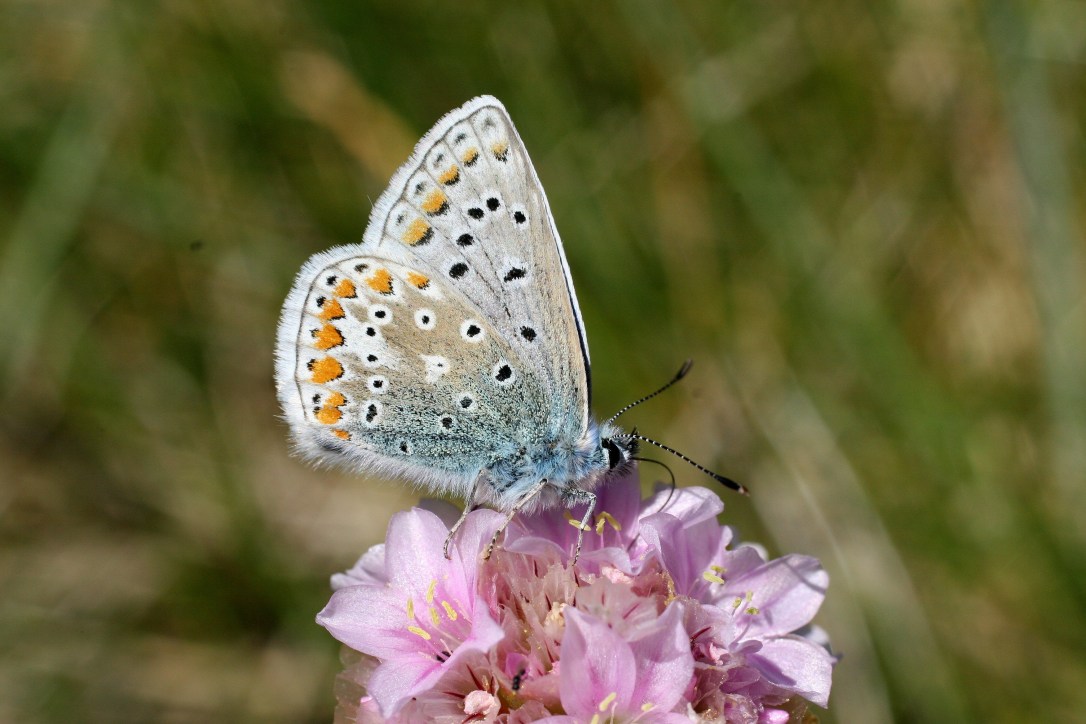
Common Blue (Liam Lysaght)