Blog

Solitary Bee Project

The UK is home to approximately 275 species of bee and Ireland is home to 97, and no, they don’t all make honey. In fact, the honeybee is the only member of the group who performs this task, and, along with the bumblebees, is the only social species. All told social bees, with queens and workers, account for a mere 10% of the bee species in the UK and 20% of the species in Ireland. The vast majority of species are solitary. This means that every female is fertile and each builds her own nest in which she places her eggs and provisions each one with enough food for them to develop into adults.
C.hederae(2).jpg
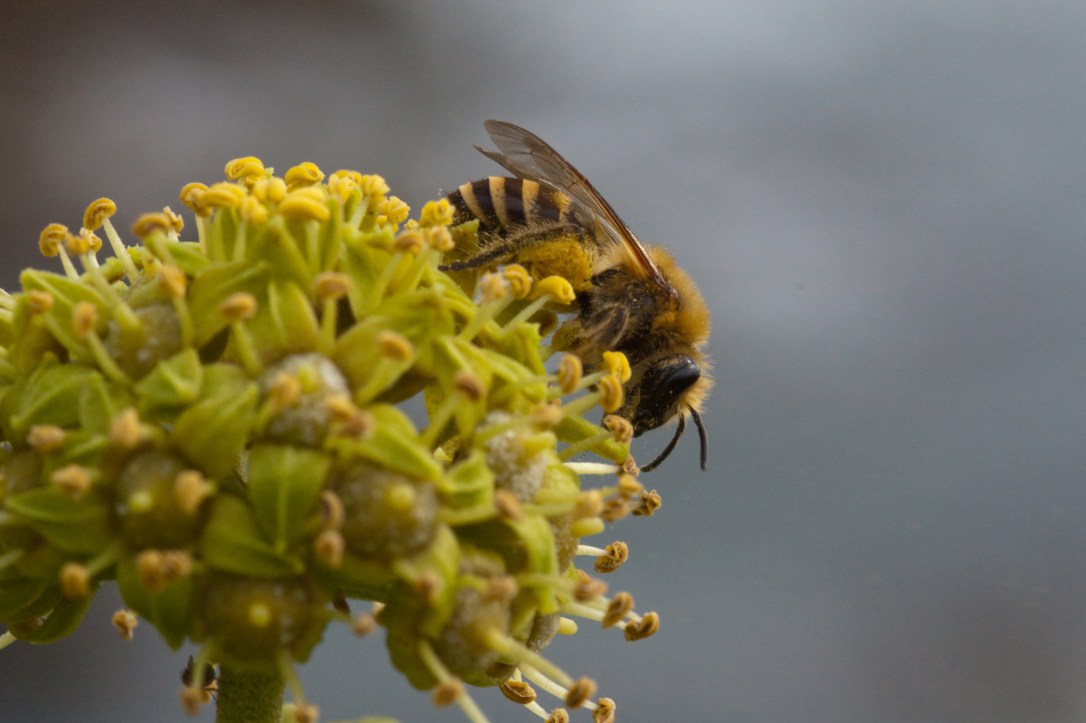
The ivy bee (Colletes hederae) is a new species in the UK, having first arrived in 2001. Last year, it underwent rapid [natural] range expansion, and we may find it gracing ivy (Hedera helix hibernica) plants in the near future. For another citizen science project linking to ivy, checkout the “Pollinators of Ivy Monitoring Project“. Image credit: Thomas Ings.
The other really important thing to know about solitary bees (once you know they exist) is that they are excellent pollinators, far better than bumblebees and honeybees. This is because when they collect pollen they leave it dry and carry it on specialised hairs on their bodies. Honeybees and bumblebees moisten the pollen they collect and pack it together. This means that when solitary bees visits flowers they’re more likely to lose pollen than other species. Solitary bees are important and they are vastly under appreciated.

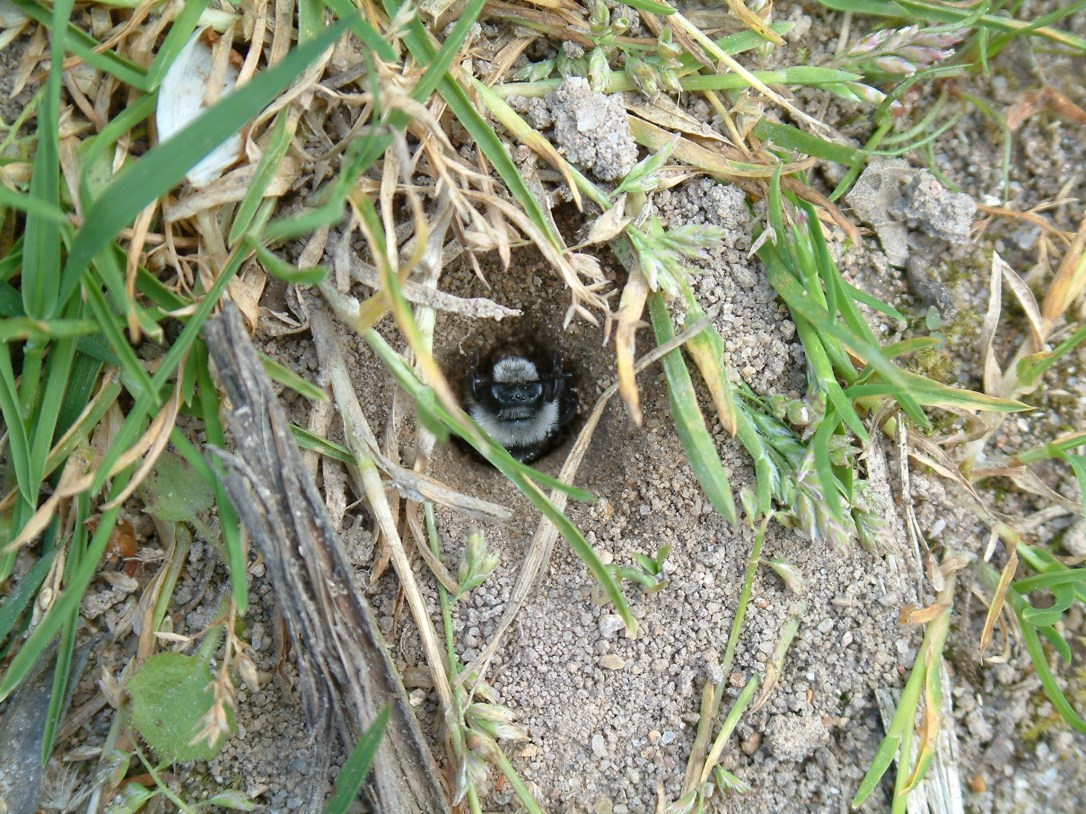
Andrena cineraria
The ashy mining bee (Andrena cineraria). Peekaboo! Image credit: Thomas Ings.

Fundamentally, there are two things every bee needs: food and shelter. When we think about the practical things one can do to help bees it is images of flower laden gardens and parks that come to mind and of course this is incredibly important. But how often do we hear about nest sites? Not very. This is not just a problem in the wider media, primary scientific literature has given little attention to nesting locations, particularly in the UK and Ireland and particularly with regard to the solitary species that nest in the ground (which is most of them). Now, one can’t for certain say why this is, but it is likely linked to the fact that finding nests is difficult and time consuming, particularly if you are trying to conduct a scientific analysis and therefore need quite a lot of them. So, a new approach is needed in terms of how we collect this information and we think the most promising route to success is through citizen science.
IMG_20170329_161345383
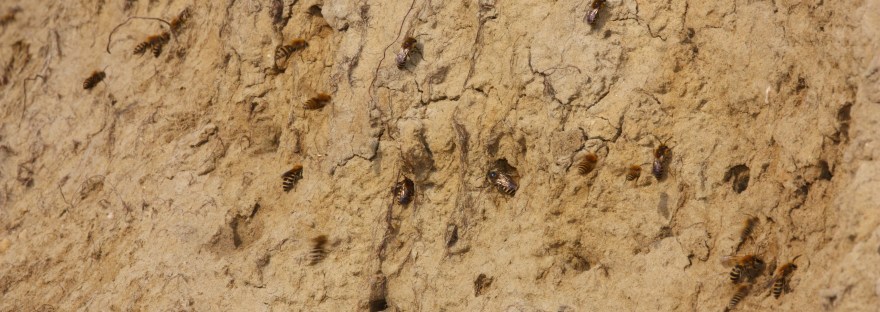
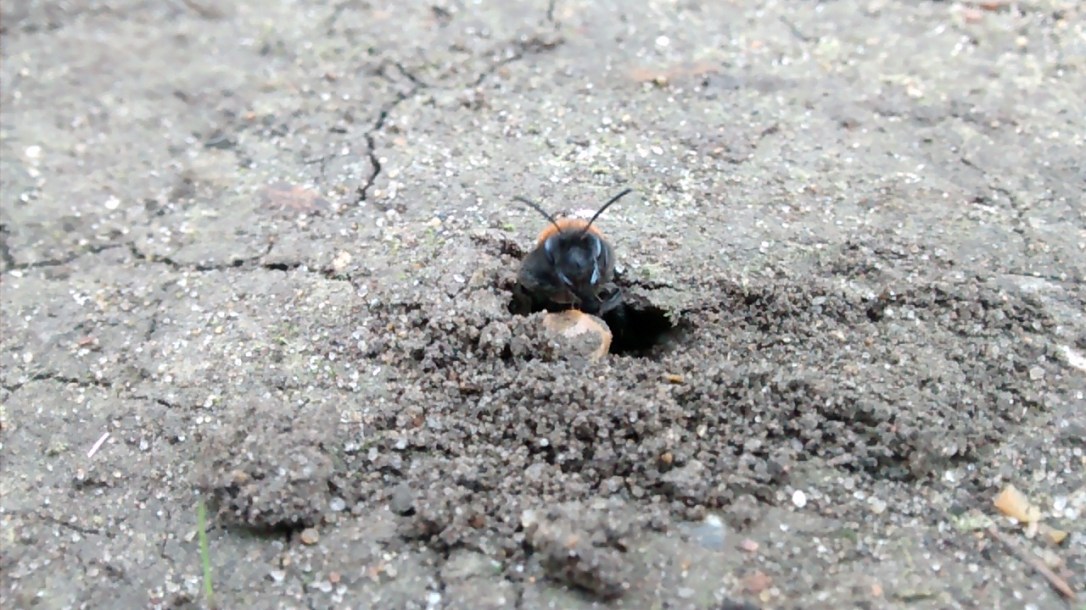
Solitary bees nest in unusual places. Many dig tunnels underground, in bare earth, as above, or producing little “ant hills”/”mini volcanoes” in lawns. There are even records of a species nesting inside old snail shells! Image credit: Thomas Ings.

To this end we have recently launched The Solitary Bee Project (thesolitarybeeproject.org), which aims to gather nesting data of four solitary bee species: Andrena fulva, Andrena cineraria, Halictus rubicundus and Colletes Hederae. Armed with this information, we not only begin to understand the needs of these important species but also the ways in which we can protect suitable nesting areas and even provide them, if need be. So, keep your eyes peeled over the next few months for ‘mini volcanoes’ showing up in your garden or local park because it could be a solitary bee moving into the neighbourhood!
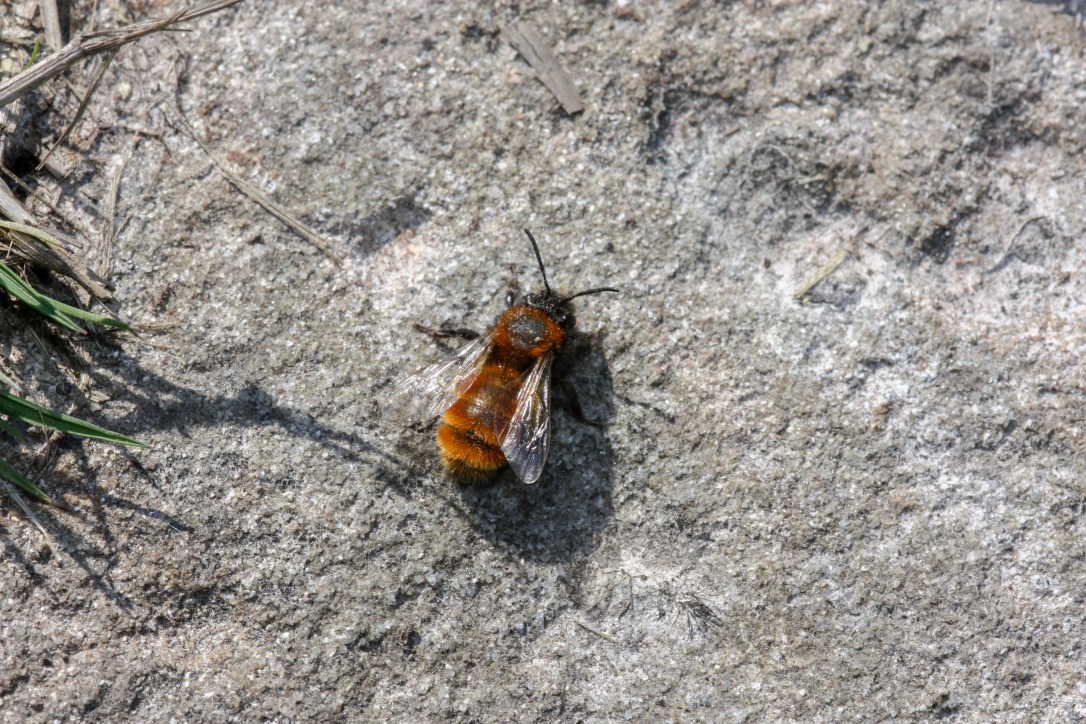
Andrena fulva female - Black Down, Mendips
The solitary female Tawny Mining bee (Andrea fulva) is one of our most striking bee species. Image credit: Thomas Ings.

Stephanie Maher (@SolitaryBeesUK) graduated from Trinity College Dublin in 2011 with a degree in Zoology. She is currently a PhD candidate at Anglia Ruskin University, UK. Find out more about taking part in her project at thesolitarybeeproject.org. Although the site is aimed at the UK, Stephanie is keen to get Irish records too!
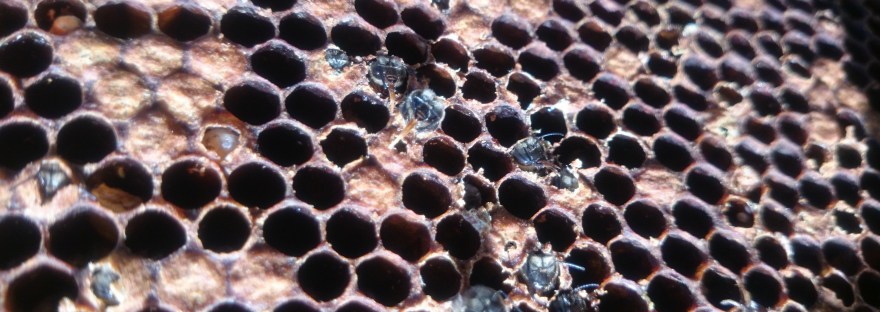
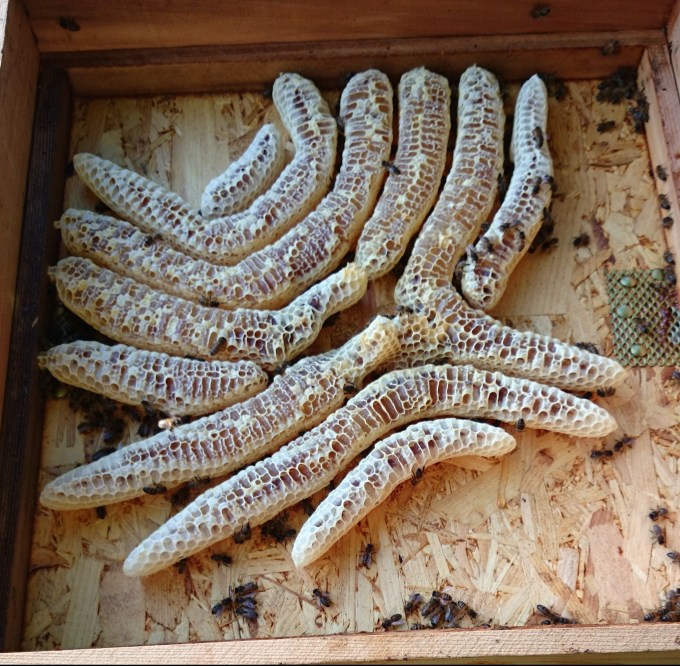
May the honey bee with you

It is estimated that honey bees (Apis spp.) fly nearly 90,000 km to make just one jar of honey, that’s more than twice the circumference of the Earth.

DSC_0181

Honey has been consumed by humans for over ten thousand years: the Egyptians were the first to practice the art of beekeeping and it has been reported that the Romans used honey instead of gold to pay their taxes. This sweet substance not only contains a complex mixture of sugars but has many other natural constituents. It is a combination of these that make it a unique and nutritious food, for both bees and humans! The composition and concentration of these constituents varies and depends on honey floral and geographical origin, honey processing and storage, and seasonal and environmental factors. Honey can also contain many contaminants mainly due to anthropogenic activities.

The reported biological properties and health benefits of honey produced by honey bees are vast. Honey contains flavonoids and phenolic acids, and many studies have shown that a high concentration of total phenolics is strongly correlated with high antioxidant activity. Food antioxidants have been shown to prevent oxidative stress and thus prevent oxidative damage.

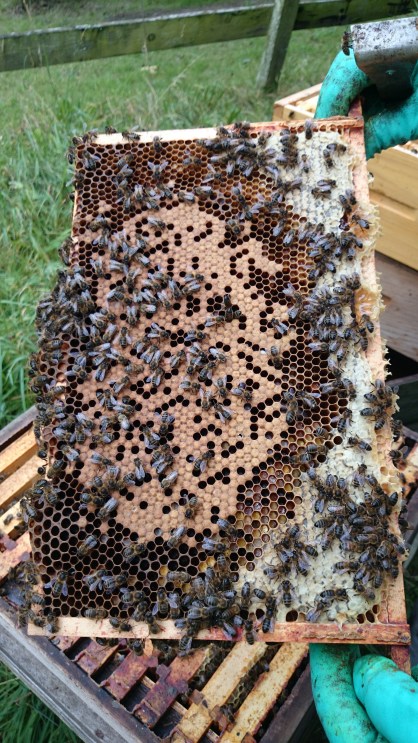
Frame of brood

The aims of my PhD research are to determine the type and quantity of phenolic acids and flavonoids present in Irish honey. To date, the results show that Irish heather honey has the highest total phenolic content out of three Irish single origin honeys (heather, ivy and oilseed rape), whilst oilseed rape honey has the lowest. Interestingly, urban honeys have a higher total phenolic content than rural honeys. Irish heather honey shows similar physiochemical characteristics to Manuka honey from New Zealand, and has a higher total phenolic content than Manuka honey. This suggests that heather honey may be as medicinally effective as Manuka honey and that the potential health benefits of Irish heather honey should be explored.

With the exciting launch of Trinity’s Pollinator Plan and the establishment of a hive on campus, honeys will be compared from DCU, TCD and UCD. The results will be revealed in a future blog post.

Saorla Kavanagh is an IRC-funded PhD student, registered at DCU, supervised by Blánaid White (DCU) and Jane Stout (TCD).

The All-Ireland Pollinator Plan: The Role of Third Level Institutions

If you’ve been following the blog recently, you probably know that Ireland’s pollinators are in decline. Of the 98 bee species on the island of Ireland, nearly one-third are threatened with extinction. The All-Ireland Pollinator Plan 2015-2020 is a strategy that addresses this problem. It is a shared plan of action, supported by 68 governmental and non-governmental organisations. We are working with all sectors, from local communities to Councils, farmers, businesses schools and more, to take actions that will make Ireland more pollinator-friendly.

Bombus pratorum_Steven Falk
On the island of Ireland alone there are some 98 bee species! Image credit: Steven Falk.

Third level institutions have a big role to play in implementing the Pollinator Plan. Below are five actions campuses could take to help. These suggestions come from the Pollinator Plan’s Local Community Guidelines. This guide actually suggests 24 pollinator-friendly actions, so every campus across the island is sure to find suggestions that suit their space. Download it and encourage your college to get involved.

  • Protect existing sources of food and shelter for pollinators: Does your campus have areas with bramble or ivy? What about existing pollinator-friendly flowering trees? The best and easiest thing you can do is to protect what resources you already have. At TCD: A map of existing pollinator resources on Trinity’s campus was produced as part of the Campus Pollinator Plan. This resource will help ensure existing pollinator habitats are protected.
  • Reduce mowing and aim to create a wildflower meadow: When grassy areas are cut less often, wildflowers have a chance to bloom and provide food for bees. Areas of longer grass are also ideal nesting habitats. The idea with this action is to cut some grassy areas just once in autumn, to allow the grass to grow long. The grass cutting should be removed after each cut to reduce soil fertility over time. At TCD: The grass on the Ecology Bank is allowed to grow to provide more flowers for bees.
Andrena on taraxacum, Powerscourt Waterfall May 2010
Even if you can’t quite create a meadow, letting the dandelions thrive in lawns is one of the most cost-effective ways you can help pollinators.


  • Perennial flowers for pollinators: When choosing ornamental species, remember that traditional bedding plants like Geraniums, Begonias, Petunias and Busy Lizzy have virtually no pollen and nectar, so are of little value to pollinators. Incorporating pollinator-friendly perennials that will flower all season long, from March through to October, is an excellent way to increase the food on campus for pollinators. At TCD: The new garden outside Botany has several pollinator-friendly plants, and the Campus Pollinator Plan aims to increase spring flowering species to further enhance the space for pollinators.
Pollinator friendly bed_Peter Cuthbert
A great example of how a pollinator friendly bed can look good and do good at the same time. Image credit: Peter Cuthbert.
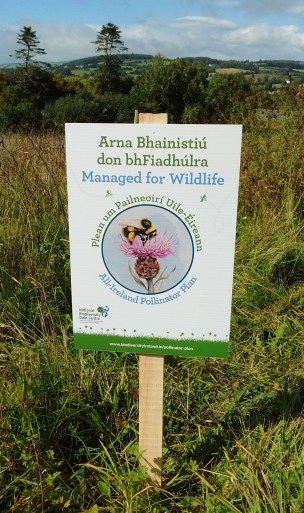
  • Put up signage: 9-signage-template.jpgThis action both raises awareness of pollinators with the public and helps inform why some areas are being managed differently. At TCD: Signage has been added on the Ecology Bank and at newly installed solitary bee nest boxes.


  • Log the actions taken on your campus on our mapping system, Actions for Pollinators: This new, publically available website tracks the build-up of food, shelter, and safety for pollinators in the landscape. It is hoped that all campuses that take actions for pollinators will log what they are doing so we can document all the efforts to conserve our pollinating insects.


If your third level institution wants to sign up to support the All-Ireland Pollinator Plan, get in touch! We’re always happy to welcome new partners. If every campus on the island of Ireland took just a few simple pollinator-friendly measures, it would go a long way towards creating a landscape where pollinators can survive and thrive.

Dr Erin Jo Tiedeken (@EJTiedeken) joined the National Biodiversity Data Centre (@BioDataCentre) in April 2016 as the Project Officer for the All Ireland Pollinator Plan. She previously completed her PhD on Irish pollinators with Dr Jane Stout (@JaneCStout) at Trinity College Dublin.

ZooSoc Takeover: The Start of Something Great

Whenever someone finds out that I study zoology, the first thing they say is ‘Wow, that must be really interesting’. I agree with them, it is. The second thing they ask me is ‘are you going to work in a zoo?’. Unfortunately this time I have to disappoint them, most graduates of zoology  don’t end up working in zoos. Just like a graduate in botany isn’t trained to grow plants in their back garden, a graduate of zoology is trained in much more than animal handling.

field_teaching.JPG
A degree in Zoology from TCD is more than just handling animals and fun field trips abroad. Image credit: School of Natural Sciences, TCD.

What a degree from the School of Natural Sciences teaches you is how to analyse a system, take it apart, examine the components and then rebuild it taking into account the interactions. And the interactions are the important aspect here. Ecology is the science of interactions and networks, and evolution is really just ecology over a longer period of time. And so graduates of the Natural Sciences tend to have a knack for ending up as city planners, addressing questions such as ‘how does the city function, what are its components and how do these interact?’ Perhaps most importantly:  ‘how will this city evolve over the next ten, fifteen, twenty years and how do we want it to evolve?’.

With 35% of the Irish population living in urban centres (Ireland actually has one of the lowest urban/rural population ratios in the EU) city planning is becoming more and more important. By incorporating ideas like ecosystem services into city planning we can make a city a much more enjoyable, livable experience. Pollinators are important, an annual value of 153 billion speaks for itself. They’re easy to understand: with no insect visiting the flower, you don’t get an apple! But I think they’re just the tip of the ecosystem service iceberg, easy to see but just a small bit of the overall picture. There’s carbon sequestration and storage in parklands, flood mitigation and waste water treatment by appropriately placed wetlands, urban temperature regulation, traffic noise reduction, pest population control and they’re just some of the regulating services.

9385067869_bd5a88e12b_o.jpg
Bees are the poster girls of ecosystem services! Image credit: RedBull Trinker flickr.com/blackhole_eater.

Some of the most expensive houses in New York City are the Brownstones located around Central Park. In the future, such recreational areas shouldn’t just be reserved for the privileged and rich but rather integrated into the cities themselves. Let’s have rooftop gardens connected with bridges, creating elevated green spaces. Let’s have a connected network of greenways so that people can cycle and walk to work in an environment that doesn’t frankly annoy you. College Green is ironically grey. Or how about Urban farms which can show kids where food actually comes from, not just a Tescos. Let’s have places people can go and simply get away from it all. It has been shown that Urban green infrastructure reduces stress and improves mental health. We have a pandemic of mental health issues in Ireland, especially among my generation, about which not much is being done.  Having a network of green infrastructure that serves the people, communities and biodiversity of this the city not only makes economic sense, it creates a happier society.

14204263083_741940caab_o
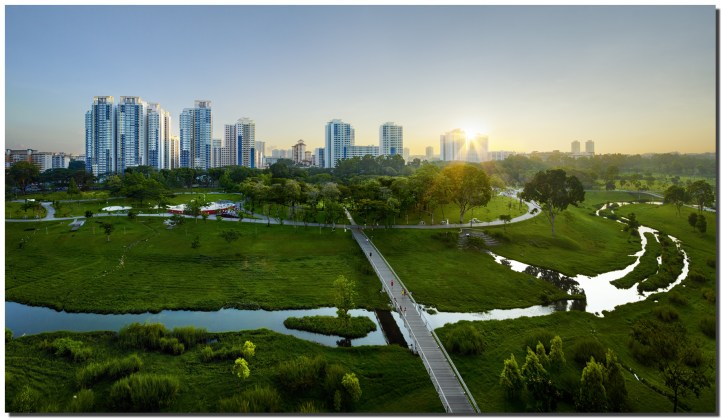
Green infrastructure for flood mitigation in Singapore. Image credit: Stefan flickr.com/_stefano_.

However creating a city such as this requires an inter and transdisciplinary approach! It will require working closely across disciplines and Trinity has placed itself in a unique position with which to address this by establishing the Engineering, Energy and Environment Institute, E3. This sees the schools of Natural Science, Engineering and Computer Science coming together to teach and work in close collaboration to address some of society’s biggest needs. Integrating cultural, educational and provisional ecosystem services into civil engineering is the one I’m most excited about. It’s already happening in London, Singapore, Milan but with E3, Ireland could become a world leader in this area!

It’s not just about building a city that we could survive in, it’s about building a future we want to live in. The Trinity Campus Pollinator Plan could be the start of something great!

This week ZooSoc are taking over CampusBuzz! Today’s entry was the last in this series and was written by TCD’s ZooSoc President, Cian White (@Cian_De_Faoiche). Cian is a fourth year Zoology student at TCD. He’s interested in ecology, evolution and how ecosystem services could best be integrated into society.

ZooSocTakeover2

A bee feeding on a cornflower in the middle of diverse grassland, with many other flower species visible in the background.

ZooSoc Takeover: Should the law mind its own B(ee)sense?

A look at the role of regulation in facing pollinator decline.

The vital role of science in researching the importance of pollinators and their role in food production and the protection of the environment is well established. However, a further trans disciplinary approach is required to spread the message of their importance and to convince society at large that we all need to play a part in addressing pollinator decline. As a Law student with a strong passion for the environment, I am interested in the practical realisation of such an approach.

Upon my selection for the Trinity Hall environmental team this year, I was encouraged, by my reading of the All Ireland Pollinator Plan, to attempt to create a pollinator friendly haven on the grounds of Hall. By cordoning off an area of Hall’s land and encouraging the growth of pollinator friendly plants, we could do our bit to reverse the decline in Ireland’s pollinator population, thus benefitting both the environment and the population of Hall.

WildFlowerLawnsandMeadows
A pollinator friendly grassland! Image credit: Wild Flower Lawns and Meadows.

My desire to implement such an initiative was surprisingly compounded by my first year legal studies. At the end of our final lecture in my favourite module of the year, entitled Legislation and Regulation, our lecturer imparted some apt words of wisdom. He acknowledged that even though both legislation and regulation are oftentimes used to break down and tear apart human behaviour, they can also be used to create and to positively influence both individual behaviour and society at large.

This sentiment may appear aspirational, particularly in the context of environmental law. However, application of some of the substantive lessons taught in the module revealed to me that attitudes towards the environment may be altered without having to rely on the imposition of explicit legislation or regulation.

A different approach, that of reliance on a duality of subtle regulation, must be adopted. This duality includes, first and foremost, regulation by norms.

Convincing people that it is socially beneficial to act in an environmentally friendly manner begins with the implementation of schemes such as the Pollinator Plan. Educating people on the importance of pollinators and publicly displaying pollinator friendly gardens affects a subconscious attitude change in how people understand pollinators and their important role in biodiversity. Over time, and through the increased advertisement of this message, it becomes the norm to adapt one’s garden to become more pollinator friendly. Once this norm takes hold, it is regulated by people, for people, through peer pressure and desire to maintain a reputation.

droitenvironnement
The importance of balanced regulation in addressing the environment. Image credit: Cabinet Salès.

This method of regulation is compounded by the next – regulation by architecture. The introduction of pollinator friendly gardens on the rooftops of high rise apartment buildings and office blocks could augment the behaviour of their residents and workers respectively. Just as architectural changes like speed bumps make people conscious of their driving speed, the clever placement of such gardens has the power influence one’s desire to affect positive pollinator change.

pollinator-friendly-rooftop-garden
A pollinator friendly rooftop garden. Image credit: Amanda Carlucci, theNatureFan.com.

Dependence on such indirect forms of regulation could allow an environmental attitude change to be achieved not through reliance on a forced rhetoric of environmental awareness, against which people often feel compelled to rebel, but through the implementation of visible environmentally friendly initiatives, designed to subconsciously encourage people to be increasingly mindful of their own environmental impact.

Buoyed by recent success in creating pollinator friendly plots in Trinity Hall and by the ecological areas blooming with pollinator plants here on campus, I believe that the Trinity Campus Pollinator Plan can be the start of such an environmental mindfulness movement.

This week ZooSoc are taking over CampusBuzz! Expect a new blog everyday written by student members of the society. Today’s entry was written by Caoimhe White (@ZooSoc). Caoimhe is in her 1st year of Law at TCD. Her main areas of interest are environmental and animal welfare policy.

ZooSocTakeover2