Tired of the winter blues? Read about our summer of farmland pollinator surveys!

Written by Dr Sarah Larragy, Postdoctoral researcher in Botany, School of Natural Sciences, Trinity College Dublin, working on the EU-funded RestPoll project, and Moya Owens, Research Assistant in Botany, School of Natural Sciences, Trinity College Dublin, working on the ANTENNA project.

As we trudge our way through the dark and grey wintertime, it is no wonder we are reminiscing over sunny, insect-filled days. The People and Nature group saw a very busy season last summer, which brought us to and from farms all around the Co. Kildare area to conduct pollinator research! Our travelling troupe of bug catchers this summer included:
• Dr Sarah Larragy (post-doc, RestPoll)
• Fernanda Azevedo (PhD student, RestPoll)
• Moya Owens (Research Assistant, ANTENNA)
• Michalis Cristou (Biodiversity and Conservation MSc student)
• Sarah Browne (Research Assistant)
• Katie Gahan (Research Assistant)
• Daan Mathijssen (Summer intern)
• Sirus Rasti (Erasmus plus student)

Figure 1 The TCD RestPoll fieldwork team (a lovely bunch 😊 – thanks for all your help!)


This work contributed to two pollinator-related EU projects being conducted by members of the lab:
RestPoll: Restoring pollinator habitats across European agricultural landscapes (see Sarah’s blog here)
ANTENNA: Making technology work for monitoring pollinators (see Moya’s blog here)
RestPoll field work

As part of RestPoll, we are collecting field data to see if restoration measures for pollinators are effective. Many of our farms were previously involved in Protecting Farmland Pollinators and carry out many practices that are likely to benefit our busy bees and other pollinators. These biodiversity friendly actions include reduced hedgerow cutting, reducing or eliminating insecticide use, increasing the area of field margins and letting ‘weeds’ grow in unfarmed areas.
To conduct our RestPoll field work, it was clear we were in for an intense season of insect counting (tough work but someone’s got to do it!). The traditional methods for surveying pollinators generally involve a transect walk – this is where one walks at a slow pace while keeping their eyes peeled for any bees, hoverflies or butterflies that pass through their path. Once we spot a pollinator, we note down the species and – should we spot them enjoying a floral treat – the plant species it visits. Over the summer, we conducted three rounds of pollinator transects and floral coverage surveys across 21 beef and tillage farms in the Co. Kildare region – and have the farmers’ tans to prove it!
Antenna field work

Overlapping with the RestPoll fieldwork was the much more technologically-advanced project, ANTENNA, conducted by Moya Owens (supervised by TCD alumni Dr Jessica Knapp, now based in Lund University!). Pollinator surveys have been conducted across 6 different countries in Europe, which included four rounds of surveys on five different sites in Co. Kildare.
ANTENNA is investigating the feasibility of using fancy, solar-powered cameras to conduct pollinator monitoring. It aims to compare these high-tech approaches to traditional methods, like transecting and pan trapping. While transects are the traditional and usually the core methodology for any pollinator monitoring project, there are limitations such as not being able to see, or identify, everything you spot in the field. Oftentimes, you need to catch an insect to find out what species it is, and sometimes this requires careful examination under microscopes. Also, insects can often be difficult to catch. You may not think it, but chasing a butterfly down in a field full of boisterous cattle or waist-high wheat is a surprisingly humbling experience. Indeed, Sarah L. faced an unusually specific conundrum one day when a cow made off with her butterfly net, presumably for its own scientific pursuits.
Other traditional methods, such as pan-trapping (multi-coloured buckets of soapy solution to catch insects) have the downfall of being a form of attractant, lethal sampling – an approach we are trying to reduce to mitigate negative effects on pollinator populations. Considering these limitations, technological approaches may be a solution to gathering much needed data on pollinator richness and abundance trends, as traditional methods are time-consuming and often require some level of lethal sampling.
The cameras being tested in ANTENNA were a DIOPSIS 2.0 Insect Camera (Fig. 2A, Fig. 3) and a MiniMon camera (Fig. 2B).
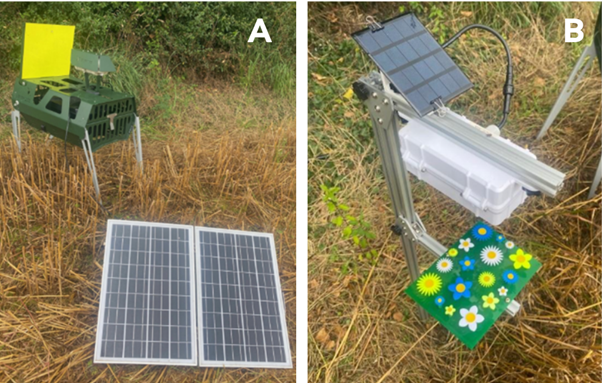
Figure 2 Cameras being used in ANTENNA project include a DIOPSIS 2.0 Insect Camera (A) and a MiniMon camera (B).

The DIOPSIS camera is a fully automated system designed to detect, monitor and document insect populations, produced by Faunabit in The Netherlands. When an insect lands on the yellow screen, the camera captures high resolution images which are then uploaded to a server via Wi-Fi. Images are then processed using the image recognition model developed by Naturalis.
In terms of the MiniMon camera, this was developed by the ANTENNA team, with the aim of being a user-friendly, cost-effective camera. Unlike the DIOPSIS camera, which monitors continuously, the MiniMon camera takes a burst of five pictures every minute. As shown in Fig. 1, there is a custom-made flower plate containing 3-D printed artificial flowers which attract insects. As well as recording insects we found, we also took note of floral coverage around each stake (2m radius).

Figure 3 Katie, Sarah B. and Moya did trojan work bringing these cameras around to different sites to conduct 6-hour bouts of surveying! Here they are on day one of successfully setting up the DIOPSIS camera.

Fun finds
Over the course of the summer, we found some amazing insects, from painted lady butterflies (Vanessa cardui) to orange-tailed mining bees (Andrena haemorrhoa). Below we share with you our catches of the season!
Research Assistant Sarah B.’s main memories from this season include finding the Common Tiger hoverfly (Helophilus pendulus; Fig 4 A) and peacock butterfly (Aglais io). Another stand out moment from the summer was finding 5 small tortoise shell (Aglais urticae) butterflies on field scabious (Knautia arvensis). Katie Gahan, another Research Assistant working with us this summer, enjoyed the field full of common spotted orchids (Dactylorhiza fuchsii).

Figure 4 Some of our fun finds during field work season! A. Common tiger hoverfly (Helophilus pendulus). B. Common spotted orchid (Dactylorhiza fuchsia). C. The large carder bumblebee (Bombus muscorum). D. Many tortoiseshell butterflies (Aglais urticae) foraging on field scabius (Knautia arvensis). E. Peacock butterfly (Aglais io). F. A new buff-tailed bumblebee (Bombus terrestris) queen.

“My catch of the season was finally seeing a Large Carder Bee (Bombus muscorum) for the first time! I caught a male on one of the last days of surveying, which was even more exciting as it meant I got to hold him since males don’t sting! After I caught this one, we saw a couple more flying along the transect which was super exciting. This was probably the best day in the field for me!” – Moya
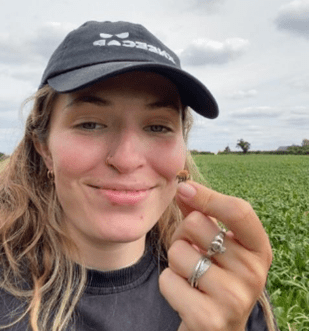
Figure 5 Moya only delighted with the male Bombus muscorum she found!

“My fun find is not exactly rare, but it is very beautiful – it is the buff-tailed bumblebee queen. In this picture we see a new queen who is likely preparing for her upcoming winter diapause by stocking up on nectar and pollen. I studied buff-tailed bumblebees during my PhD, so I always enjoy seeing these beautiful (and huge!) queens during such a vital part of their lifecycle. I also really loved seeing so many butterflies out after several mild seasons – a particular favourite was the painted lady butterfly (Fig. 6)” – Sarah L.
“I remember a day during our third round of surveys on Kepak farm where there were so many butterflies of different species out – it was really beautiful!” – Fernanda

Figure 6 A painted lady butterfly (Vanessa cardui).

A big thank you to the field work team for all their hard work this summer, it is so appreciated! And a sincere thank you to the farmers who let us come and count insects on their farms (and sometimes treated us to cups of tea!) – we couldn’t do this work without your support!
ANTENNA – Making technology work for monitoring pollinators

By Moya Owens, Research Assistant with the ANTENNA Project at TCD

In recent years the decline in wild insect pollinators has increased dramatically, causing huge concern among the pollinator monitoring community. The 2023 EU Pollinators Initiative has set out a number of actions to be taken by the EU and the Member States to help reverse the decline in pollinators, with the first action defined as ‘establishing a comprehensive monitoring system. The current EU-wide Pollinator Monitoring Scheme (EU-PoMS) provides a methodology for transnational pollinator monitoring however many gaps still remain. Modern technologies (such as camera traps, sensors, robotics) can help to address these concerns, with the aim of overcoming key monitoring gaps by increasing taxonomic and geographic coverage, speed and accuracy.

The ANTENNA project (MAkiNg Technology work for moNitoring polliNAtors) is an EU wide project with an overarching goal of filling key monitoring gaps through advancing novel technologies which complement EU-wide pollinator monitoring schemes. The project will address the following objectives:

  1. Advance automated sample sorting and image recognition tools from individual prototypes to systems adoptable by practitioners, through a co-design approach;
  2. Expand pollinator monitoring to under-researched pollinator taxa, ecosystems, and pressures;
  3. Quantify the added value of a broad range of novel monitoring systems in comparison and combination with ‘traditional’ methods in terms of information gains related to economic costs;
  4. Provide a framework for integrative monitoring by combining multiple data streams and for developing routines for near real-time forecasting models as bases for early warning systems;
  5. Upscale from local demonstrations to the implementation of large-scale transnational pipelines and provide context-specific guidance for the choice and combination of monitoring methods and indicators for policy and end-users.

Field work

ANTENNA is organised into 5 work packages, including improving and testing new monitoring technologies, integrative modelling and large scale implementation. Here at Trinity, we are going to be testing novel technologies in the field alongside traditional methods of pollinator monitoring. This involves deploying two camera traps in the field: a DIOPSIS camera, developed by Faunabit and a MiniMon camera, developed by members of the ANTENNA team. These cameras use image recognition tools to record and identify insects. Alongside using this technology, we will conduct transects and pan trapping on a minimum of 5 sites in Co. Kildare, meaning a busy field season for us!

Next steps

Along with fieldwork, we are also involved in identifying the needs of stakeholders ie. members of the pollinator community (such as ecologists, entomologists, researchers). We have developed an online survey which aims to identify the limitations of current monitoring approaches, opportunities for improvement and desired outcomes (eg. Integration of technologies with EU monitoring schemes). This survey represents the first step of a co-design process, with the information gathered summariesed to inform other tasks in the project and to optimise large-scale implementation which is the ultimate aim of the project. Additionally we are going to produce a roadmap for enhanced European wide pollinator monitoring. The report will outline a pathway for implementing the novel technology at large EU scales, and will include information on the status of the new technologies, guidance of complementary use and a cost benefit analysis.

This work is supported by the Environmental Protection Agency (EPA) through the Biodiversa+ program. Irish ANTENNA work is led in Trinity College Dublin by Prof Jane Stout, in collaboration with Dr Jess Knapp (Lund University).

New Research – Ask a Farmer

Pollinators are an important part of the world’s biodiversity, responsible for pollinating crops and wild plants, providing a valuable ecosystem service (Potts, 2010). Despite its importance, it is evident the global decline of the wild and domesticated species of pollinators (Potts, 2010). In Ireland, 30% of pollinator species are classified as threatened with extinction (Fitzpatrick et al., 2007), which jeopardises the country’s food production since the decline of pollinators means the decline of pollinator-dependent plant species (Potts, 2010).

78% of Europe’s flowering plants benefit from animal pollination, as do 71% of the crops that supply 90% of the world’s food.  However, modern agriculture contributes to the decline of pollinator species through the application of agrochemicals and the conversion to highly productive monocultures (Russo et al., 2022). In a country like Ireland, where nearly 70% of land is managed for agriculture, and the agri-food sector is one of the country’s biggest industries, contributing in 2020 with 7% of the country’s gross income, plus 10% of exports (Government of Ireland, 2021), this is a pertinent issue.

Figure 1: Hedgerow managed for pollinators in an arable farm in Kildare.

The decline of bees not only impacts human life with agriculture and food security, but also the entire ecosystem, as without their action, there is a decline in ecosystem services. It means that, for example, wildlife does not have access to fruits and seeds, which interferes with nutrient cycling, seed dispersal and adaptation to climate change (All-Ireland Pollinator Plan, 2021). Furthermore, pollinator conservation has beneficial effects on pest control, soil erosion and microclimate regulation, which helps to mitigate the effects of the climate crisis and biodiversity loss (All-Ireland Pollinator Plan, 2021).

Figure 2: A green-veined butterfly (Pieris napi) on hedgerow Hawthorn (Crateagus monogyna).

According to Russo et al. (2022), it is extremely important to take conservation actions that protect the remaining high-quality habitats and improve the quality of degraded systems by identifying central organisms in the plant-pollinator network that can support the pair’s diversity and abundance.

A key challenge facing biodiversity conservation is human behaviour and the factors that govern its change (Marselle et al., 2020; Schultz, 2011; Knapp et al., 2020). However, Knapp et al. (2020) identified that when developing conservation strategies, natural scientists often disregard social factors affecting the human decision-making process to favour ecological evidence. This is particularly interesting because the implementation of conservation practices is majorly voluntary (Witzling et al., 2021) and, therefore, relies on a human decision.

Ignoring the social aspect of the conservation problem creates a gap between the ecological solutions and the implementation of these solutions by individuals, communities and society in general. This gap demands interdisciplinary approaches combining the understanding of the social pressures and norms that shape behaviour, the psychological reasons behind such behaviours, and the ecological solutions that can improve conservation behaviours.

Farms cover 67.6% of the Ireland’s area (EPA, 2022); therefore, taking into consideration farmers’ experience and knowledge of the land to adapt the already in place actions to a more comprehensive and user-friendly action plan is extremely important for a real impact in not only conserving the pollinators but also reversing the trend and restore pollinators in the country. 

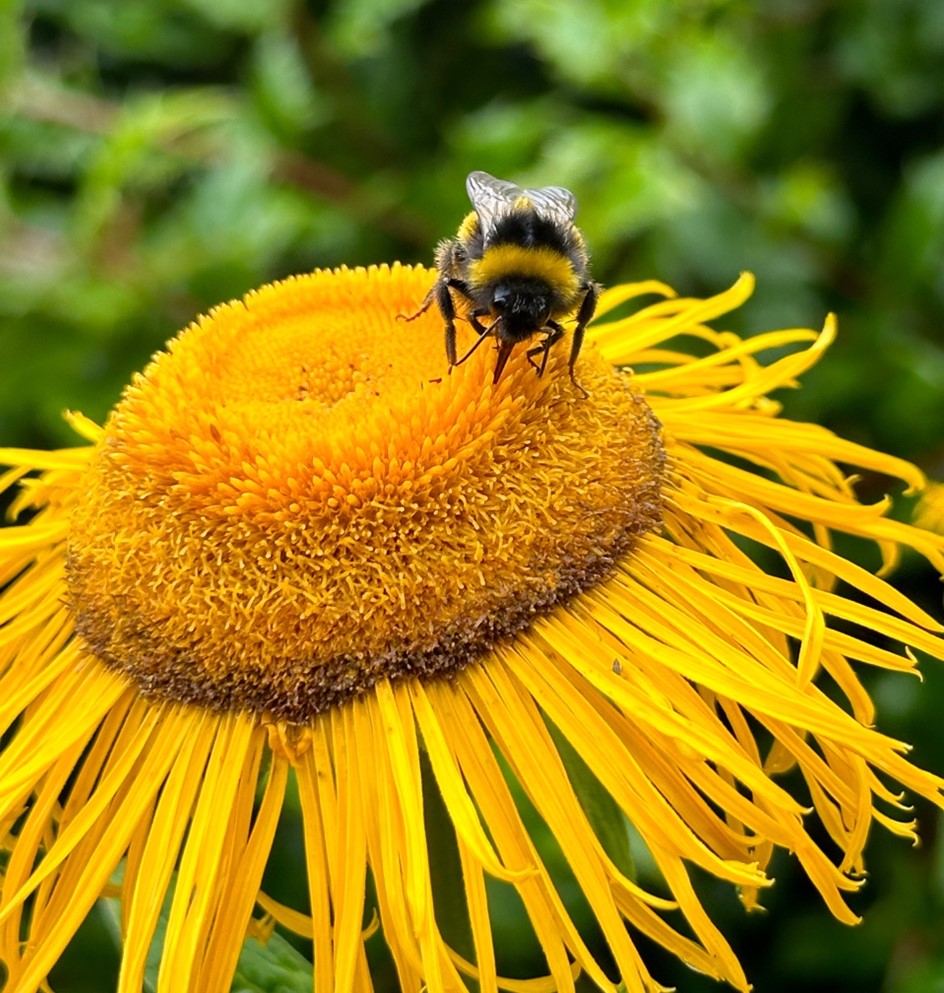
Figure 3: A bumblebee foraging on a Yellow Oxeye (Telekia speciosa).

Ask a Farmer is a PhD research project that will contribute to closing the gap between farmers’ actions and the ecological solutions to reverse pollinator decline using the All-Ireland Pollinator Plan (AIPP) as a case study, expanding the traditional, evidence-based conservation research and increasing the uptake and perpetuation of the AIPP. Adopting a holistic perspective that acknowledges the diverse and plural values individuals and societies attribute to nature (IPBES, 2022), and understanding the wide range of social factors (beyond finance). These social factors shape farmer motivation, capabilities and opportunities, influencing their behaviour around pollinator interventions and policies.

This will be possible by first developing a socio-psychological model to identify and quantify the social factors, including historical context, well-being, finance, social norms and identity, influencing the behaviour of the farmers. Then, the social effectiveness of the pollinator-friendly actions proposed by the AIPP (figure 4) will be tested by evaluating what is being done in real-life farms, integrating the recommendations and the experience of a lifetime in the field. Finally, developing a strategy that integrates social and ecological perspectives to increase the number of farmers adopters of the AIPP, ensuring a continuation of the program and enhancing pollinator conservation in Ireland and beyond.

Figure 4: Five pollinator-friendly actions proposed by the All-Ireland Pollinator Plan.

            This May marks the beginning of the 2025 field season, during which the team started visiting the partner farms to collect ecological data on pollinators and interview the farmers about their perspectives on conservation actions, particularly pollinator conservation. A very ‘beezy’ summer ahead!

Figure 5:  The team on our first day of the field season 2025. Dr. Sarah Larragy (front), Moya Owens (standing), and Fernanda Azevedo (sitting).

About the author:

Fernanda ‘Fern’ Azevedo is a first-year PhD researcher funded by the Trinity Research Doctorate Award, supervised by Professor Jane Stout, Dr. Jessica Knapp and Dr. Sarah Larragy. Her doctoral research builds on the themes she explored during her MSc in Biodiversity and Conservation at Trinity College Dublin, supervised by Dr. Jessica Knapp.

References:

All-Ireland Pollinator Plan (2021) All-Ireland Pollinator Plan 2021-2025. National Biodiversity Data Centre, Waterford. Available at pollinators.ie (Last accessed on 07/05/2025).

EPA (2022) Ireland’s Environment: Maps and Charts – Key Message 13: Land use.Available at:  epa.ie (Last accessed on 07/05/2025).

Fitzpatrick, U., Murray, T.E., Paxton, R.J., Breen, J., Cotton, D., Santorum, V., Brown, M.J.F. (2007) Rarity and decline in bumblebees – A test of causes and correlates in the Irish fauna. Biological Conservation, 136(2): 185-194. DOI: 10.1016/j.biocon.2006.11.012

Government of Ireland (2021) Climate Action Plan 2021: Securing our Future. Dublin. Available at: gov.ie/pdf (Last accessed on 07/05/2025).

IPBES. (2022) Summary for Policymakers of the Methodological Assessment of the Diverse Values and Valuation of Nature of the Intergovernmental Science-Policy Platform on Biodiversity and Ecosystem Services (IPBES). DOI: 10.5281/zenodo.6522392

Knapp, J.L., Phillips, B.B., Clements, J., Shaw, R.F., Osborne, J.L. (2020) Socio-psychological factors, beyond knowledge, predict people’s engagement in pollinator conservation. People and Nature, pp. 204–220. DOI: 10.1002/pan3.10168

Marselle, M.R., Turbe, A., Shwartz, A., Bonn, A., Colléony, A. (2020) Addressing behaviour in pollinator conservation policies to combat the implementation gap. Conservation Biology. Vol 35 (2), 610-622. DOI: 10.1111/cobi.13581

Potts, S.G., Biesmeijer, J.C., Kremen, C., Neumann, P., Schweiger, O., Kunin, W.E. (2010) Global pollinator declines: trends, impacts and drivers. Trends in Ecology & Evolution. Vol.25, 6, 345-353. DOI: 10.1016/j.tree.2010.01.007

Russo, L., Fitzpatrick, Ú., Larkin, M., Mullen, S., Power, E., Stanley, D., White, C., O’Rourke, A., & Stout, J. C. (2022).  Conserving diversity in Irish plant–pollinator networks. Ecology and Evolution, 12, e9347. DOI: 10.1002/ece3.9347

Schultz, P.W. (2011) Conservation means behavior. Conservation Biology, 25 (6), 1080–1083. DOI: 10.1111/j.1523-1739.2011.01766.x

Witzling, L., Wald, D., Williams, E. (2021) Communicating with farmers about conservation practices: lessons learned from a systematic review of survey studies. Journal of Soil and Water Conservation. Vol. 76(5), 00145. DOI: 10.2489/jswc.2021.00145