New Research – Ask a Farmer

Pollinators are an important part of the world’s biodiversity, responsible for pollinating crops and wild plants, providing a valuable ecosystem service (Potts, 2010). Despite its importance, it is evident the global decline of the wild and domesticated species of pollinators (Potts, 2010). In Ireland, 30% of pollinator species are classified as threatened with extinction (Fitzpatrick et al., 2007), which jeopardises the country’s food production since the decline of pollinators means the decline of pollinator-dependent plant species (Potts, 2010).

78% of Europe’s flowering plants benefit from animal pollination, as do 71% of the crops that supply 90% of the world’s food.  However, modern agriculture contributes to the decline of pollinator species through the application of agrochemicals and the conversion to highly productive monocultures (Russo et al., 2022). In a country like Ireland, where nearly 70% of land is managed for agriculture, and the agri-food sector is one of the country’s biggest industries, contributing in 2020 with 7% of the country’s gross income, plus 10% of exports (Government of Ireland, 2021), this is a pertinent issue.

Figure 1: Hedgerow managed for pollinators in an arable farm in Kildare.

The decline of bees not only impacts human life with agriculture and food security, but also the entire ecosystem, as without their action, there is a decline in ecosystem services. It means that, for example, wildlife does not have access to fruits and seeds, which interferes with nutrient cycling, seed dispersal and adaptation to climate change (All-Ireland Pollinator Plan, 2021). Furthermore, pollinator conservation has beneficial effects on pest control, soil erosion and microclimate regulation, which helps to mitigate the effects of the climate crisis and biodiversity loss (All-Ireland Pollinator Plan, 2021).

Figure 2: A green-veined butterfly (Pieris napi) on hedgerow Hawthorn (Crateagus monogyna).

According to Russo et al. (2022), it is extremely important to take conservation actions that protect the remaining high-quality habitats and improve the quality of degraded systems by identifying central organisms in the plant-pollinator network that can support the pair’s diversity and abundance.

A key challenge facing biodiversity conservation is human behaviour and the factors that govern its change (Marselle et al., 2020; Schultz, 2011; Knapp et al., 2020). However, Knapp et al. (2020) identified that when developing conservation strategies, natural scientists often disregard social factors affecting the human decision-making process to favour ecological evidence. This is particularly interesting because the implementation of conservation practices is majorly voluntary (Witzling et al., 2021) and, therefore, relies on a human decision.

Ignoring the social aspect of the conservation problem creates a gap between the ecological solutions and the implementation of these solutions by individuals, communities and society in general. This gap demands interdisciplinary approaches combining the understanding of the social pressures and norms that shape behaviour, the psychological reasons behind such behaviours, and the ecological solutions that can improve conservation behaviours.

Farms cover 67.6% of the Ireland’s area (EPA, 2022); therefore, taking into consideration farmers’ experience and knowledge of the land to adapt the already in place actions to a more comprehensive and user-friendly action plan is extremely important for a real impact in not only conserving the pollinators but also reversing the trend and restore pollinators in the country. 

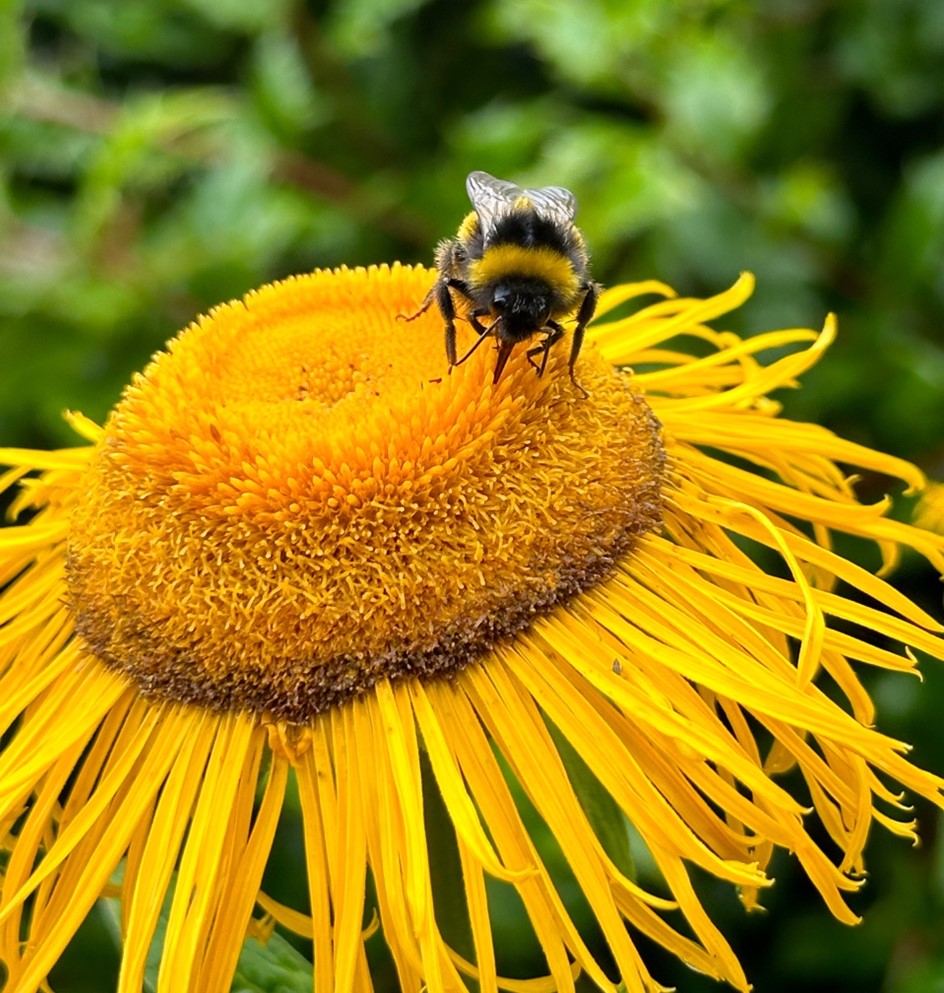
Figure 3: A bumblebee foraging on a Yellow Oxeye (Telekia speciosa).

Ask a Farmer is a PhD research project that will contribute to closing the gap between farmers’ actions and the ecological solutions to reverse pollinator decline using the All-Ireland Pollinator Plan (AIPP) as a case study, expanding the traditional, evidence-based conservation research and increasing the uptake and perpetuation of the AIPP. Adopting a holistic perspective that acknowledges the diverse and plural values individuals and societies attribute to nature (IPBES, 2022), and understanding the wide range of social factors (beyond finance). These social factors shape farmer motivation, capabilities and opportunities, influencing their behaviour around pollinator interventions and policies.

This will be possible by first developing a socio-psychological model to identify and quantify the social factors, including historical context, well-being, finance, social norms and identity, influencing the behaviour of the farmers. Then, the social effectiveness of the pollinator-friendly actions proposed by the AIPP (figure 4) will be tested by evaluating what is being done in real-life farms, integrating the recommendations and the experience of a lifetime in the field. Finally, developing a strategy that integrates social and ecological perspectives to increase the number of farmers adopters of the AIPP, ensuring a continuation of the program and enhancing pollinator conservation in Ireland and beyond.

Figure 4: Five pollinator-friendly actions proposed by the All-Ireland Pollinator Plan.

            This May marks the beginning of the 2025 field season, during which the team started visiting the partner farms to collect ecological data on pollinators and interview the farmers about their perspectives on conservation actions, particularly pollinator conservation. A very ‘beezy’ summer ahead!

Figure 5:  The team on our first day of the field season 2025. Dr. Sarah Larragy (front), Moya Owens (standing), and Fernanda Azevedo (sitting).

About the author:

Fernanda ‘Fern’ Azevedo is a first-year PhD researcher funded by the Trinity Research Doctorate Award, supervised by Professor Jane Stout, Dr. Jessica Knapp and Dr. Sarah Larragy. Her doctoral research builds on the themes she explored during her MSc in Biodiversity and Conservation at Trinity College Dublin, supervised by Dr. Jessica Knapp.

References:

All-Ireland Pollinator Plan (2021) All-Ireland Pollinator Plan 2021-2025. National Biodiversity Data Centre, Waterford. Available at pollinators.ie (Last accessed on 07/05/2025).

EPA (2022) Ireland’s Environment: Maps and Charts – Key Message 13: Land use.Available at:  epa.ie (Last accessed on 07/05/2025).

Fitzpatrick, U., Murray, T.E., Paxton, R.J., Breen, J., Cotton, D., Santorum, V., Brown, M.J.F. (2007) Rarity and decline in bumblebees – A test of causes and correlates in the Irish fauna. Biological Conservation, 136(2): 185-194. DOI: 10.1016/j.biocon.2006.11.012

Government of Ireland (2021) Climate Action Plan 2021: Securing our Future. Dublin. Available at: gov.ie/pdf (Last accessed on 07/05/2025).

IPBES. (2022) Summary for Policymakers of the Methodological Assessment of the Diverse Values and Valuation of Nature of the Intergovernmental Science-Policy Platform on Biodiversity and Ecosystem Services (IPBES). DOI: 10.5281/zenodo.6522392

Knapp, J.L., Phillips, B.B., Clements, J., Shaw, R.F., Osborne, J.L. (2020) Socio-psychological factors, beyond knowledge, predict people’s engagement in pollinator conservation. People and Nature, pp. 204–220. DOI: 10.1002/pan3.10168

Marselle, M.R., Turbe, A., Shwartz, A., Bonn, A., Colléony, A. (2020) Addressing behaviour in pollinator conservation policies to combat the implementation gap. Conservation Biology. Vol 35 (2), 610-622. DOI: 10.1111/cobi.13581

Potts, S.G., Biesmeijer, J.C., Kremen, C., Neumann, P., Schweiger, O., Kunin, W.E. (2010) Global pollinator declines: trends, impacts and drivers. Trends in Ecology & Evolution. Vol.25, 6, 345-353. DOI: 10.1016/j.tree.2010.01.007

Russo, L., Fitzpatrick, Ú., Larkin, M., Mullen, S., Power, E., Stanley, D., White, C., O’Rourke, A., & Stout, J. C. (2022).  Conserving diversity in Irish plant–pollinator networks. Ecology and Evolution, 12, e9347. DOI: 10.1002/ece3.9347

Schultz, P.W. (2011) Conservation means behavior. Conservation Biology, 25 (6), 1080–1083. DOI: 10.1111/j.1523-1739.2011.01766.x

Witzling, L., Wald, D., Williams, E. (2021) Communicating with farmers about conservation practices: lessons learned from a systematic review of survey studies. Journal of Soil and Water Conservation. Vol. 76(5), 00145. DOI: 10.2489/jswc.2021.00145

Trinity’s Campus Pollinator Plan

At Trinity College Dublin, our 47-acre College Green campus is buzzing with life thanks to a collaborative effort to support pollinators, aligning with the All-Ireland Pollinator Plan. Trinity was one of the first third level institutions to develop a Campus Pollinator Plan in 2017 and we’ve been working hard for pollinators ever since.

Across campus, bumble bee boxes and insect hotels for native bees have been installed in College gardens and near tree lines, creating vital nesting sites for species of bumble and solitary bees. Check out our short video here.

Nesting habitats for bees on Trinity’s campus: cavity nests for solitary bees (above) and bumblebee boxes (below) were upcycled from waste materials on campus

These habitats, installed with input from the Estates and Facilities team, provide safe havens for pollinators amid urban challenges, boosting local biodiversity. Meanwhile, ornamental meadows along with the No Mow April and May initiatives have transformed managed lawns into wildflower-rich zones, with areas like Front Square blooming with daisies and dandelions each spring.

No-mow May in Trinity’s Front Square

These efforts, championed by students, staff, and the sustainability team, offer food and shelter for bees, butterflies, and other insects while fostering a culture of conservation. Together, we’re engaging the Trinity community, students, staff, and visitors, in protecting nature, contributing to a sustainable future. 

These actions are a cornerstone of Trinity’s Biodiversity Action Plan 2025-2030, driving us toward a more nature friendly campus. This is a key part of Trinity’s ambition to be nature positive by 2030 (see Trinity’s Sustainability Strategy). 

Join us in safeguarding pollinators and building greener cities, gardens, parks and farms – check out the All-Ireland Pollinator Plan Resources for tips and advice.  

Irish Pollinator Research Network meeting 2025

By Tara Dirilgen & Jim Carolan, Maynooth University

This year the Irish Pollinator Research Network (IPRN) returned to Maynooth University for a second time (the first was in 2020) and was hosted by Dr Jim Carolan and Dr Tara Dirilgen. Launched in 2017, the IPRN is an open network of pollinator researchers committed to conducting pollinator research and build the evidence base required to conserve and manage our beleaguered pollinator populations across Ireland. Although primarily focussed on pollinating insect species, the network is open to members that conduct research on any aspect of pollinator biology and ecology.

In total, 13 researchers representing seven institutions presented their work on topics including solitary bee hotels, farmers sentiments to conservation, cryptic bumblebees, pesticides impacts, changing habitats, non-lethal sampling, honeybee health and genomics and the importance of hedgerows (download programme below). The presentations were given by PhD candidates and PIs, and as with previous years, it seems that pollinator research is booming and in a great place.

Updates were also provided by Dr Saorla Kavanagh on several Teagasc biodiversity projects that are planned and Dr Sarah Larragy on the first year of the EU funded RestPoll project, a European-wide initiative aiming to restore pollinator habitats and enhance their connectivity. Dr Michelle Larkin from the National Biodiversity Data Centre presented on the Irish Pollinator Monitoring scheme which plans to track pollinator numbers and species and their distributions across different habitats (including farmlands) and geographical regions in Ireland. Such projects are essential for us to understanding the decline in pollinator numbers and diversity but also the causes and consequences of these declines.

Delegates enjoyed a lovely lunch in Pugin Hall and a quick visit to stretch the legs to the Junior Garden. Despite the lack of life (plants and pollinators) given the time of the year, we were happy to stretch our legs, breath some fresh air and show off the great biodiversity management and initiatives of Maynooth Green Campus. Everyone was forgiven for the delayed start to the afternoon session, but as it turned out energy and rested minds were required.

As in past years the end of the meeting is dedicated to an open discussion regarding the future and function of the IPRN. Since it’s establishment the IPRN has had strong links with the NBDC and particularly through the collation of research actions as part of the All-Ireland Pollinator Plan. Indeed, much of the research conducted by IPRN members has directly contributed to the actions and monitoring of AIPP. The session was directed by Professor Jane Stout (VP for Biodiversity and Climate Action at TCD, and Deputy Chair of the AIPP Steering Group) who presented plans for the AIPP Phase III (2025-2030). In a slight departure to previous phases, new approaches to translating and disseminating research findings and widening involvement in pollinator data acquisition and monitoring were proposed and supported. In addition, new collaborative approaches were agreed where IPRN members have committed to share equipment, knowledge and even samples so that we can improve integration among Irish pollinator researchers and support those new to the group.

Looking forward to next year’s IPRN at UCD.

To find out more about past IPRN meetings, see other blog posts on Campus Buzz. Current IPRN PIs include:

Jane Stout, TCD

Dara Stanley, UCD

Jim Carolan, MU

Blanaid White, DCU

Grace McCormack, NUI Galway

Una Fitzpatrick, National Biodiversity Data Centre

Tara Dirilgen, MU

Saorla Kavangh, Teagasc

Simon Hodge, UCD

Julia Jones, UCD

About the author(s): Jim Carolan and Tara Dirilgen are both research group leaders at the Department of Biology, Maynooth University.

Unseen Worlds Beneath Our Feet: The Living Complexity of Soil

By Dr Paul Dowding, Emeritus Professor in Botany, School of Natural Sciences, Trinity College Dublin

Many people speak of soil in dismissive tones — “dirt,” “muck,” “mud.” Yet beneath our feet lies one of the most dynamic and mysterious ecosystems on Earth: soil is not just the passive ground we walk on, but a living, breathing system critical to the health of the planet.

Unfortunately, soils across the globe are under severe threat. Decades of intensive agriculture, heavy machinery, synthetic fertilizers, and biocides have degraded many of the world’s soils, possibly beyond repair. The damage is so widespread and entrenched that some experts warn it may be too late to reverse.

The Hidden Architecture of Soil

Soil is complex and opaque, making it one of the most difficult ecosystems to study. Unlike ecosystems on the surface, we can’t observe soil life without disturbing it. But we know it’s composed of a mix of mineral particles (sand, silt, and clay), organic matter, water, and countless living organisms — plants, fungi, bacteria, invertebrates — all intricately interacting in ways we don’t fully understand.

Astronomers talk about billions of galaxies; soil scientists encounter billions of bacteria. It’s a scale of life that rivals the cosmos in its vastness — and importance.

One of soil’s essential features is porosity. Living soil is riddled with pores created by roots, invertebrates, including insects like solitary bees, which dig vertical tunnels. Plant roots that die leave behind voids, and organic “crumbs” form on the soil surface — delicate soil structures that allow air and water to circulate.

Life and Death in Soil

Soil is not static. In grasslands, plant roots turnover every few weeks, creating a flux of organic material below the surface. Interestingly, in grasslands, there is four times more biomass below ground than above. Contrast this with woodlands, where most organic matter accumulates on the surface as leaf litter and decays from the top down. Each ecosystem supports different soil structures and functions.

Soil layers — or horizons — reveal the story of life underground. The topmost A horizon is where most biological activity occurs, dense with roots and organisms. Beneath lie the B and C horizons, progressively richer in unaltered parent material. In forests, a litter layer of leaves (A0) rests on top, with distinct zones: loose leaves (A0L), fragmented organic matter (A0F), and finally a highly active microbial layer where decaying leaves become unrecognizable. This layer is damp, and becomes a rooting medium for plants.

Fungi dominate the early stages of decomposition, breaking down tannins and detoxifying compounds in leaf litter, effectively “preparing” plant material for consumption by other soil creatures. These fungi also convert nitrogen-rich compounds into forms that are available to be taken up by plants and attract a range of decomposers — from microscopic bacteria to springtails, nematodes, and maggots — that mine, mince, and strip decaying material. Bacteria, unable to penetrate plant tissues alone, rely on these animals and fungi to access the nutrients within dead plant materials.

Rooted in Symbiosis

No plant root exists in isolation. Nearly all plants form relationships with mycorrhizal fungi, which extend their reach for water and nutrients, especially phosphorus, in exchange for carbon. Bacteria cluster around roots as well — some incidental, others essential, fixing atmospheric nitrogen into usable forms.

This complex interplay is vital to the cycling of nutrients and gases. Soil emits large quantities of carbon dioxide, though measuring this accurately is difficult due to the variability in temperature, moisture, and organic matter across different soil types, exposure and times of year.

Challenges in Measuring Soil Carbon

Efforts to measure and monetize soil carbon — for climate mitigation or farm payments — face scientific hurdles. Sampling depth, seasonal changes, and natural variation in organic matter all complicate assessments. For example, sampling at just 10 cm, the standard in some schemes, may miss the deeper organic reservoirs found in undisturbed grasslands or tree-planted plots. Opportunistic sampling (e.g. under nettles or hedgerows) can skew results.

In newly planted oak woodlands, soil carbon can accumulate rapidly, especially in the spaces between trees where grass roots can reach deep, undisturbed layers. Meanwhile, annual mowing of hay meadows limits root growth and soil organic matter buildup.

Standing Dead and Silent Decay

Not all dead organic matter makes it immediately into the soil. In grasslands, dead material often remains standing within tussocks; in woodlands, a large proportion of organic input is trapped high in the canopy as dead wood. The timing of leaf fall, tree species, and leaf chemistry (e.g. resin in conifers) all influence the rate and nature of decomposition.

Fungi are central players in making plant material palatable to soil fauna, transforming tough, chemically defended tissues into protein-rich, accessible resources.

Dead Wood: A Living Legacy

Managing woodlands or rewilded areas? If enhancing soil and biodiversity is the goal, consider leaving fallen trees in place. Decaying logs — particularly dense, slow-rotting species — create stable, moisture-rich habitats for fungi and invertebrates. While branches and brash can offer shelter to birds and small mammals, they dry out too quickly to support the rich microbial life needed for soil health.

Conclusion: Soil as the Final Frontier

Despite decades of study, soil remains one of the least understood yet most vital ecosystems on Earth. It’s a factory of life, death, and transformation — often invisible, but always active. To protect it, we must first learn to value it not as dirt beneath our boots, but as a dynamic partner in sustaining life.

Bees in the Trees

by Kate Harrington, PhD student, FOREST project, Trinity College Dublin

The pollinator community of young woodland sites, planted in farmlands under the Native Woodland Scheme (DAFM, 2024), was explored in the summer of 2023. We used pan trap and transect surveys to record and capture bees and hoverflies , looking at both the edges and centres of the woodlands, and we also looked at pollinator activity and floral resources. 

Pollinators, as might be expected,  forage mainly on the edges of the woodlands. The Native Woodland Scheme prescribes the planting of flowering species around the edges which support our native pollinator species, and seem to be particularly important for solitary bees in the spring.  The grassy edges, released from agriculture pressure, and unmanaged hedgerows, also contribute to the floral resources available for pollinators.    

Bombus pratorum resting on a hazel leaf

With a range of sites of different ages, we were able to look at how the pollinator fauna changed across the development of a woodland from an open habitat to one with a closed-tree canopy. 

A young native woodland plantation

With a range of sites of different ages, we were able to look at how the pollinator fauna changed across the development of a woodland from an open habitat to one with a closed-tree canopy. 

Native woodland spring plant-pollinator network

It has been suggested that functional groups such as pollinators may be particularly useful as ecological indicators.  With the rush to plant native trees as a solution to the biodiversity and climate crises, monitoring the success of these restoration initiatives is crucial, and we may need to look beyond simple habitat metrics (Marshall, 2024).  Our findings suggest that if we were to use pollinators as a monitoring metric for woodland sites, that bees may be a better indicator than hoverflies, as the latter respond more to landscape-level changes, while bees may better reflect any site-level changes. 

DAFM. (2024). Afforestation Scheme 2023-2027 Document. April 2024. Department of Agriculture, Food and the Marine. https://www.gov.ie/en/publication/6e997-afforestation-scheme/

Marshall, C. A. M., Wade, K., Kendall, I. S., Porcher, H., Poffley, J., Bladon, A. J., Dicks, L. V., & Treweek, J. (2024). England’s statutory biodiversity metric enhances plant, but not bird nor butterfly, biodiversity. Journal of Applied Ecology, 1365-2664.14697. https://doi.org/10.1111/1365-2664.14697

Mola, J. M., Hemberger, J., Kochanski, J., Richardson, L. L., & Pearse, I. S. (2021). The Importance of Forests in Bumble Bee Biology and Conservation. BioScience, 71(12), 1234–1248. https://doi.org/10.1093/biosci/biab121