The Teagasc Farmland Biodiversity Group led by Dr Saorla Kavanagh, (Department of Environment, Soils and Land Use, Johnstown Castle) invites applications for a fully funded 4-year PhD. The PhD candidate will be registered at Trinity College Dublin and co-supervised by Professor Jane Stout, Professor of Ecology, School of Natural Sciences.
Project Background and Description Pollinator decline is a key threat to biodiversity conservation and the provision of ecosystem services. One third of Ireland’s bee species are under threat, with intensification and homogenisation of agricultural landscapes considered the principal driver. Diversifying habitats and understanding farmer attitudes towards biodiversity are key to halting further pollinator decline. Semi-natural habitats on the farm, for example, hedgerows, woodlands and trees, and wetland areas including ponds can provide valuable food and nesting resources for pollinators. In Ireland, there is little data on just how valuable ponds are for pollinators. Restoring biodiversity-friendly habitats and designing evidence-based actions that benefit biodiversity on the farm are crucial to meet the requirements of the EU’s Biodiversity Strategy and Nature Restoration Regulation, and to inform Policy for Agri-Environment measures. The aim of this PhD is to identify the benefits of ponds for pollinators, and gain an understanding of farmers’ knowledge of farmland biodiversity. Barriers around implementing biodiversity measures on the farm and solutions to these barriers will be identified.
Candidate Profile The ideal candidate will:
Hold at least an upper second class honours (or equivalent) Bachelor or Masters degree in, entomology, plant science, zoology, environmental science, or another related discipline
Have demonstrable analytical skills in the field and/or laboratory, and in data handling, analysis and presentation
Have the capacity/willingness to think critically and creatively, and apply multidisciplinary techniques to address hypothesis-driven questions
Work well in a multi-disciplinary team, and be able to work independently
Have excellent oral and written communication skills
Be willing to travel to field sites to conduct fieldwork and interact with landowners/farmers
Hold a full clean driving licence and able to drive in Ireland
Meet Trinity postgraduate entry requirements. See English language requirements here.
Funding This is a 4-year PhD project funded by the Teagasc Walsh Scholar Programme and covers an annual stipend of €25,000, and student fees of up to a maximum of €6,000. Project costs will be covered.
Application procedure Please send a CV and a 1-2 page personal statement detailing your interest in the project Tuesday, June 24th 2025 via email to Dr Saorla Kavanagh saorla.kavanagh@teagasc.ie quoting the reference number (2025037) in the subject field. Your CV should include the name and contact details of two references. In your personal statement, please explain both why you are specifically interested in this PhD project and why you are a strong candidate to undertake it. Interviews will take place (online) Friday, July 4th 2025.
Project start date: September 2025 Please send all inquiries to Dr Saorla Kavanagh Saorla.kavanagh@teagasc.ie
By Moya Owens, Research Assistant with the ANTENNA Project at TCD
In recent years the decline in wild insect pollinators has increased dramatically, causing huge concern among the pollinator monitoring community. The 2023 EU Pollinators Initiative has set out a number of actions to be taken by the EU and the Member States to help reverse the decline in pollinators, with the first action defined as ‘establishing a comprehensive monitoring system. The current EU-wide Pollinator Monitoring Scheme (EU-PoMS) provides a methodology for transnational pollinator monitoring however many gaps still remain. Modern technologies (such as camera traps, sensors, robotics) can help to address these concerns, with the aim of overcoming key monitoring gaps by increasing taxonomic and geographic coverage, speed and accuracy.
The ANTENNA project (MAkiNg Technology work for moNitoring polliNAtors) is an EU wide project with an overarching goal of filling key monitoring gaps through advancing novel technologies which complement EU-wide pollinator monitoring schemes. The project will address the following objectives:
Advance automated sample sorting and image recognition tools from individual prototypes to systems adoptable by practitioners, through a co-design approach;
Expand pollinator monitoring to under-researched pollinator taxa, ecosystems, and pressures;
Quantify the added value of a broad range of novel monitoring systems in comparison and combination with ‘traditional’ methods in terms of information gains related to economic costs;
Provide a framework for integrative monitoring by combining multiple data streams and for developing routines for near real-time forecasting models as bases for early warning systems;
Upscale from local demonstrations to the implementation of large-scale transnational pipelines and provide context-specific guidance for the choice and combination of monitoring methods and indicators for policy and end-users.
Field work
ANTENNA is organised into 5 work packages, including improving and testing new monitoring technologies, integrative modelling and large scale implementation. Here at Trinity, we are going to be testing novel technologies in the field alongside traditional methods of pollinator monitoring. This involves deploying two camera traps in the field: a DIOPSIS camera, developed by Faunabit and a MiniMon camera, developed by members of the ANTENNA team. These cameras use image recognition tools to record and identify insects. Alongside using this technology, we will conduct transects and pan trapping on a minimum of 5 sites in Co. Kildare, meaning a busy field season for us!
Next steps
Along with fieldwork, we are also involved in identifying the needs of stakeholders ie. members of the pollinator community (such as ecologists, entomologists, researchers). We have developed an online survey which aims to identify the limitations of current monitoring approaches, opportunities for improvement and desired outcomes (eg. Integration of technologies with EU monitoring schemes). This survey represents the first step of a co-design process, with the information gathered summariesed to inform other tasks in the project and to optimise large-scale implementation which is the ultimate aim of the project. Additionally we are going to produce a roadmap for enhanced European wide pollinator monitoring. The report will outline a pathway for implementing the novel technology at large EU scales, and will include information on the status of the new technologies, guidance of complementary use and a cost benefit analysis.
This work is supported by the Environmental Protection Agency (EPA) through the Biodiversa+ program. Irish ANTENNA work is led in Trinity College Dublin by Prof Jane Stout, in collaboration with Dr Jess Knapp (Lund University).
Pollinators are an important part of the world’s biodiversity, responsible for pollinating crops and wild plants, providing a valuable ecosystem service (Potts, 2010). Despite its importance, it is evident the global decline of the wild and domesticated species of pollinators (Potts, 2010). In Ireland, 30% of pollinator species are classified as threatened with extinction (Fitzpatrick et al., 2007), which jeopardises the country’s food production since the decline of pollinators means the decline of pollinator-dependent plant species (Potts, 2010).
78% of Europe’s flowering plants benefit from animal pollination, as do 71% of the crops that supply 90% of the world’s food. However, modern agriculture contributes to the decline of pollinator species through the application of agrochemicals and the conversion to highly productive monocultures (Russo et al., 2022). In a country like Ireland, where nearly 70% of land is managed for agriculture, and the agri-food sector is one of the country’s biggest industries, contributing in 2020 with 7% of the country’s gross income, plus 10% of exports (Government of Ireland, 2021), this is a pertinent issue.
Figure 1: Hedgerow managed for pollinators in an arable farm in Kildare.
The decline of bees not only impacts human life with agriculture and food security, but also the entire ecosystem, as without their action, there is a decline in ecosystem services. It means that, for example, wildlife does not have access to fruits and seeds, which interferes with nutrient cycling, seed dispersal and adaptation to climate change (All-Ireland Pollinator Plan, 2021). Furthermore, pollinator conservation has beneficial effects on pest control, soil erosion and microclimate regulation, which helps to mitigate the effects of the climate crisis and biodiversity loss (All-Ireland Pollinator Plan, 2021).
Figure 2: A green-veined butterfly (Pieris napi) on hedgerow Hawthorn (Crateagus monogyna).
According to Russo et al. (2022), it is extremely important to take conservation actions that protect the remaining high-quality habitats and improve the quality of degraded systems by identifying central organisms in the plant-pollinator network that can support the pair’s diversity and abundance.
A key challenge facing biodiversity conservation is human behaviour and the factors that govern its change (Marselle et al., 2020; Schultz, 2011; Knapp et al., 2020). However, Knapp et al. (2020) identified that when developing conservation strategies, natural scientists often disregard social factors affecting the human decision-making process to favour ecological evidence. This is particularly interesting because the implementation of conservation practices is majorly voluntary (Witzling et al., 2021) and, therefore, relies on a human decision.
Ignoring the social aspect of the conservation problem creates a gap between the ecological solutions and the implementation of these solutions by individuals, communities and society in general. This gap demands interdisciplinary approaches combining the understanding of the social pressures and norms that shape behaviour, the psychological reasons behind such behaviours, and the ecological solutions that can improve conservation behaviours.
Farms cover 67.6% of the Ireland’s area (EPA, 2022); therefore, taking into consideration farmers’ experience and knowledge of the land to adapt the already in place actions to a more comprehensive and user-friendly action plan is extremely important for a real impact in not only conserving the pollinators but also reversing the trend and restore pollinators in the country.
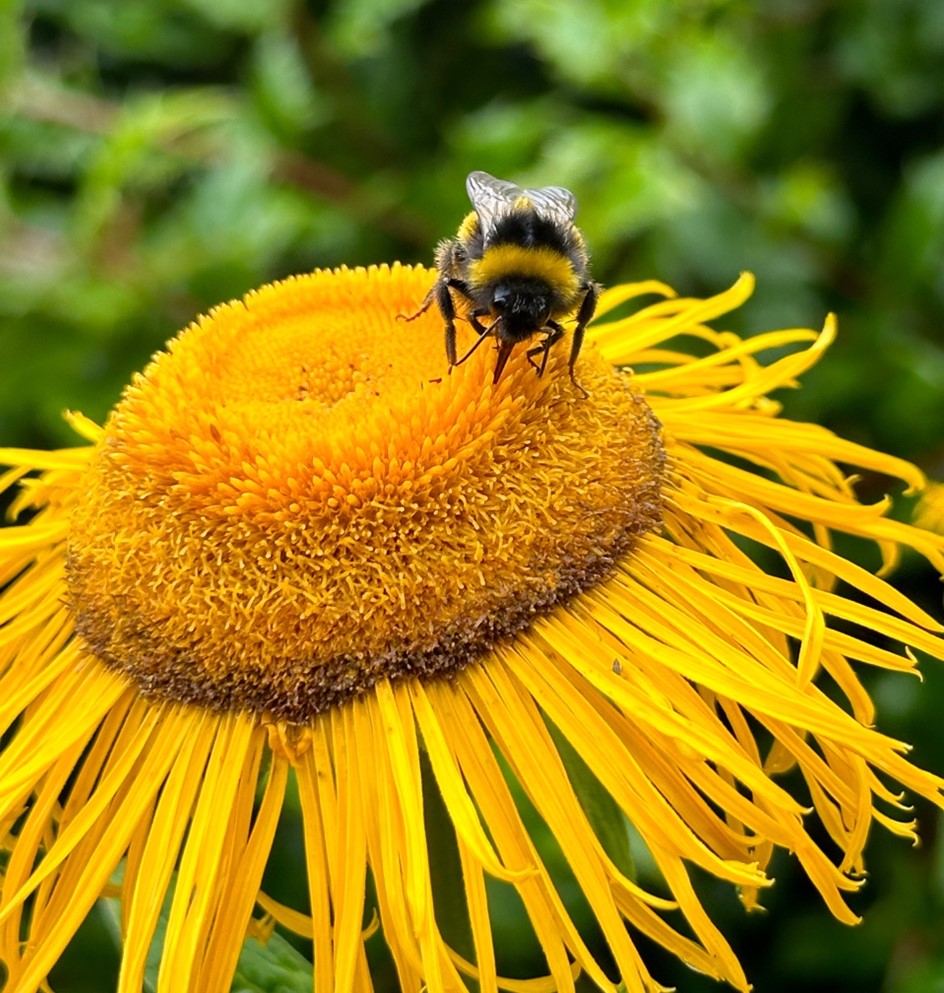
Figure 3: A bumblebee foraging on a Yellow Oxeye (Telekia speciosa).
Ask a Farmer is a PhD research project that will contribute to closing the gap between farmers’ actions and the ecological solutions to reverse pollinator decline using the All-Ireland Pollinator Plan (AIPP) as a case study, expanding the traditional, evidence-based conservation research and increasing the uptake and perpetuation of the AIPP. Adopting a holistic perspective that acknowledges the diverse and plural values individuals and societies attribute to nature (IPBES, 2022), and understanding the wide range of social factors (beyond finance). These social factors shape farmer motivation, capabilities and opportunities, influencing their behaviour around pollinator interventions and policies.
This will be possible by first developing a socio-psychological model to identify and quantify the social factors, including historical context, well-being, finance, social norms and identity, influencing the behaviour of the farmers. Then, the social effectiveness of the pollinator-friendly actions proposed by the AIPP (figure 4) will be tested by evaluating what is being done in real-life farms, integrating the recommendations and the experience of a lifetime in the field. Finally, developing a strategy that integrates social and ecological perspectives to increase the number of farmers adopters of the AIPP, ensuring a continuation of the program and enhancing pollinator conservation in Ireland and beyond.
Figure 4: Five pollinator-friendly actions proposed by the All-Ireland Pollinator Plan.
This May marks the beginning of the 2025 field season, during which the team started visiting the partner farms to collect ecological data on pollinators and interview the farmers about their perspectives on conservation actions, particularly pollinator conservation. A very ‘beezy’ summer ahead!
Figure 5: The team on our first day of the field season 2025. Dr. Sarah Larragy (front), Moya Owens (standing), and Fernanda Azevedo (sitting).
About the author:
Fernanda ‘Fern’ Azevedo is a first-year PhD researcher funded by the Trinity Research Doctorate Award, supervised by Professor Jane Stout, Dr. Jessica Knapp and Dr. Sarah Larragy. Her doctoral research builds on the themes she explored during her MSc in Biodiversity and Conservation at Trinity College Dublin, supervised by Dr. Jessica Knapp.
References:
All-Ireland Pollinator Plan (2021) All-Ireland Pollinator Plan 2021-2025. National Biodiversity Data Centre, Waterford. Available at pollinators.ie (Last accessed on 07/05/2025).
EPA (2022) Ireland’s Environment: Maps and Charts – Key Message 13: Land use.Available at:epa.ie (Last accessed on 07/05/2025).
Fitzpatrick, U., Murray, T.E., Paxton, R.J., Breen, J., Cotton, D., Santorum, V., Brown, M.J.F. (2007) Rarity and decline in bumblebees – A test of causes and correlates in the Irish fauna. Biological Conservation, 136(2): 185-194. DOI: 10.1016/j.biocon.2006.11.012
Government of Ireland (2021) Climate Action Plan 2021: Securing our Future. Dublin. Available at: gov.ie/pdf (Last accessed on 07/05/2025).
IPBES. (2022) Summary for Policymakers of the Methodological Assessment of the Diverse Values and Valuation of Nature of the Intergovernmental Science-Policy Platform on Biodiversity and Ecosystem Services (IPBES). DOI: 10.5281/zenodo.6522392
Knapp, J.L., Phillips, B.B., Clements, J., Shaw, R.F., Osborne, J.L. (2020) Socio-psychological factors, beyond knowledge, predict people’s engagement in pollinator conservation. People and Nature, pp. 204–220. DOI: 10.1002/pan3.10168
Marselle, M.R., Turbe, A., Shwartz, A., Bonn, A., Colléony, A. (2020) Addressing behaviour in pollinator conservation policies to combat the implementation gap. Conservation Biology. Vol 35 (2), 610-622. DOI: 10.1111/cobi.13581
Potts, S.G., Biesmeijer, J.C., Kremen, C., Neumann, P., Schweiger, O., Kunin, W.E. (2010) Global pollinator declines: trends, impacts and drivers. Trends in Ecology & Evolution. Vol.25, 6, 345-353. DOI: 10.1016/j.tree.2010.01.007
Russo, L., Fitzpatrick, Ú., Larkin, M., Mullen, S., Power, E., Stanley, D., White, C., O’Rourke, A., & Stout, J. C. (2022). Conserving diversity in Irish plant–pollinator networks. Ecology and Evolution, 12, e9347. DOI: 10.1002/ece3.9347
Witzling, L., Wald, D., Williams, E. (2021) Communicating with farmers about conservation practices: lessons learned from a systematic review of survey studies. Journal of Soil and Water Conservation. Vol. 76(5), 00145. DOI: 10.2489/jswc.2021.00145
At Trinity College Dublin, our 47-acre College Green campus is buzzing with life thanks to a collaborative effort to support pollinators, aligning with the All-Ireland Pollinator Plan. Trinity was one of the first third level institutions to develop a Campus Pollinator Plan in 2017 and we’ve been working hard for pollinators ever since.
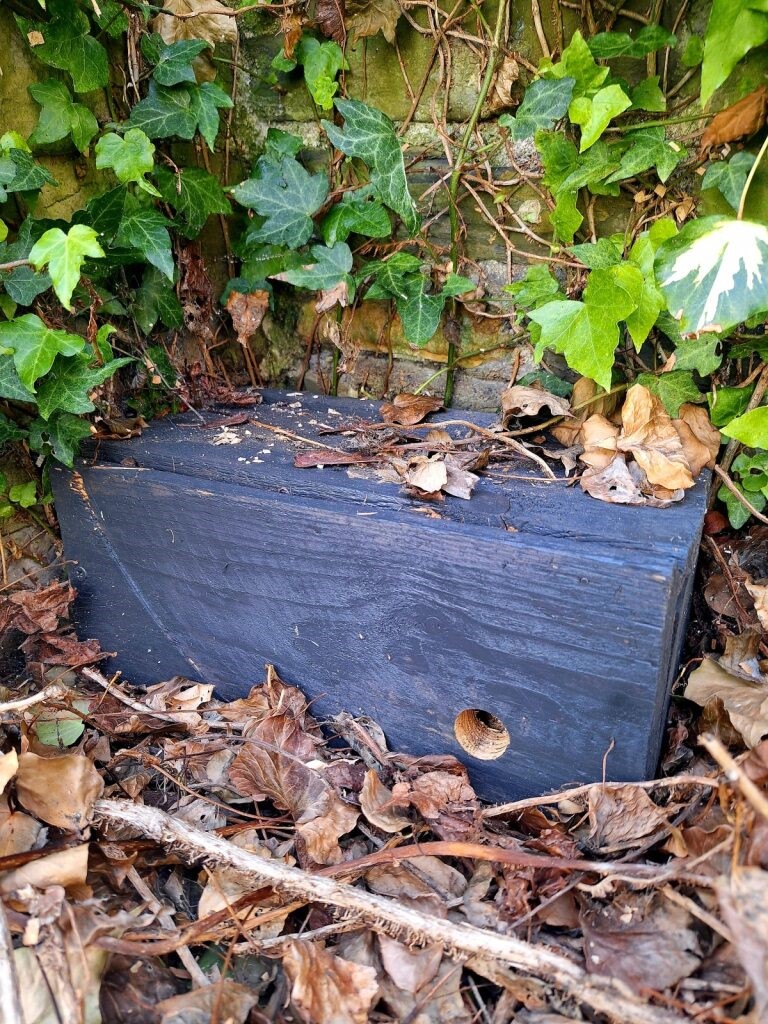
Across campus, bumble bee boxes and insect hotels for native bees have been installed in College gardens and near tree lines, creating vital nesting sites for species of bumble and solitary bees. Check out our short video here.
Nesting habitats for bees on Trinity’s campus: cavity nests for solitary bees (above) and bumblebee boxes (below) were upcycled from waste materials on campus
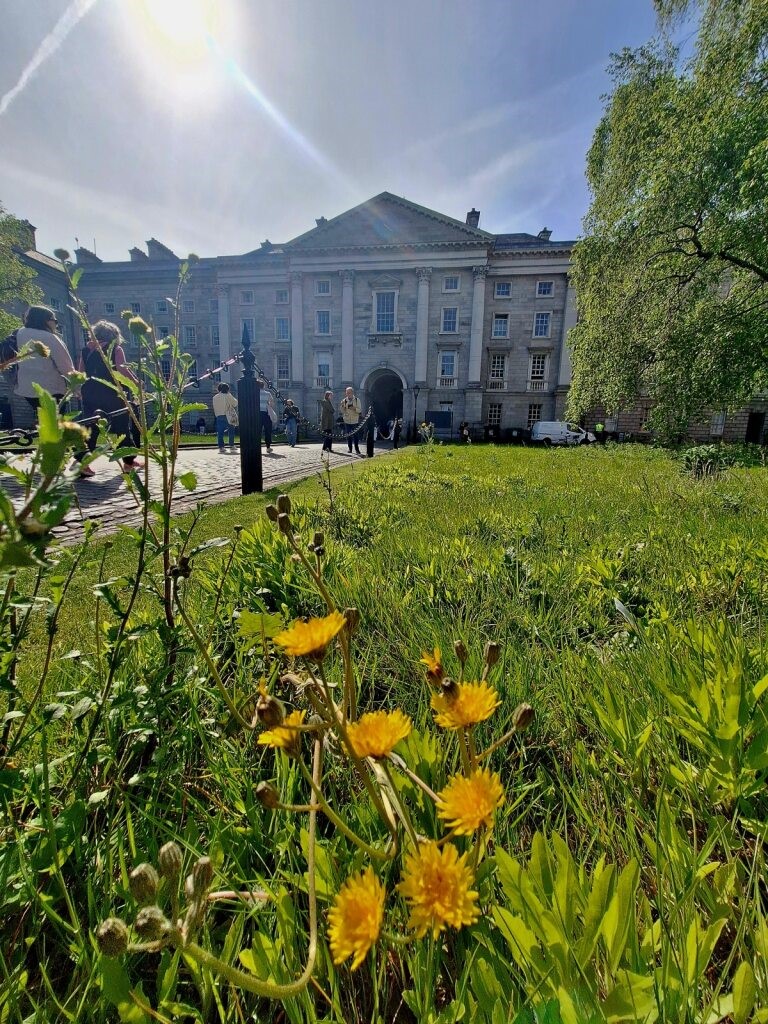
These habitats, installed with input from the Estates and Facilities team, provide safe havens for pollinators amid urban challenges, boosting local biodiversity. Meanwhile, ornamental meadows along with the No Mow April and May initiatives have transformed managed lawns into wildflower-rich zones, with areas like Front Square blooming with daisies and dandelions each spring.
No-mow May in Trinity’s Front Square
These efforts, championed by students, staff, and the sustainability team, offer food and shelter for bees, butterflies, and other insects while fostering a culture of conservation. Together, we’re engaging the Trinity community, students, staff, and visitors, in protecting nature, contributing to a sustainable future.
These actions are a cornerstone of Trinity’s Biodiversity Action Plan 2025-2030, driving us toward a more nature friendly campus. This is a key part of Trinity’s ambition to be nature positive by 2030 (see Trinity’s Sustainability Strategy).
Join us in safeguarding pollinators and building greener cities, gardens, parks and farms – check out the All-Ireland Pollinator Plan Resources for tips and advice.
By Tara Dirilgen & Jim Carolan, Maynooth University
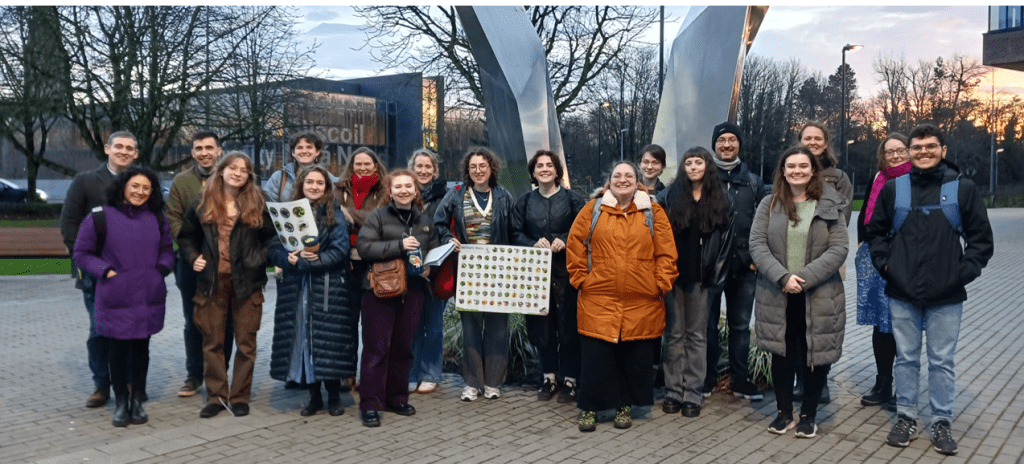
This year the Irish Pollinator Research Network (IPRN) returned to Maynooth University for a second time (the first was in 2020) and was hosted by Dr Jim Carolan and Dr Tara Dirilgen. Launched in 2017, the IPRN is an open network of pollinator researchers committed to conducting pollinator research and build the evidence base required to conserve and manage our beleaguered pollinator populations across Ireland. Although primarily focussed on pollinating insect species, the network is open to members that conduct research on any aspect of pollinator biology and ecology.
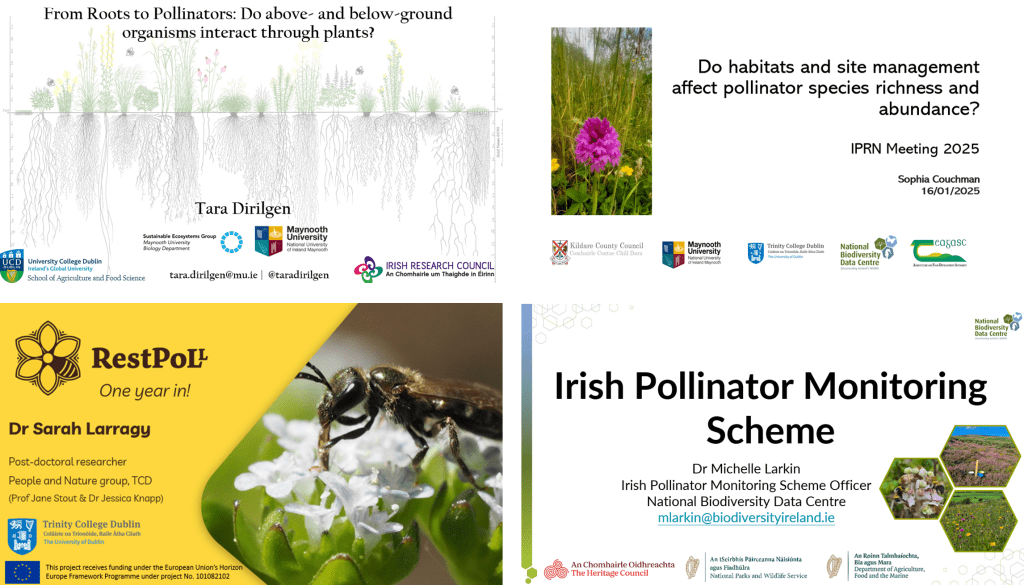
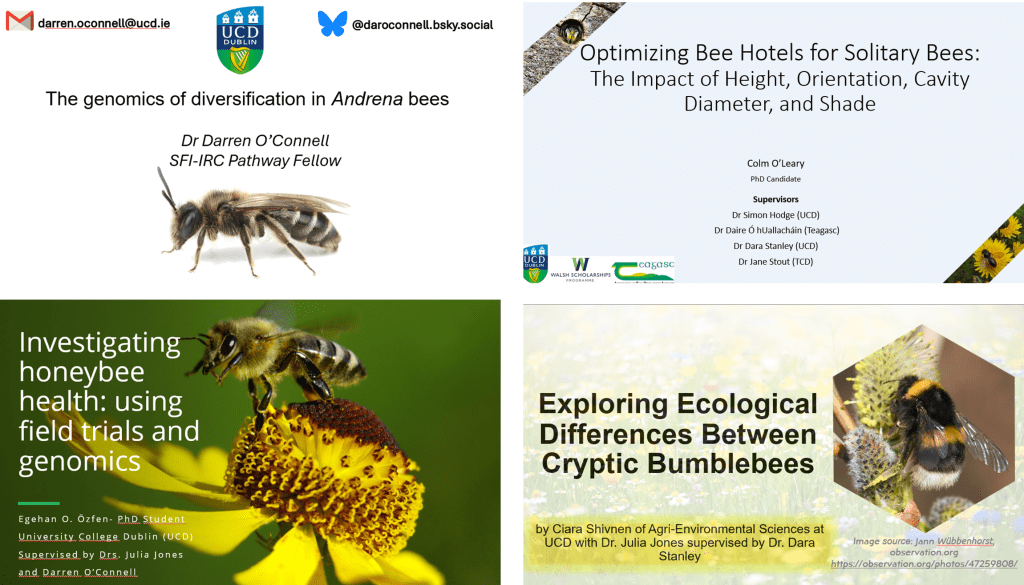
In total, 13 researchers representing seven institutions presented their work on topics including solitary bee hotels, farmers sentiments to conservation, cryptic bumblebees, pesticides impacts, changing habitats, non-lethal sampling, honeybee health and genomics and the importance of hedgerows (download programme below). The presentations were given by PhD candidates and PIs, and as with previous years, it seems that pollinator research is booming and in a great place.
Updates were also provided by Dr Saorla Kavanagh on several Teagasc biodiversity projects that are planned and Dr Sarah Larragy on the first year of the EU funded RestPoll project, a European-wide initiative aiming to restore pollinator habitats and enhance their connectivity. Dr Michelle Larkin from the National Biodiversity Data Centre presented on the Irish Pollinator Monitoring scheme which plans to track pollinator numbers and species and their distributions across different habitats (including farmlands) and geographical regions in Ireland. Such projects are essential for us to understanding the decline in pollinator numbers and diversity but also the causes and consequences of these declines.
Delegates enjoyed a lovely lunch in Pugin Hall and a quick visit to stretch the legs to the Junior Garden. Despite the lack of life (plants and pollinators) given the time of the year, we were happy to stretch our legs, breath some fresh air and show off the great biodiversity management and initiatives of Maynooth Green Campus. Everyone was forgiven for the delayed start to the afternoon session, but as it turned out energy and rested minds were required.
As in past years the end of the meeting is dedicated to an open discussion regarding the future and function of the IPRN. Since it’s establishment the IPRN has had strong links with the NBDC and particularly through the collation of research actions as part of the All-Ireland Pollinator Plan. Indeed, much of the research conducted by IPRN members has directly contributed to the actions and monitoring of AIPP. The session was directed by Professor Jane Stout (VP for Biodiversity and Climate Action at TCD, and Deputy Chair of the AIPP Steering Group) who presented plans for the AIPP Phase III (2025-2030). In a slight departure to previous phases, new approaches to translating and disseminating research findings and widening involvement in pollinator data acquisition and monitoring were proposed and supported. In addition, new collaborative approaches were agreed where IPRN members have committed to share equipment, knowledge and even samples so that we can improve integration among Irish pollinator researchers and support those new to the group.
Looking forward to next year’s IPRN at UCD.
To find out more about past IPRN meetings, see other blog posts on Campus Buzz. Current IPRN PIs include: