Unseen Worlds Beneath Our Feet: The Living Complexity of Soil

By Dr Paul Dowding, Emeritus Professor in Botany, School of Natural Sciences, Trinity College Dublin

Many people speak of soil in dismissive tones — “dirt,” “muck,” “mud.” Yet beneath our feet lies one of the most dynamic and mysterious ecosystems on Earth: soil is not just the passive ground we walk on, but a living, breathing system critical to the health of the planet.

Unfortunately, soils across the globe are under severe threat. Decades of intensive agriculture, heavy machinery, synthetic fertilizers, and biocides have degraded many of the world’s soils, possibly beyond repair. The damage is so widespread and entrenched that some experts warn it may be too late to reverse.

The Hidden Architecture of Soil

Soil is complex and opaque, making it one of the most difficult ecosystems to study. Unlike ecosystems on the surface, we can’t observe soil life without disturbing it. But we know it’s composed of a mix of mineral particles (sand, silt, and clay), organic matter, water, and countless living organisms — plants, fungi, bacteria, invertebrates — all intricately interacting in ways we don’t fully understand.

Astronomers talk about billions of galaxies; soil scientists encounter billions of bacteria. It’s a scale of life that rivals the cosmos in its vastness — and importance.

One of soil’s essential features is porosity. Living soil is riddled with pores created by roots, invertebrates, including insects like solitary bees, which dig vertical tunnels. Plant roots that die leave behind voids, and organic “crumbs” form on the soil surface — delicate soil structures that allow air and water to circulate.

Life and Death in Soil

Soil is not static. In grasslands, plant roots turnover every few weeks, creating a flux of organic material below the surface. Interestingly, in grasslands, there is four times more biomass below ground than above. Contrast this with woodlands, where most organic matter accumulates on the surface as leaf litter and decays from the top down. Each ecosystem supports different soil structures and functions.

Soil layers — or horizons — reveal the story of life underground. The topmost A horizon is where most biological activity occurs, dense with roots and organisms. Beneath lie the B and C horizons, progressively richer in unaltered parent material. In forests, a litter layer of leaves (A0) rests on top, with distinct zones: loose leaves (A0L), fragmented organic matter (A0F), and finally a highly active microbial layer where decaying leaves become unrecognizable. This layer is damp, and becomes a rooting medium for plants.

Fungi dominate the early stages of decomposition, breaking down tannins and detoxifying compounds in leaf litter, effectively “preparing” plant material for consumption by other soil creatures. These fungi also convert nitrogen-rich compounds into forms that are available to be taken up by plants and attract a range of decomposers — from microscopic bacteria to springtails, nematodes, and maggots — that mine, mince, and strip decaying material. Bacteria, unable to penetrate plant tissues alone, rely on these animals and fungi to access the nutrients within dead plant materials.

Rooted in Symbiosis

No plant root exists in isolation. Nearly all plants form relationships with mycorrhizal fungi, which extend their reach for water and nutrients, especially phosphorus, in exchange for carbon. Bacteria cluster around roots as well — some incidental, others essential, fixing atmospheric nitrogen into usable forms.

This complex interplay is vital to the cycling of nutrients and gases. Soil emits large quantities of carbon dioxide, though measuring this accurately is difficult due to the variability in temperature, moisture, and organic matter across different soil types, exposure and times of year.

Challenges in Measuring Soil Carbon

Efforts to measure and monetize soil carbon — for climate mitigation or farm payments — face scientific hurdles. Sampling depth, seasonal changes, and natural variation in organic matter all complicate assessments. For example, sampling at just 10 cm, the standard in some schemes, may miss the deeper organic reservoirs found in undisturbed grasslands or tree-planted plots. Opportunistic sampling (e.g. under nettles or hedgerows) can skew results.

In newly planted oak woodlands, soil carbon can accumulate rapidly, especially in the spaces between trees where grass roots can reach deep, undisturbed layers. Meanwhile, annual mowing of hay meadows limits root growth and soil organic matter buildup.

Standing Dead and Silent Decay

Not all dead organic matter makes it immediately into the soil. In grasslands, dead material often remains standing within tussocks; in woodlands, a large proportion of organic input is trapped high in the canopy as dead wood. The timing of leaf fall, tree species, and leaf chemistry (e.g. resin in conifers) all influence the rate and nature of decomposition.

Fungi are central players in making plant material palatable to soil fauna, transforming tough, chemically defended tissues into protein-rich, accessible resources.

Dead Wood: A Living Legacy

Managing woodlands or rewilded areas? If enhancing soil and biodiversity is the goal, consider leaving fallen trees in place. Decaying logs — particularly dense, slow-rotting species — create stable, moisture-rich habitats for fungi and invertebrates. While branches and brash can offer shelter to birds and small mammals, they dry out too quickly to support the rich microbial life needed for soil health.

Conclusion: Soil as the Final Frontier

Despite decades of study, soil remains one of the least understood yet most vital ecosystems on Earth. It’s a factory of life, death, and transformation — often invisible, but always active. To protect it, we must first learn to value it not as dirt beneath our boots, but as a dynamic partner in sustaining life.

Bees in the Trees

by Kate Harrington, PhD student, FOREST project, Trinity College Dublin

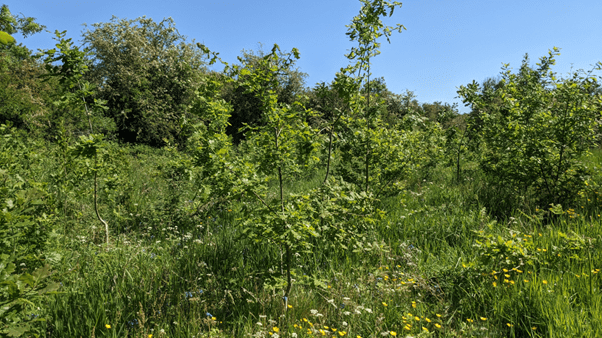
The pollinator community of young woodland sites, planted in farmlands under the Native Woodland Scheme (DAFM, 2024), was explored in the summer of 2023. We used pan trap and transect surveys to record and capture bees and hoverflies , looking at both the edges and centres of the woodlands, and we also looked at pollinator activity and floral resources. 

Pollinators, as might be expected,  forage mainly on the edges of the woodlands. The Native Woodland Scheme prescribes the planting of flowering species around the edges which support our native pollinator species, and seem to be particularly important for solitary bees in the spring.  The grassy edges, released from agriculture pressure, and unmanaged hedgerows, also contribute to the floral resources available for pollinators.    

Bombus pratorum resting on a hazel leaf

With a range of sites of different ages, we were able to look at how the pollinator fauna changed across the development of a woodland from an open habitat to one with a closed-tree canopy. 

A young native woodland plantation

With a range of sites of different ages, we were able to look at how the pollinator fauna changed across the development of a woodland from an open habitat to one with a closed-tree canopy. 

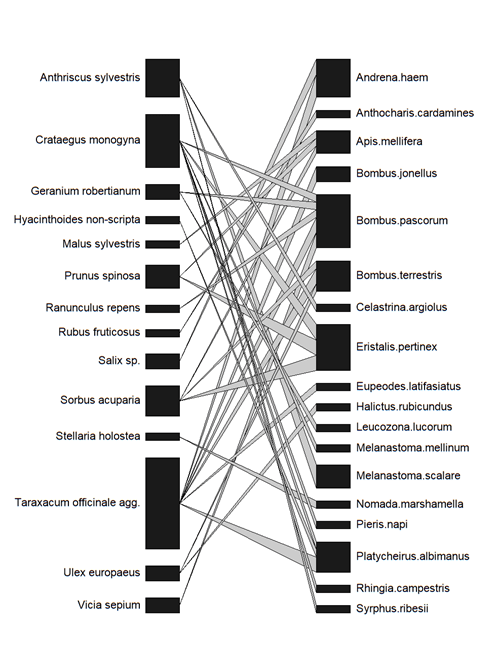
Native woodland spring plant-pollinator network

It has been suggested that functional groups such as pollinators may be particularly useful as ecological indicators.  With the rush to plant native trees as a solution to the biodiversity and climate crises, monitoring the success of these restoration initiatives is crucial, and we may need to look beyond simple habitat metrics (Marshall, 2024).  Our findings suggest that if we were to use pollinators as a monitoring metric for woodland sites, that bees may be a better indicator than hoverflies, as the latter respond more to landscape-level changes, while bees may better reflect any site-level changes. 

DAFM. (2024). Afforestation Scheme 2023-2027 Document. April 2024. Department of Agriculture, Food and the Marine. https://www.gov.ie/en/publication/6e997-afforestation-scheme/

Marshall, C. A. M., Wade, K., Kendall, I. S., Porcher, H., Poffley, J., Bladon, A. J., Dicks, L. V., & Treweek, J. (2024). England’s statutory biodiversity metric enhances plant, but not bird nor butterfly, biodiversity. Journal of Applied Ecology, 1365-2664.14697. https://doi.org/10.1111/1365-2664.14697

Mola, J. M., Hemberger, J., Kochanski, J., Richardson, L. L., & Pearse, I. S. (2021). The Importance of Forests in Bumble Bee Biology and Conservation. BioScience, 71(12), 1234–1248. https://doi.org/10.1093/biosci/biab121

RestPoll: Restoring pollinator habitats across European agricultural landscapes

Dr Sarah Larragy, post-doctoral researcher working on RestPoll, TCD.

We are making strides on our work as part of the Horizon Europe funded project called “RestPoll” (https://www.restpoll.eu). The name of our project, RestPoll, stands for “Restoring Pollinator habitats across European agricultural landscapes”. Among its 31 partners are both natural and social scientists from research institutions across Europe, alongside professionals from ministries, NGOs and businesses. Our partners represent 14 countries in Europe.

What is the goal of this project?

The mission of this project is to restore and increase connectivity between habitats for pollinators to help reverse the decline of these essential insects and the important pollinating services they provide. It also hopes to investigate co-benefits of pollinator restoration to various sectors of society as well as incentives and barriers (e.g. in policy) to pollinator restoration. In doing this, RestPoll will help fill the necessary knowledge gaps that will help to enable and support members of society to reverse pollinator decline.

How will we do it?

A core part of this project is to establish, in each participating partner country, case study areas that contain ‘living lab’ sites. With this network of living labs established, RestPoll will assess how actions taken to help restore pollinator habitats impact both pollinators and people alike.

What is a living lab? A living lab is a setting where “experiments, research, and innovation take place in real-life contexts, often involving end-users or stakeholders directly”.

Aligning with other Irish research:

RestPoll is aligned with, and part of, the Research Ireland-funded BiOrbic Bioeconomy Centre (https://biorbic.com/), specifically the Healthy Ecosystems Challenge. Healthy, functioning, biodiverse ecosystems underpin the bioeconomy, particularly in agricultural landscapes.

In addition, RestPoll is working with the FarmBioNet project https://farmbionet.eu/, which is a Farmer-focused Biodiversity and Agricultural Knowledge Network, which brings together stakeholders for researching, implementing and supporting Biodiversity Friendly Farming practices.

RestPoll Updates so far:

Establishing Irish Case Study Area:

Last summer, I began reaching out to farmers to see about monitoring pollinators on their farms. Many of the farmers had previously been involved in an EIP project called ‘Protecting Farmland Pollinators’ (NBDC, Project Manager Dr Saorla Kavanagh), and so were already taking actions to restore habitats for pollinators on their farms, including reduced hedgerow cutting, reduced pesticide use and having pollinator friendly trees, to name a few.

The summer involved many farm walks and chats over cups of tea with farmers to tell them more about the RestPoll project and, most importantly, to learn more about their perspectives on biodiversity conservation in agriculture. With the help of Research Assistant, Claire Kearney, and Erasmus+ student, Anna-Sonia Anastasiadou, a trial round of pollinator surveys was also carried out.

First Irish RestPoll Living Lab workshop:

In Sept 2024, we ran our first Living Lab workshop on a participating farm site in Athy. Among attendees were farmers, researchers and a representative from DAFM. Attendees received an overview of the RestPoll project and our plans and heard the reflections on the key successes of the Protecting Farmland Pollinators project from Dr Saorla Kavanagh, before delving into discussions around biodiversity conservation in agriculture. A farm walk also took place, led by our host Andrew Bergin, tillage farmer and Farming For Nature Ambassador. For a more detailed summary of this workshop and the discussions that took place, follow this link.

Watch this space…

This year, we will be conducting three rounds of pollinator and floral surveys on participating farms in the Co. Kildare region. Also on our pollinator monitoring team are PhD student Fernanda Azevedo and Moya Owens, research assistant working on the “Antenna” project. Over the summer, we also hope to trial out a rapid assessment tool with some farmers to help RestPoll develop an easy-to-use tool to quickly monitor pollinators. A second living lab workshop is also due to take place this Autumn, where we can update our Living Lab network on our progress.

For more information about RestPoll or if you are interested in getting involved, email Sarah at slarragy@tcd.ie.

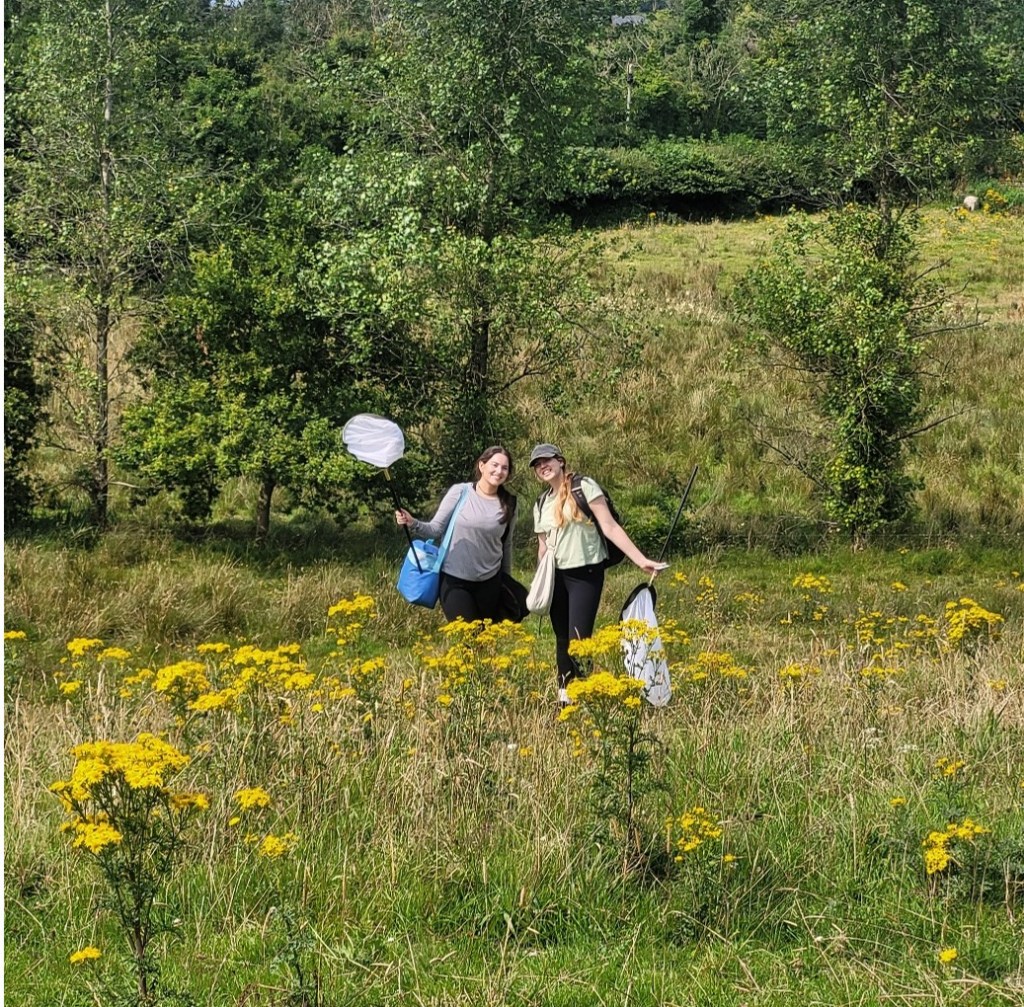
Claire Kearney (L) and Anna-Sonia Anastasiadou (R) happy after a long day of pollinator surveys. August, 2024.  

Hiring researcher/project manager for pollinator monitoring project

THIS POSITION HAS NOW BEEN FILLED!

A highly motivated individual is sought to join the multidisciplinary team of ANTENNA “Making technology work for monitoring pollinators”, a European Biodiversa consortium nationally funded by the Environmental Protection Agency. The successful applicant will be based in the School of Natural Sciences at Trinity College Dublin, with Professor Jane Stout, collaborating with partners across Europe.

About the project

Due to pollinators’ decline and their importance in food security and ecosystems, the EU Pollinators Initiative has prioritised the establishment of a comprehensive monitoring system (EU PoMS). Modern technologies like robotics and computer vision can improve pollinator monitoring coverage, speed, and accuracy. However, more research is needed to advance and adapt these technologies to determine the best, most cost-effective ways to use them for pollinator monitoring.

ANTENNA will assess stakeholder needs regarding usability, design, current limitations, and opportunities for improvement to enhance new monitoring methods. Based on this, we will improve methodologies whilst testing their effectiveness and complementarity alongside traditional sampling across various regions within and outside the EU. Additionally, we will create a roadmap for improving pollinator monitoring across Europe using these frameworks, data standards, and integration pipelines.

About the role

We seek an experienced individual to join the team for up to 2 years of the ANTENNA project. This person will be responsible for:

  1. Assessing stakeholder needs for novel pollinator monitoring technologies.
  2. Trialling novel technologies at our site network in Ireland.
  3. Providing a roadmap for novel pollinator monitoring technologies to be incorporated into European policy.
  4. Working with the wider project team to contribute to a cost-benefit analysis and refine methods.
  5. Project management, including reporting, data management, and managing relationships with project personnel and partners

Skills and qualifications required

Essential

  • Experience in biodiversity monitoring
  • Exceptional skills in the management of a multi-partner project, including arranging meetings, reporting, and interacting with researchers and a wide range of stakeholders (partners, taxonomic experts, funders, and decision-makers)
  • Excellent interpersonal and problem-solving skills
  • Excellent personal time management
  • Excellent data handling and presentation skills
  • Excellent report writing skills

Desirable

  • PhD in ecological/environmental sciences, entomology, biodiversity or similar
  • Experience with insect identification
  • Experience in successfully publishing scientific journal articles

Job specifications

Post status: Up to 24 month Specific Purpose Contract

The duration of this contract is limited to the above-fixed term so that the successful candidate can complete work on the ANTENNA project. This contract is, therefore, limited to a fixed term and is not being offered on a permanent basis, as the specific scope of responsibilities associated with this role aligns with the externally funded ANTENNA project timeline and deliverables and is expected to conclude within the period outlined.

Hours of Post: Full-time, 35 hours per week

Salary: This appointment will be made on the Research Assistant (€31,962 – €41,943 per annum) or Post-Doctoral Researcher Salary Scale (€43,908 – €44,496 per annum) at a point depending on experience, in line with current Irish Universities Association University Research Salary Scales/Guidelines.

How to apply

Applicants should submit a Curriculum Vitae and a Cover Letter that specifically addresses their relevant experience and outlines their suitability for the position, along with three referees’ names and contact details, to Jessica Knapp (KNAPPJ@tcd.ie). The position will remain open until filled.

Applicants not addressing the application requirements above will not be considered at the shortlist stage.

Pollinator scientists gather at Trinity

Ireland’s pollinator research community came together this month to share their latest updates and research at the annual Irish Pollinator Research Network (IPRN) meeting. Researchers descended on the Botany building from Trinity, Maynooth University, UCD, Galway University, and Teagasc for the one-day meeting. Over the day, 15 talks were given, and a few of the highlights are presented below.

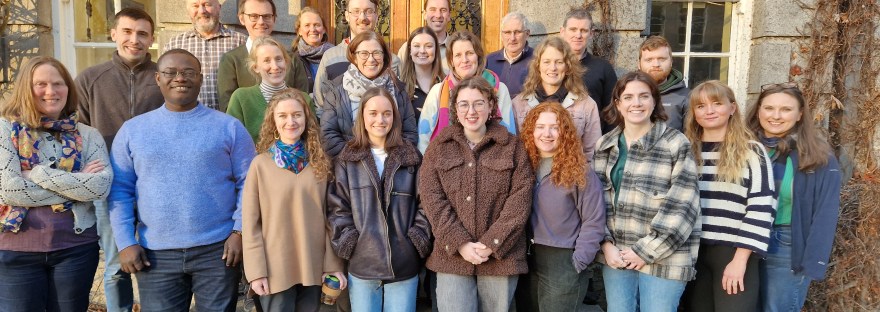
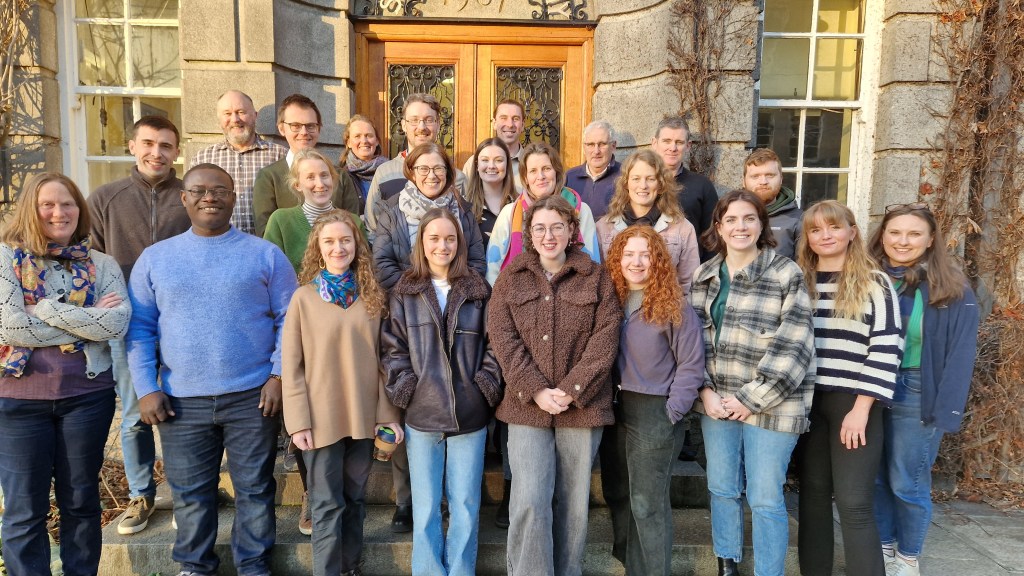
IPRN members at the 2024 meeting at Trinity College Dublin


Interesting cross-disciplinary research was presented by Engineer Adam Narbudowicz (Senior Research Fellow at Trinity), whose team, funded by Trinity’s Kinsella E3 multidisciplinary scheme and working with Jane Stout and Cian White, has been developing a small radar sensor capable of distinguishing between several pollinator species. This generated much excitement at the thought of how many different uses a technology like this could have.

Adam Narbudowicz presents work on radar sensors

Tara Dirilgen (Assistant Professor at Maynooth) presented a fascinating talk on why bee scientists need to diversify their pesticide research. With a systematic review methodology, she, and a team at UCD, found that bee researchers had overly invested in studying just one species, honeybees and just one group of pesticides, neonicotinoids.

In contrast, the conference had no such biases. There was a wonderfully diverse set of talks including research on solitary bee nesting habits (Colm O’Leary, a PhD student at UCD and Teagasc), rare and cryptic bumblebees (Lydia Thompson and Ciara Shivnen, PhD and undergraduate students at UCD), and cocoa pollination in Ghana (Richard Boakye, recent PhD student at UCD).

Richard Boakye presents his work from his PhD on implications of cocoa expansion in Ghana

Kate Harrington (PhD student at Trinity) presented some of the preliminary results from her survey of pollinators in newly planted Irish woodlands (part of the FOREST research project), and Sophia Couchman (PhD student at Maynooth) shared some of her findings about how pollinator abundance varies with the variable Irish summer weather.

Alexandra Valentine (PhD student at Galway) updated the meeting on her work on the Irish honeybee, and her work on morphological and molecular traits of Irish bees. Whilst Darren O’Connell (postdoc at UCD) presented a meta-analysis done as part of the National Apiculture Programme on the challenges associated with the treatment of Varroa using different methods. Julia Jones (Assistant Professor at UCD) presented findings from a study in the UK on non-native and native commercial bumblebee imports that demonstrated little introgression of non-native genes into wild populations. Julia announced that they have been awarded funding for the next phase of the National Apiculture Programme, and called for researchers to join their efforts.

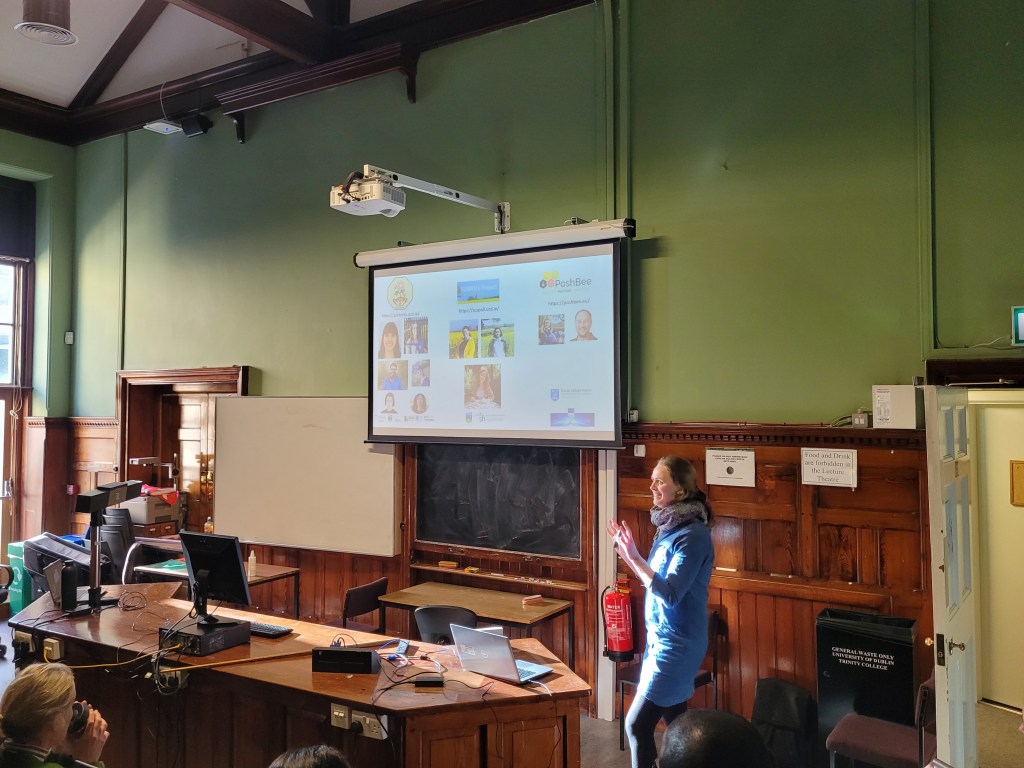
Dara Stanley (Assistant Professor at UCD) did an excellent job of summarising the findings of three major research projects: PROTECTS, SusPoll and PoshBee, all of which examined the exposure and impacts of pesticides on pollinators. Some of the key findings were 1. The most widely used pesticides in Ireland are herbicides and fungicides; 2. There is little known about these products on bees; 3. Pesticide residues are found in crops, wild plants, and the pollen collected by bees; 4. Herbicides can influence molecular processes and functioning like digestion and learning in bumblebees; 5. Non-neonicotinoid insecticides can have sub-lethal impacts on pollen collection by bumblebee colonies and on solitary bees; and 6. Although Irish pollinators are most active in the middle of the day, we should think about mitigating pesticide use in a broader context than just spraying at different times.  

Dara Stanley summarising the pollinator-pesticide work from 3 recently completed collaborative research projects

Following this, Jess Knapp (Assistant Professor at Trinity) presented a major output from the PoshBee project, showing that despite strict risk assessment and regulatory process in Europe, pesticides are still having negative impacts on bumblebees, particularly in intensive agricultural landscapes. This research, which was the biggest standardised experiment ever performed on bumblebees, was recently presented to EFSA, the body that assesses pesticide risks and advises the European Commission, emphasising the importance of research for informing policy and regulation.  

In an exciting development for Irish pollinator research, Sarah Larragy (postdoc in Trinity) introduced the community to the new EU funded project, Restpoll. As Sarah explained, Restpoll is an EU wide project looking to understand how to restore habitats to help pollinators. The project kicked off at the end of 2023 in Sweden, so we’ll update you in future years on what they find.

Jane Stout (Professor in Trinity) closed out the conference with a discussion on translating research into impact. The group identified the stakeholders who should be informed by research, and the methods that are used for research dissemination. Challenges to bridging the gaps between research and practice/policy were discussed, and the Irish Pollinator Research Network as a whole was challenged to take our research out of the lab and into society, and to help each other to do that.

Jane Stout leading a discussion on engaged research for impact.

About the Author: Ed Straw is an IRC postdoc in Jane Stout’s research group at Trinity College Dublin.