Blog

Irish Pollinator Research Network goes from strength to strength…

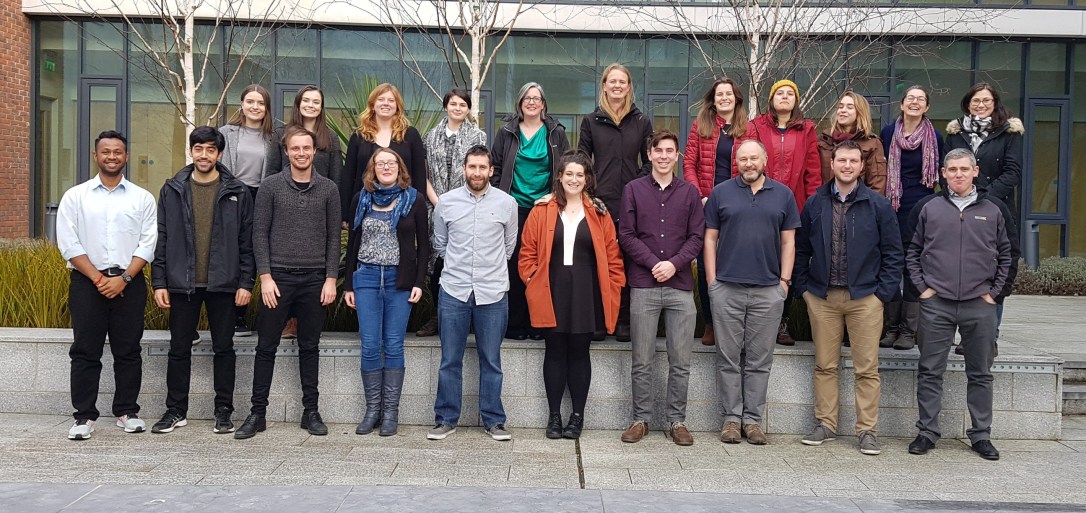
Following on from the successful meeting last year, we held our Second Annual Irish Pollinator Research Network Meeting on 18th January 2019. This year, 22 researchers from TCD, UCD, DCU, MU, TUD and QUB gathered at DCU’s Water Institute for 16 oral presentations and discussions about pollinator, pollination and pollen research currently underway in Ireland.

20190118_191338.jpg

From rare bumblebee ecology and conservation, to pollen modelling and forecasting, pesticide residues and impacts on bees, how weather affects pollinators, plant-pollinator networks and the value of pollinators to Ireland, this meeting demonstrated the breadth and quality of research that is currently underway on the island of Ireland. Several national and international collaborative projects (including @ProtectsProject, @FarmEcos and @poshbee_eu) provide formal links among researchers, but the informal collaborations and the feeling of community fostered in the network is its real strength. In addition, with expertise encompassing the fields of molecular biology, analytical chemistry, ecology and conservation, this network can address problems and provide insights that go beyond traditional disciplinary boundaries.

The network first formed in 2016, and actively engages with DAFM and the EPA, provides some of the research under pinning the All-Ireland Pollinator Plan and contributes to a wide range of science outreach and knowledge exchange activities.

All researchers on the island of Ireland who work on pollinators are welcome to join – email us and we’ll put you on the mailing list for next year’s meeting.

To find out more, see other blog posts on Campus Buzz and the webpages of the research groups:
Jane Stout
Jim Carolan
Blanaid White
Dara Stanley

David O’Connor

Postdoc wanted to work on Farm-Ecos project

Post-doctoral research assistant wanted for Farm-Ecos project (Farming and Natural Resources: Measures for Ecological Sustainability)

Picture1.png

Farm-Ecos is a Department of Agriculture, Food and the Marine funded, interdisciplinary project, which aims to identify and outline the evidence base for novel, cost-effective measures to protect and enhance farmland biodiversity. These measures should increase habitat quantity, enhance habitat quality and improve ecological connectivity, from the farm to landscape scale.  Measures should thus help halt biodiversity loss and enhance the provision of ecosystem services. The project team, based at Teagasc, NUIG, GMIT, TCD and DCU, has expertise in agri-ecology, soil science, socio-economics and agri-environment policy.

We are seeking a post-doctoral research assistant (PDRA) to join this team and to lead field sampling and analysis of pollinating insects. The PDRA will be based in the research group of Jane Stout in the School of Natural Sciences, Trinity College Dublin. The PDRA will be responsible for fieldwork, insect identification, data collation, data management and sharing, data analysis and modelling, and writing reports and academic papers. The overall aim of this PDRA is to predict how farming intensity, habitat quantity, quality, and connectivity, relate to pollinating insect biodiversity, and to model the spatial extent of benefits in terms of the delivery of ecosystem services across the landscape.

Key skills

Essential:

  • PhD in ecology, agro-ecology, pollination, landscape ecology or similar
  • Proven ability to work in a team and to communicate effectively with other team members – the position will involve collaborative sampling, data sharing, analysis and writing
  • Fieldwork experience, preferably in agroecosystems, with sampling and identifying insects
  • Excellent quantitative and statistical skills, including mixed modelling
  • Excellent spatial analytical skills, including using GIS and spatial modelling software
  • Excellent written communication skills to prepare clear and precise documents and reports
  • Willingness to travel for fieldwork, including intensive sampling during the summer months in South-eastern Ireland
  • Full clean driving licence valid for Republic of Ireland
  • Language – must be fluent in English

Desirable:

  • Knowledge and interest in pollinators and pollination services
  • Experience in sampling and identifying flower-visiting insects
  • Own car


Salary: This appointment will be made at point 1 of the PDRA scale from the Irish Universities Association Researcher Salary Scales i.e. €37,223 per annum (gross) for 24 months, from 1st March 2019.

To apply: please send letter of application, outlining suitability for the post, and a CV including the names and contact details of two referees, to Jane Stout stoutj@tcd.ie before 11th January 2019. Interviews will be conducted 17/18th January (in person or via Skype).

For further information contact Jane Stout (stoutj@tcd.ie)

Bee baking – communicating our research through cake…

We have a wonderful tradition in Botany here in Trinity College Dublin – that of communicating our research to each other via a cake competition: The Botany Bake Off. Each week, members of the Botany Discipline gather to hear the stories associated with the cakes, to taste the cakes, and then cast their votes.

Members of the Plant-Animal Interactions Research group have contributed fantastically to this competition in the past, and this year is no exception.

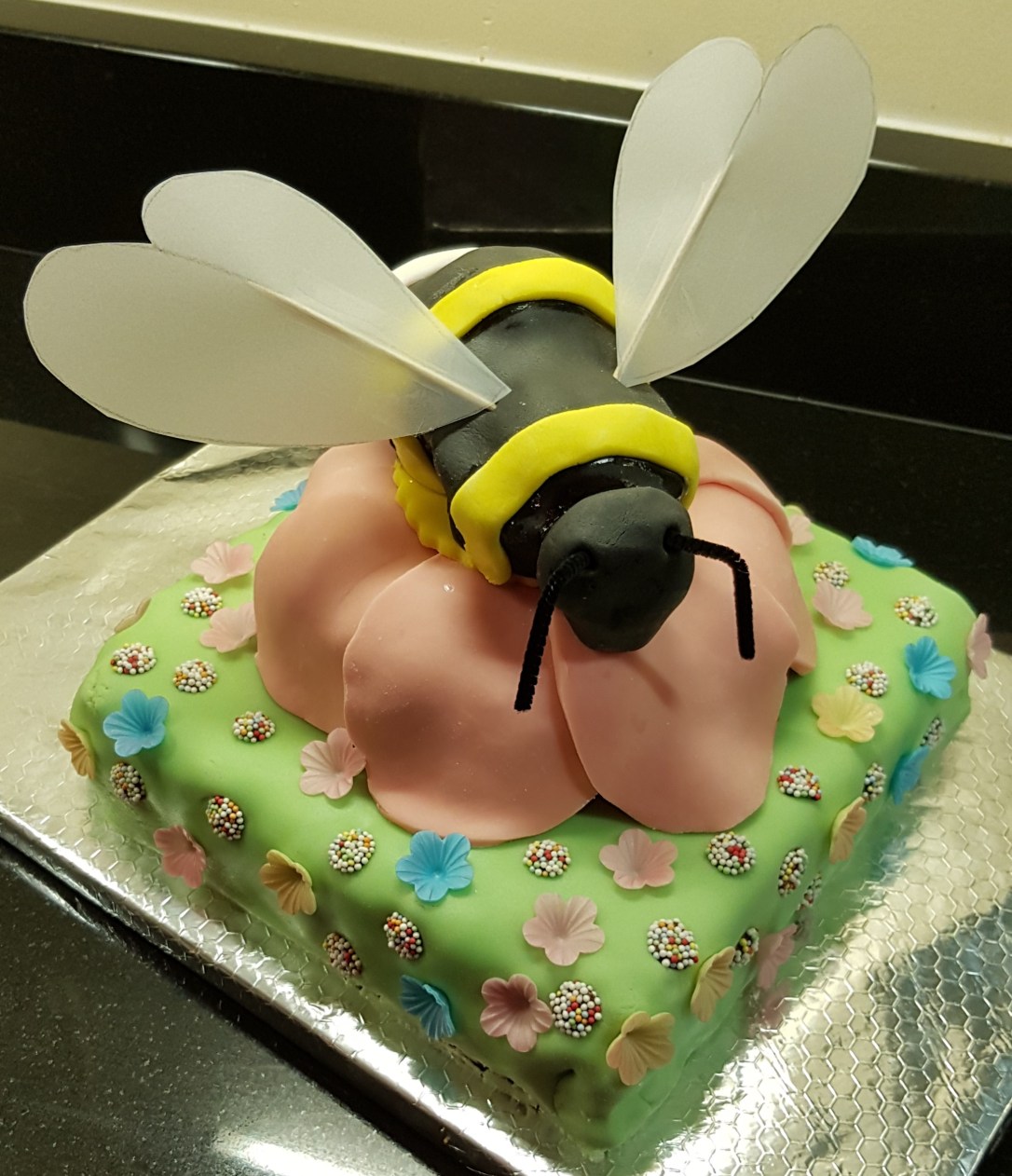
Up first was Prof Jane Stout, with her bumble bee cake, which represented her plant-pollinator ecological research at a variety of scales: from the landscape, with its different habitats and floral resources for pollinators, to individual flowers and how their traits affect their value to insects, their visitation and pollination, to interactions with bees that forage on those flowers. From the colour patterns on the bee, we can tell it is from the Bombus lucorum cryptic complex, and so molecular methods are needed to identify the species.

20181008_202732

PhD students Irene Bottero and Elena Zioga then upped the game by presenting not only a wonderful cake, but a fantastic theatrical piece to go with it to describe their research which focuses on identifying the hazards bees face as part of the EU PoshBee and DAFM Protects projects.

Elena and Irene Bake off cake 2018


Emeritus group member, Paul Dowding, reflected on 50 years of research on various topics including air quality and pollen forecasting, and treated us to home-made buns representing various pollen morphologies, and home-made hedgerow jams from his sustainable farm in Co. Carlow.

paul bake off 2018

Finally, PhD student Cian White, presented his research on plant-pollinator interactions and how they are influenced by human activity in landscapes along a disturbance gradient. He used four different cakes to illustrate different intensity of human activity – from intensive agriculture to intensive urbanisation, to less-intensive agriculture and suburban habitats. And he told some tales about the interesting people he met along the way…

Cian bake off cake 2018


In previous years, members of the research group have produced these delicious delights… see details on the Botany Facebook page and last year’s EcoEvoBlog.


The 2018 winners are…

  • Relevance to theme: Mike Jones
  • Taste: Daniel Kelly
  • Effort: Irene Bottero and Elena Zioga
  • Overall: Cian White

Congratulations!


PhD studentship available: How sustainable is the bioeconomy? A natural capital approach.

We are seeking applicants with Bachelors/Masters degree (2.1 or higher) in natural/environmental science, natural resource management, or similar, preferably with knowledge and experience in ecosystem services, natural capital, bioeconomy, and/or life cycle analysis to do a PhD on “Integrating natural capital into Bioeconomic industrial applications”.

A studentship, which includes a €18,000 stipend, plus €5,500 contribution to fees per annum, is available for 4 years from 1st March 2019.

The PhD student will be registered in Trinity College Dublin, supervised by Prof Jane Stout (TCD) and Prof Cathal O’Donoghue (NUIG), and work as part of the SFI-funded BEACON-Bioeconomy research centre, with access to the support of BEACON infrastructure.

20065932-4436-4ef8-a0d0-dbe04d4577e5

To apply: please send letter of application, outlining suitability for the post, and a CV with the names and email addresses of 2 referees, to Jane Stout stoutj@tcd.ie before 11th January 2019.

Project description: “Natural capital” comprises the world’s stock of natural resources, including all living and non-living components and associated bio-physio-chemical processes, from which flow ecosystem goods and services which have benefits and value to human society (see www.naturalcapitalireland.com). Natural capital is essential for a sustainable bioeconomy – it can be distinguished from physical capital (e.g. the factory that processes raw materials), social capital (e.g. employees harvesting and processing materials), and financial capital (e.g. the repayments on the operational costs). All types of capital are needed and an imbalance will reduce the capacity of the bioeconomy to function and threaten its long-term sustainability.

Natural capital stocks have been depleted globally, and although it is not about protecting the environment, the bioeconomy strategy could represent an opportunity to stop the loss of natural capital and the services that flow from it. However, integrating the natural capital approach into biobased industrial applications is challenging. One problem is in specifying and assigning “value” to natural capital in order to incorporate goods and services from nature into economic business models; another is making knowledge, tools and approaches accessible; and a third is reforming practices to align short-term private objectives with long-term public/societal ones.

This project will deliver a generic natural capital approach to developing bioeconomic activities in Ireland. This will involve determining impacts and dependencies (reliance on and outputs to) on natural capital across spatio-temporal scales (from local, regional, national to global; from cradle to cradle) for case-study applications, and developing general product rules.

Objective: Deliver generic and specific frameworks for integrating natural capital, tested on Technical Projects, applicable across industries. Demonstrate how natural capital accounting could underpin bioeconomy business case development and natural capital management.

Methodological approach: Using an LCA approach and incorporating economic valuations, costs and benefits of alternative pathways can be determined. The project will further identify pressure points at which intervention could minimise potentially adverse impacts on natural capital.


See also advertisement on Findaphd.com

The Future of Sustainable Pest Management workshop

On October 5 2018, the Plant-Animal Interactions Research Group at Trinity College Dublin hosted a one-day workshop entitled “The Future of Sustainable Pest Management.” The attendees of this workshop came from a wide variety of institutions around Ireland, including UCD, DCU, Teagasc, DAFM, and of course Trinity itself. There were three talks given in the Botany Lecture Theatre, and then a final seminar open to everyone held in the Ecology, Evolution, and the Environment Seminar Series in the Museum Building.

sustainable pesticide workshop 05.10.18

The main objectives of the workshop were:

  1. To discuss the problems and potential of current and future methods of pest control in agricultural systems.
  2. To develop new research networks and ties.
  3. To compare pest control methods and policies within Ireland and abroad.

To this end, the workshop was a resounding success! I personally learned so much from each of the talks, and felt they complemented one another perfectly. I am so grateful to the speakers and participants who took the time to come to this workshop. And I was encouraged to see participants chatting to one another about potential collaborations.


Talk Overviews:

The first speaker, Aidan Moody, started the day by discussing the careful ways in which the EU and Ireland ensure that chemicals are safe to be released to the market. He also welcomed anyone to come visit Teagasc to learn more. Mr. Moody’s talk is available here.

The second speaker, Ronan Byrne, then gave a thorough overview of the mechanisms behind the evolution of herbicide resistance in weed species, with a particular focus on herbicide resistant weeds in Ireland. Mr. Byrne’s talk is available here.

The third speaker, Brian Murphy, gave a talk on new ideas regarding fungal endophytes in plants, and how these can help to promote crop yield without using chemical applications. Dr Murphy’s talk is available here.

We then had lunch at the Trinity Dining Hall so that participants could mingle, discuss ideas, and develop new research networks.

We had an international speaker, who was also speaking in the Ecology, Evolution, and the Environment seminar series, Prof. David Mortensen. Prof. Mortensen gave the last talk of the day on the potential to influence policy on herbicide usage and change behaviour in agriculture. Prof. Mortensen’s talk is available here.

Finally, students had an opportunity to chat more to the seminar speakers at the end of the day as we met up at the Bank.

Graduate students Irene Bottero and Elena Zioga (from Jane Stout’s lab) wrote a complete summary of the workshop, which is available here.


Speaker Bios:

Aidan Moody is the Head of the Pesticides Division at the Senior Inspector Level for the Department of Agriculture, Food and Marine, for Ireland. He gave a talk on EU policies regarding the approval of chemicals for use in agriculture, including the stringent requirements the producer must meet to release a new chemical. https://whodoeswhat.gov.ie/branch/agriculture/CI/aidan-moody/877/


Ronan Byrne is a PhD candidate at the University of Sheffield, currently working with Teagasc at Oak Park, in Co. Carlow. He is a Walsh Fellow working on herbicide resistance in grass weeds here in Ireland, and specialises in molecular biology, genomics, bioinformations, and molecular evolution. https://www.teagasc.ie/about/research–innovation/research-impact-highlights/grass-weed-control-in-irish/


Brian Murphy is a research fellow funded by Enterprise Ireland at TCD with a Masters level Special Purpose Certificate in academic practice. He has a high commendation as a registered scientist with the Science Council. He recently won the award for best new technology emerging from 3rd level with Trevor Hodkinson for e-Seed, an agritech company. https://www.researchgate.net/profile/Brian_R_Murphy


Dave Mortensen, previously head of the Ecology program at Penn State University, was named a Distinguished Professor by that university this year. He also recently received an oustanding teacher/mentor award, which is distributed exclusively by the students. He is now at the University of New Hamphsire, where he is the chair of Agriculture, Nutrition, and Food Systems. This department includes 35 faculty who work on the spectrum from sustainable food production through to human health. The thread that holds Prof. Mortensen’s work together over teh years is fundamental and applied science centered on ecosystem service provisioning and how that is influenced by the structure of the landscape. https://plantscience.psu.edu/directory/dam37


Special Thanks:

Special thanks to everyone who made this workshop possible; Jane Stout, Matthew Saunders, Pepijn Luijckx, Siobhan McNamee, Mandy Lockhart, Olive Keegan, Suzanne Richmond, Cian White, and Sandra Kavanagh. Funding from TCD’s Visiting Professorships and Fellowships Benefaction Fund and Marie Curie Individual Fellowship (FOMN 705287).

By Laura Russo, Marie Skłodowska Curie Postdoctoral Research Fellow.